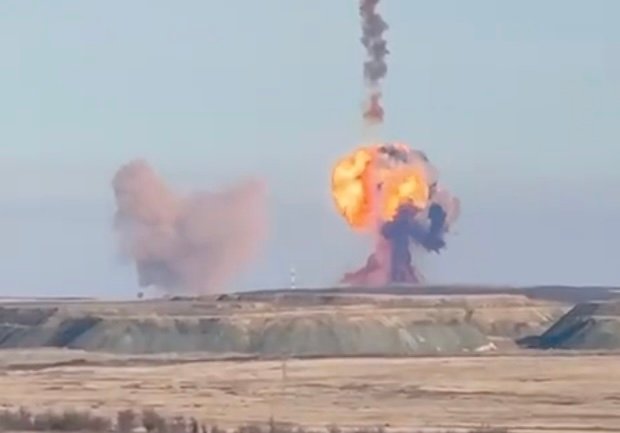
Therefore, it is not surprising that Russian officials love to talk about the capabilities of the Sarmat. Russian President Vladimir Putin has called Sarmat a “truly unique weapon” that will “provide food for thought for those who try to threaten our country in the heat of frenzied aggressive rhetoric.” Dmitry Rogozin, then head of Russia’s space agency, called the Sarmat missile a “superweapon” after its first test flight in 2022.
So far, what is unique about the Sarmat missile is its propensity for failure. The missile’s first full-scale test flight in 2022 apparently went well, but the program has since suffered a series of setbacks, most notably a catastrophic explosion last year that destroyed the Sarmat missile’s underground silo in northern Russia.
The Sarmat is supposed to replace Russia’s aging R-36M2 strategic ICBM fleet, which was built in Ukraine. According to the Russian Defense Ministry, the RS-28, sometimes called Satan II, is “a product of entirely Russian industrial cooperation”.
While video of the missile failure last week lacks confirmation of whether it was a Sarmat missile or the older model R-36M2, analysts believe it was likely the Sarmat. The missile silo used for Friday’s test was recently renovated, perhaps converting it to support Sarmat tests after the destruction of the new missile’s northern launch site last year.
“Work started there in spring 2025, after the ice melted,” wrote Étienne Marcuse, a strategic weapons analyst at the Foundation for Strategic Research, a French think tank. The “urgent renovation” of the missile silo at Dombarovsky supports the hypothesis that last week’s crash involved the Sarmat, not the R-36M2, which was last tested more than 10 years ago, Markusz wrote on X.
“If this is indeed another failure of Sarmat, it would be extremely damaging to the medium-term future of Russian deterrence,” Marcus continued. “The replacement of the aging R-36M2 missiles, which carry a significant portion of Russia’s strategic weapons, is being pushed even further into the future, while their maintenance – previously managed by Ukraine until 2014 – remains highly uncertain.”
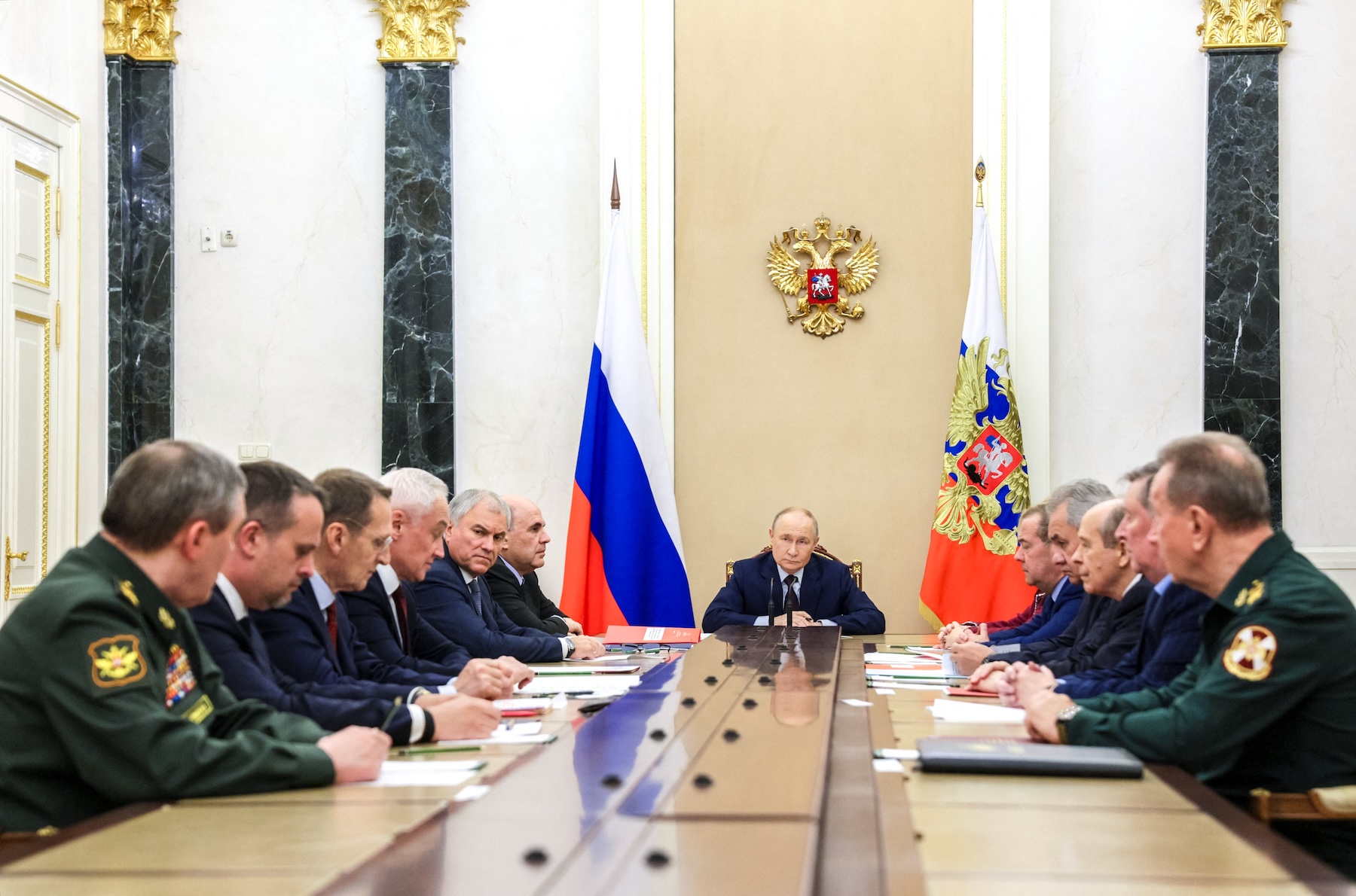
In this pool photo distributed by Russian state media agency Sputnik, Russian President Vladimir Putin chairs a Security Council meeting in the Kremlin in Moscow on Nov. 5, 2025.
Credit: Gavriil Grigorov/Pool/AFP via Getty Images
UN researcher Podvig, who also runs the Russian Nuclear Forces blog site, agrees with Markusz’s findings. Podvig writes on his website that with the R-36M2 missiles soon to be retired, “it is very unlikely that the Rocket Forces will want to test them.” “This leaves Sarmat.”
The failure adds new uncertainty to the readiness of Russia’s nuclear arsenal. If this had indeed been a test of one of Russia’s older ICBMs, the results would have raised questions about hardware decay and obsolescence. In the more likely case of a Sarmat test flight, it would be the latest in a series of problems that have delayed its entry into service since 2018.
<a href