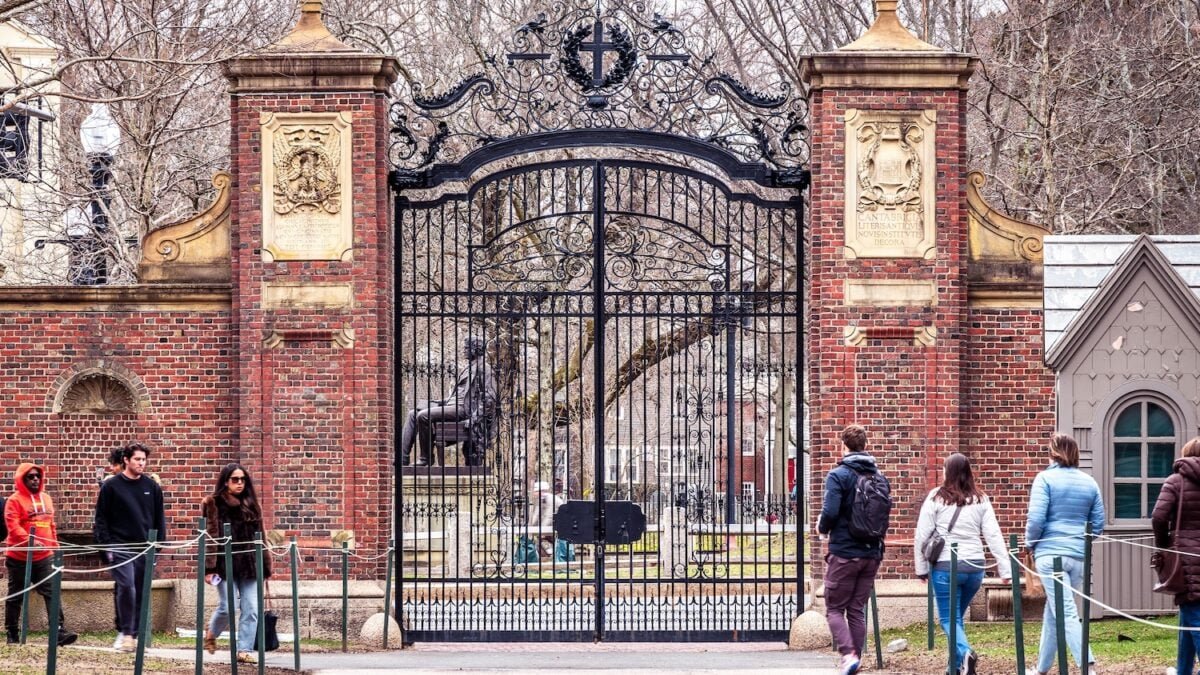

The Harvard University endowment’s largest publicly traded investment is now in the iShares Bitcoin Trust (IBIT), a spot Bitcoin exchange-traded fund (ETF) run by BlackRock, according to a new SEC filing. The filing indicates that the endowment has increased its stake in IBIT from 1,906,000 shares to 6,813,612 shares since its last such report.
At current prices, those IBIT holdings are worth about $364 million. This is already significantly lower than the approximately $443 million valuation included in the filing, as the price of Bitcoin has been struggling recently and now appears to be stuck below the $100,000 mark. As noted by Macroscope on
Bitcoin is now Harvard’s largest reportable public investment. Bigger than Microsoft, Amazon, Nvidia and others. See link below for list.
Harvard’s total endowment is, of course, much larger and includes private investments that are not publicly reported. But yesterday’s BTC… https://t.co/OsV0XFAb6N
– Macroscope (@MacroScope17) 15 November 2025
In addition to their notable Bitcoin and gold holdings, the Harvard University endowment also reported large investments in tech giants like Microsoft, Nvidia, and Alphabet (Google’s parent company).
Again, it should be noted that this SEC filing only covers the endowment’s stake in the public markets. According to a recent Reuters report, the total size of Harvard University’s endowment is approximately $57 billion, of which only 14% is held in public equities. That valuation indicates that the endowment’s stake in IBIT represents less than 1% of its overall portfolio. However, it is certainly possible that the endowment also has Bitcoin exposure in some of its privately held investments.
According to Forbes, Harvard has the largest endowment of all universities.
Trust in Bitcoin as a store of value is growing
Of course, Harvard is not going overboard with its Bitcoin holdings. There have been reports pointing to fellow Ivy Leaguers Brown and Yale, among many others, in terms of university endowments with Bitcoin exposure.
These endowment funds focus on long-term, fundamental value rather than short-term trading based on temporary hype. And interest in Bitcoin from these types of funds focused on longer time frames has generally increased over time. In addition to university endowments, various state pension funds everywhere from Michigan to Florida also have investments in Bitcoin through spot ETFs or Bitcoin Treasury Company strategies. Bitcoin exposure can also be found in sovereign wealth funds of Abu Dhabi, Norway and other countries.
🇺🇸 NEW: 14 US states report $632 million $mstr Exposure to public retirement and treasury funds for Q1.
A collective increase of $302 million in one quarter. The average increase in holding size was 44%. pic.twitter.com/0PKm1avcPR
– Julian Fahrer (@JulianFahrer) 15 May 2025
Nation-states, Fortune 500 companies, central banks and other large institutions are also looking to Bitcoin as a reserve asset in place of US Treasuries, gold or other alternatives. Just last week, despite objections from European Central Bank President Christine Lagarde, the Czech National Bank announced its first Bitcoin purchase with the aim of evaluating the potential addition of the crypto asset to its international reserves.
Of course, establishing a strategic Bitcoin reserve was also a campaign promise made by now-President Donald Trump, but such a reserve has not yet materialized.
While those more aligned with Bitcoin’s original cypherpunk ethos are becoming concerned about the overly prevalent use of third-party Bitcoin custodians by the vast majority of these large institutions, this type of adoption at least still enables the removal of trust in terms of the crypto asset’s underlying, unwavering monetary policy. However, when it comes to other cyberpunk values, such as decentralization of payments and financial privacy, there is still a lot of work to be done, as shown by the crypto industry’s adoption of stable coins.
В этом информативном тексте представлены захватывающие события и факты, которые заставят вас задуматься. Мы обращаем внимание на важные моменты, которые часто остаются незамеченными, и предлагаем новые перспективы на привычные вещи. Подготовьтесь к тому, чтобы быть поглощенным увлекательными рассказами!
Детальнее – https://vivod-iz-zapoya-2.ru/