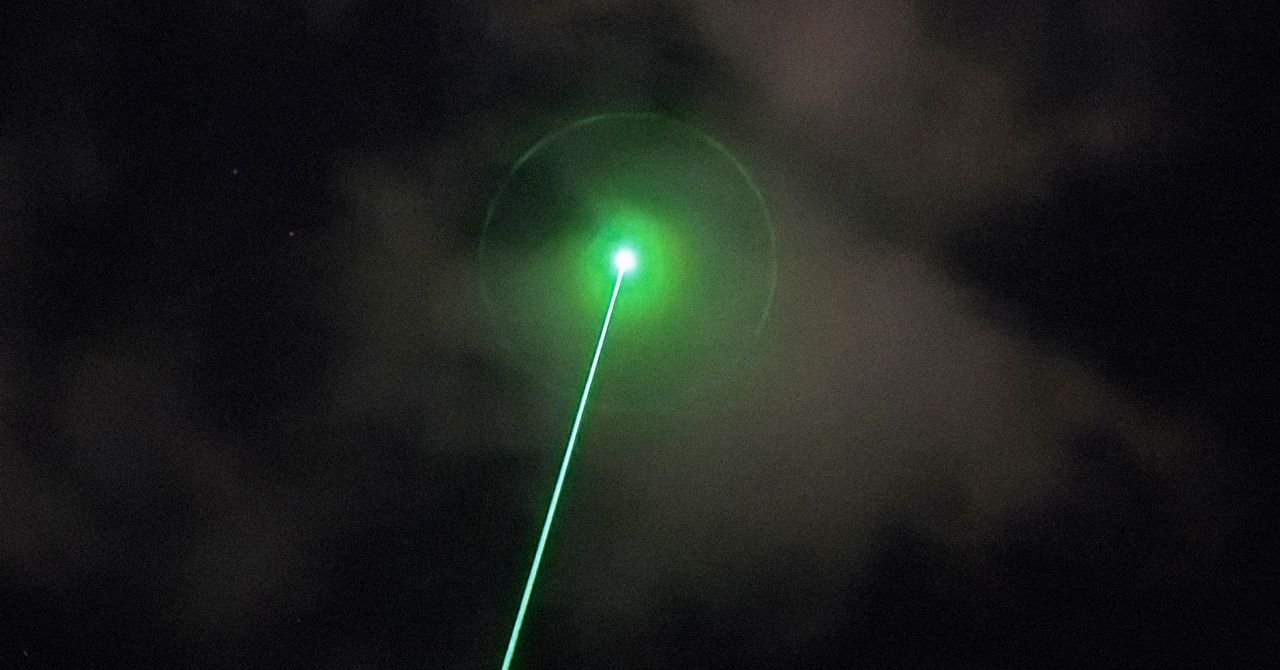
As low-cost UAV equipment proliferates around the world, analysts have repeatedly warned that destructive attacks using drones are inevitable. However, developing nimble and secure countermeasures is challenging, given that things like trying to jam or shoot down drones are difficult or even impossible to do safely in populated areas, much less densely populated cities.
In the case of the El Paso incident, the Federal Aviation Administration originally scheduled a 10-day closure of the airspace, but it was ultimately lifted after eight hours. The Trump administration initially said the move was related to potential infiltration of Mexican drug cartel drones, but The New York Times and others reported it came from FAA concerns that Customs and Border Protection officials were using Pentagon-provided anti-drone laser weapons in the area despite questions about potential threats to civilian aircraft.
CBP reportedly used laser defense equipment to shoot down the party balloon.
“The FAA probably did a very wise thing by issuing a temporary flight ban,” says Tara Wheeler, chief security officer at cybersecurity consultancy TPO Group. “From the initial 10-day period of the TFR it appears that the FAA was not provided information as to how long the laser would be used. The FAA does not want to close the airspace for longer than that.”
The FAA, the Defense Department and the Department of Homeland Security did not respond to WIRED’s requests for comment.
A White House official told The Hill on Thursday that the FAA administrator made the decision to close the airspace without notifying the White House, the Pentagon or DHS.
“The War Department and the Department of Transportation have been working together for months regarding drone infiltration operations. Last night’s action to disable a cartel drone was not a spontaneous action,” the official told The Hill in a statement. “At no point in the process of disabling these cartel drones were civilian aircraft in danger as a result of the methods used by DOW to disable the drones.”
Also on Thursday, U.S. Representatives Veronica Escobar of Texas and Gabe Vasquez of New Mexico, along with Senators Martin Heinrich and Ben Ray Luján of New Mexico, wrote to DHS Secretary Kristi Noem, Defense Secretary Pete Hegseth and Transportation Secretary Sean Duffy requesting a classified briefing on the incident.
The lawmakers wrote that they want representatives from each agency to “talk about your role, acknowledge where communication failed, and share the steps you are taking to ensure that a future crisis of this nature does not happen again.”
According to a Reuters report, the laser device used in this situation was a “LOCUST” anti-drone weapon system made by defense company AeroVironment (AV). The LOCUST system is a 20 kilowatt laser directed energy weapon, a relatively low-power device used to shoot down small drones. (AV acquired LOCUST maker Bluehalo in November 2024.)
An Army report on laser weapons testing in June said, “The recent proliferation of cheap and readily available drones has shifted the focus to short-range air defense, where lasers and high-powered microwaves offer potentially game-changing advantages.”
AV delivered two sets of LOCUST units to the U.S. Army in September and December as part of the Army Multi-Purpose High Energy Laser (AMP-HEL) Prototype Project – one of a few “directed energy efforts” that the Army Directed Energy Prototype Office plans to undertake in 2025.
<a href