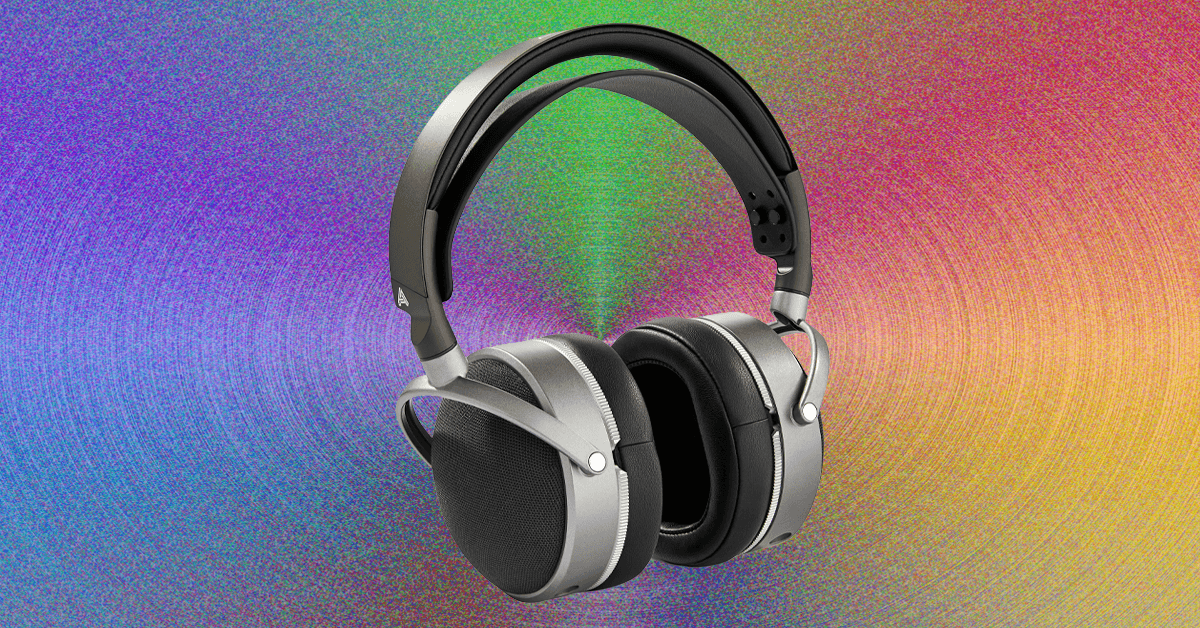
Having plenty of headphones for every life situation doesn’t have to mean spending a lot of money. Unless you’ve been successfully riding the “boomsession,” chances are that extra cash is in short supply right now. Luckily, there has been an explosion of homegrown brands focusing on affordable seats, as well as impressive budget brands making great accessories.
As an audio reviewer for over a decade, I’ve tried hundreds of models in every color of the headphone rainbow. Here’s how to buy right so you can get the most out of any and all of them, while also getting the best headphones I can think of in every category right now.
Noise-canceling earbuds: 2026 Baseline
-

-
 Review: Apple AirPods Pro 3
 -

Review: Apple AirPods Pro 3
Let’s start with a modern all-in-one option: Noise-canceling earbuds are the best option of all types. If you only want to own one pair, this is the one. The best noise-canceling earbuds sound great, fit well in your pocket, and are equally adept at letting in or blocking out environmental sounds to suit any situation.
It’s probably no surprise that the hugely popular AirPods Pro are the best headphones for iPhone owners, thanks to impressive performance, tons of features, and seamless integration with all things Apple. They’re a big step up from the standard AirPods, which offer the same Apple-friendly features and a touch of noise cancellation, but don’t perform as well as most budget earbuds.

For more phone-agnostic options, Bose’s QuietComfort Ultra 2 is the ultimate noise canceler, while Sony’s new WF-1000XM6 offers great sound and a completely natural transparency mode. Technics’ EAH AZ100 is one of my favorites for sound quality.
If they’re too expensive, don’t be afraid! Budget earbud options are diverse and abundant, ranging from Android-optimized midrangers like the Google Pixel Buds 2a to the stylish Nothing Ears (a) or the highly affordable Soundcore Space A40. If you want to own a pair, I’d put all your chips in for better performance, but there’s no shortage of great affordable options, and new pairs keep coming at all price points.
Over-ear noise-canceling: comfort as well as performance

Anyone who has taken a long flight can probably relate to the fact that having something stuck in your ears for more than five hours is not a relaxing practice. Enter travel headphones like the best noise-cancelling over-ears, which have adapted from early models like Bose’s legendary QC25 to become one of the most advanced and downright great audio products out there for your money. They’re great for other tasks too, from working in a busy office to commuting or relaxing in a quiet environment at home.

The latest and greatest, like Sony’s WH-1000XM6 and Bose’s QuietComfort Ultra, implement a host of advanced features like uncompromised noise cancellation, great comfort for long listening periods, and pauses on speaking or automatically sleeping and waking up. The Ultra is my favorite for extreme comfort, but Sonos has several rivals like the equally comfortable Ace, the iconic (and bulky) AirPods Max, or the completely immersive B&W Px7 S3. Inexpensive options abound, but some of my favorites include Sony’s high-punching WH-CH720, the extremely affordable Soundcore Life Q30, or its newer cousin, the Space One. These won’t bring the same level of performance or quiet, but they still work great for long flights and beyond.
Open Earbuds: To be alert

Soundcore by Anker
aeroclip
Here’s where things get really fun: open earbuds are exploding faster than any other audio segment in recent memory, with a kaleidoscope of options from nearly every audio brand. Designed to keep your ears open while providing satisfying sound, the best open earbuds aren’t ideal for everything you do, but they’re fantastic for specialized activities like ebike riding, where wind resistance renders the artificial transparency mode useless. Over time, I’ve found many other good use cases, ranging from walking the dog to sneaking in some Olympics at the bar.
Open earbuds come in a variety of design types, from awkward bone-conductors to wraparound models and — my personal favorite — clip-ons. Their lightweight and ergonomic housing aims to essentially disappear from your ears for all-day listening, and it works better than you might think.
You can spend a lot on pairs like Bose’s excellent Open Ultra, but you really don’t have to, as even the best models are limited in performance. Soundcore’s AeroClip is my favorite value-to-performance pair, but several cheaper options get the job done, such as Acefast’s nearly free AceFit Air or Soundpeat’s PearClip Pro. Open earbuds are easily my favorite new audio trend.
Workout Headphones: Keep Going
-Reviewer-Photo-SOURCE-Ryan-Waniata.jpg "The Best Headphones I’ve Tried (and Why I'd Buy Them All) 9")
There’s a clear Venn diagram overlap between open earbuds and workout headphones, but if you don’t like the idea of having your ears open, traditional sports models are a great alternative. My favorite modified Beats is the Powerbeats Pro 2, which offers a lot of features in a wraparound design that’s nearly unmoving. I like that they’re optimized for Apple devices, but still work well for Android, and they come with great noise cancellation and transparency modes, but they also cost more.

As with open earbuds, there are plenty of cheaper options, including the equally astute (but much more basic) Jalab Go Air Sport, which retails for just $30 or less. If you’re not interested in the minimalist thing, WIRED editor Adrienne So swears by the Blunt Pump They also feature noise cancellation and plenty of battery life of over 50 hours per charge. For jogging or cycling, open earbuds are probably a better fit, while some people only use the AirPods Pro, but it might be nice to have a dedicated pair in your gym bag.
Wired Headphones: Plug It In

Young people are happy to revive old technology that the more experienced among us have long considered dead (cassette tape?!). In the case of wired headphones, there’s good reason to plug in, starting with better performance for your money. If you’re a content creator, musician, or simply a cash-loving sound connoisseur, you can get impressive returns from wired options that avoid the sound degradation of many wireless options.
Some of our favorite affordable options include affordable and classic-looking earbuds like Shure’s iconic SE-112 and Sennheiser’s impressive IE200, and studio-friendly over-ears like Audio-Technica’s ATH-M20x. If you’re willing to spend a little more, the superb Sennheiser HD6XX offers the best sound for the money I’ve heard in any headphone segment. Based on the more expensive HD 650, these are open-back headphones that let in outdoor sound, but the performance is unreliable. If you want even better sound and design, there are Ton Of options, but they will cost you.
Fancy Headphones: Audiophile Angle
If you really want to optimize a wired connection, there’s an entire segment of audiophile headphones made with high-quality materials, innovative speaker technologies, advanced designs, and correspondingly elevated pricing. There are a whole bunch of varieties, but for the sake of brevity I’ll split them into two categories: in-ear monitors (IEMs), the fancy version of in-ear headphones, and over-ears.
IEMs typically use dynamic drivers, the traditional driver type in most headphones and speakers, balanced armatures, much smaller and more precise speakers, or a mixture of the two. My favorite pairs come from Ultimate Ears, like the UE 18+ Pro, which are customized to your ears using 3D printing and other technologies. (You may have seen these on TV for musicians and broadcasters.) Other IEMs we like include Sennheiser’s IE 900 and models from Campfire Audio.

For over-ear headphones, Audeze’s planar magnetic headphones are among my favorites, with the excellent LCD-S20 closed-back headphones starting at $500 (yes, I know). Another incredible pair I’ve recently tested is the Maze Poet, which is not only the most beautiful looking pair I’ve reviewed, but also offers the clearest and most articulate sound I’ve heard. There are dozens more to try, as audiophilia is its own journey, but this is a good starting point. We recently reviewed the Grado Signature S750, which have effortlessly detailed sound that feels like it couldn’t possibly be coming from mere centimeters away from your ears.
Other headphone types and upcoming features


steel series
Arctis Nova 3P Wireless
As I’m sure some of you have already noted, there are still a variety of specialized headphones, including gaming headsets, which are another beast entirely, and even TV headphones, which quickly convert from the screen’s internal speakers so you can listen in silence without delay. I’m currently testing a new TV headphone bundle from Sennheiser, the RS275, which includes a dedicated pair of headphones in the HDR275 and Sennheiser’s new BTA1 Auracast transmitter (verdict to come).
Speaking of Auracast, it is a rapidly growing new type of Bluetooth protocol that allows an infinite number of devices to connect up to 100 meters, just like an FM radio signal. Its implementation is still in its early stages, but it’s a nice feature to see in new headphones. Other features worth considering include an app with EQ and presets (which includes most of my recommendations), multipoint pairing for connecting to two or more devices simultaneously (again, pretty ubiquitous), and spatial audio features for video formats like Dolby Atmos.
<a href