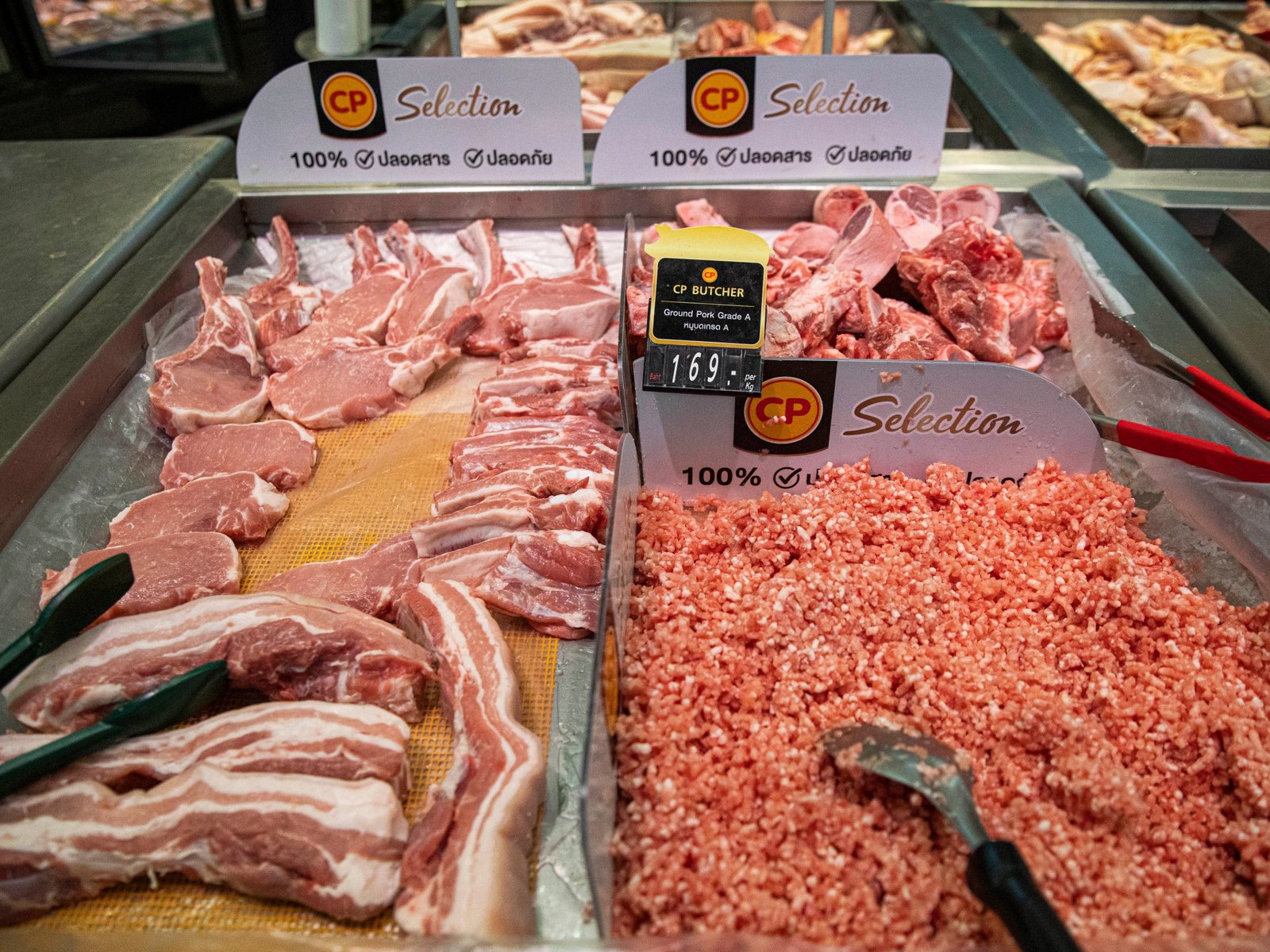
But the $3 billion market – supplied almost entirely by domestic pig farmers – may face competition like never before from giant pig farms in the United States, the world’s third-largest producer.
Recommended Stories
4 item listend of list
Although the specifics of the Thai government’s initial trade agreement with the US have not yet been revealed, some details have emerged.
Washington has a 10,000-item-long wish list of goods it wants to enter duty-free into Thailand to reduce its $45.5 billion trade deficit with the Southeast Asian country, an imbalance President Donald Trump says unfairly harms American producers.
The list includes pork, corn, soybeans and some fruits.
Trump met Thailand’s acting prime minister, Anutin Charnvirakul, on the sidelines of the Association of Southeast Asian Nations (ASEAN) summit in Malaysia last month, soon after the White House unveiled several aspects of its trade deal, which set a 19 percent tariff rate for the kingdom’s exports to the US.
According to the White House, these include Thailand agreeing to “remove and prevent barriers to US food and agricultural products entering the Thai market”, and a commitment to “accelerate access” for US meat and poultry products.
That has alarmed Thailand’s pig farmers, who say the industry can’t survive a flood of cheap, subsidized American pork, which is based on ractopamine, a livestock additive banned in many countries, including the kingdom.

According to Worawut Siripun, deputy secretary general of the Swine Raisers Association of Thailand, nothing less than the kingdom’s food security is at stake if American pork is allowed into Thailand without duty.
“Producers will not be able to survive and will stop raising pigs. But the risk is not just for farms that are facing falling pig prices,” Worawut, who has about 10,000 pigs, told Al Jazeera.
“People who grow feed crops are also affected, as well as animal feed traders, animal feed producers and veterinary medicine sellers. Everyone in the production cycle is affected.”
Trump held trade talks with the Thailand contingent in Bangkok ahead of the signing of an expanded ceasefire agreement with Cambodia.
But in the weeks since Anutin met, Thailand has suspended ceasefire talks over alleged Cambodian violations of the agreement’s terms.
While there are conflicting signs on whether tensions with Cambodia have put trade talks with Thailand’s biggest export destination on the backburner, farmers and livestock companies are bracing for intense competition.
Thailand’s pork industry has faced challenges ranging from swine flu outbreaks to illegal imports from China and Vietnam.
But it faces higher costs, mainly as a result of government price controls on corn and soy used to feed pigs and other livestock — a measure meant to protect the country’s crop farmers, a key voting group.
And like most agricultural producers in Thailand, the country’s pig farmers operate on thin margins.

“Both imported and locally produced feed ingredients in Thailand are more expensive than in the US, where feed is cheaper,” Worawut said.
Corn and other feed farmers are also bracing for tough times.
Thailand announced earlier this month it would raise its annual maize import limit from about 50,000 tonnes to 1 million tonnes, and eliminate a 20 percent tariff to appease Washington.
Prime Minister Anutin is likely to dissolve parliament and set a date for new elections in the coming weeks.
He is trying to return to office, defying critics who say he has given too much to Washington even before the sweeping trade deal has been signed.
Trump officials have already announced preferential access to Thailand’s rare earths, the sale of billions of dollars of American-made aircraft and a promise that Bangkok will not tax American digital services companies.
Anutin’s bargaining position has weakened due to difficult economic conditions.

On Monday, the Office of the National Economic and Social Development Council cut its economic growth forecast for 2026 to 1.2 percent, below the 2 percent expansion expected this year — the weakest performance so far among Southeast Asia’s major economies.
Amid the threat of a third round of trade talks with the US following the suspension of the Thailand-Cambodia peace deal, the main political opposition has called on the government to halt talks and consult with local stakeholders.
“This is an important moment,” said Werayut Karanchuchat, deputy leader of Thailand’s largest opposition People’s Party in parliament.
“The commerce minister has said the talks will conclude by the end of 2025. That will take about two months. The government should hold eight weeks of hearings from stakeholders… particularly groups directly affected, such as corn farmers.”
Thailand should take stock and assess whether regional partners with full US trade deals, including Cambodia, Vietnam and Malaysia, are happy with the results and “whether Thailand is offering too much”, he said.
For many medium-sized businesses, Trump’s return and his trade war have made for a difficult year, reducing demand across countless supply chains in the US.
Orders inside Thailand are falling for everything from lightbulbs to electrical wires needed to run factories that export to the US.
Durian farmer and middleman Tipok Lertwattanaweerakul said he has seen his profit margins shrink.
Saudi Arabian buyers who sell durians to customers in the US were Lertwattanawirakul’s main source of business, but after the Arab country imposed a 10 per cent tariff, “they are no longer buying from me at all,” he told Al Jazeera.
<a href