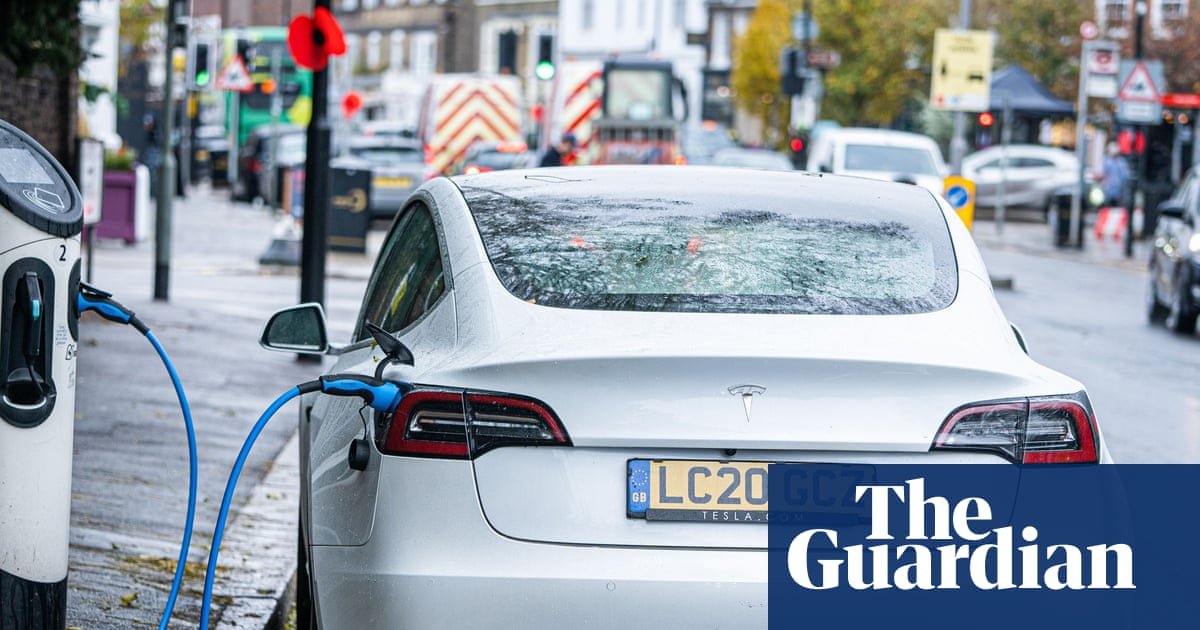
According to newly revealed documents, Tesla privately warned the UK government that weakening electric vehicle rules would hurt battery car sales and put the country at risk of missing its carbon dioxide targets.
The US electric car maker run by Elon Musk had also called for “support for the used car market”, according to a presentation of a government consultation earlier this year by Fast Charge, a newspaper covering electric cars.
The Labor government in April worried some electric car makers by weakening rules known as the zero-emission vehicle (ZEV) mandate. EV sales increased every year due to the mandate, but new loopholes allowed carmakers to sell more gasoline and diesel cars.
Critics have said new taxes on electric cars in last week’s budget could further reduce demand.
Carmakers including BMW, Jaguar Land Rover, Nissan and Toyota – all of which have factories in the UK – claimed in their submission to the consultation in the spring that the mandate was hurting investment, because they were selling electric cars at a loss. However, environmental campaigners and brands that mainly manufacture electric vehicles said the rules are having the intended effect, and it does not appear any carmakers will face fines for sales in 2024.
Tesla argued that it was “essential” to electric car sales that the government not introduce new loopholes, known as “flexibility”.
The changes “will suppress battery electric vehicle (BEV) supply, have significant emissions impacts and risk the UK losing its carbon budget”, Tesla said.
The Budget further worried carmakers with Chancellor Rachel Reeves’ promise to impose a “pay-per-mile” charge on electric cars from 2028, which is likely to reduce their attractiveness relative to more polluting petrol and diesel models. Additionally, he announced increased funding for new electric cars, which the sector has welcomed.
Tom Riley, author of Fast Charge, said: “Just as the EV transition looked to be settling, the Budget pulled it in two directions at once – effectively robbing Peter to pay Paul. If carmakers push again for softer mandates, Labor will have only themselves to blame if climate targets slip.”
Tesla, Mercedes-Benz and Ford objected to sharing their responses, and they were only obtained upon appeal under freedom of information laws. Several pages were heavily edited, including one showing on the left side of a headline that Tesla called for “support for the used car market.” Tesla declined to comment on whether that support would include grants.
In contrast, US carmakers Ford and Germany’s Mercedes-Benz lobbied against more stringent rules after 2030, which would force them to further cut average carbon dioxide emissions – potentially allowing them to sell more polluting vehicles in the long run.
After newsletter promotion
Ford strongly criticized European governments for withdrawing support for electric car sales, saying that “policy makers in many European jurisdictions have not kept their side of the deal”. Ford has made a U-turn after previously supporting strong targets.
The US carmaker also pointed to the danger of being undercut by Chinese manufacturers who “don’t have access to the UK and benefit from a lower cost base”.
Mercedes-Benz argued that the UK should reduce VAT on public charging from 20% to 5%, in line with household electricity, and said it should consider a price cap on public charging rates.
Tesla also called for a ban on the sale of plug-in hybrid electric vehicles with a battery-range of less than 100 miles after 2030 — a limit that would have ruled out many of the best-selling models in that category.
Ford, Mercedes-Benz and Tesla declined to comment further.
<a href