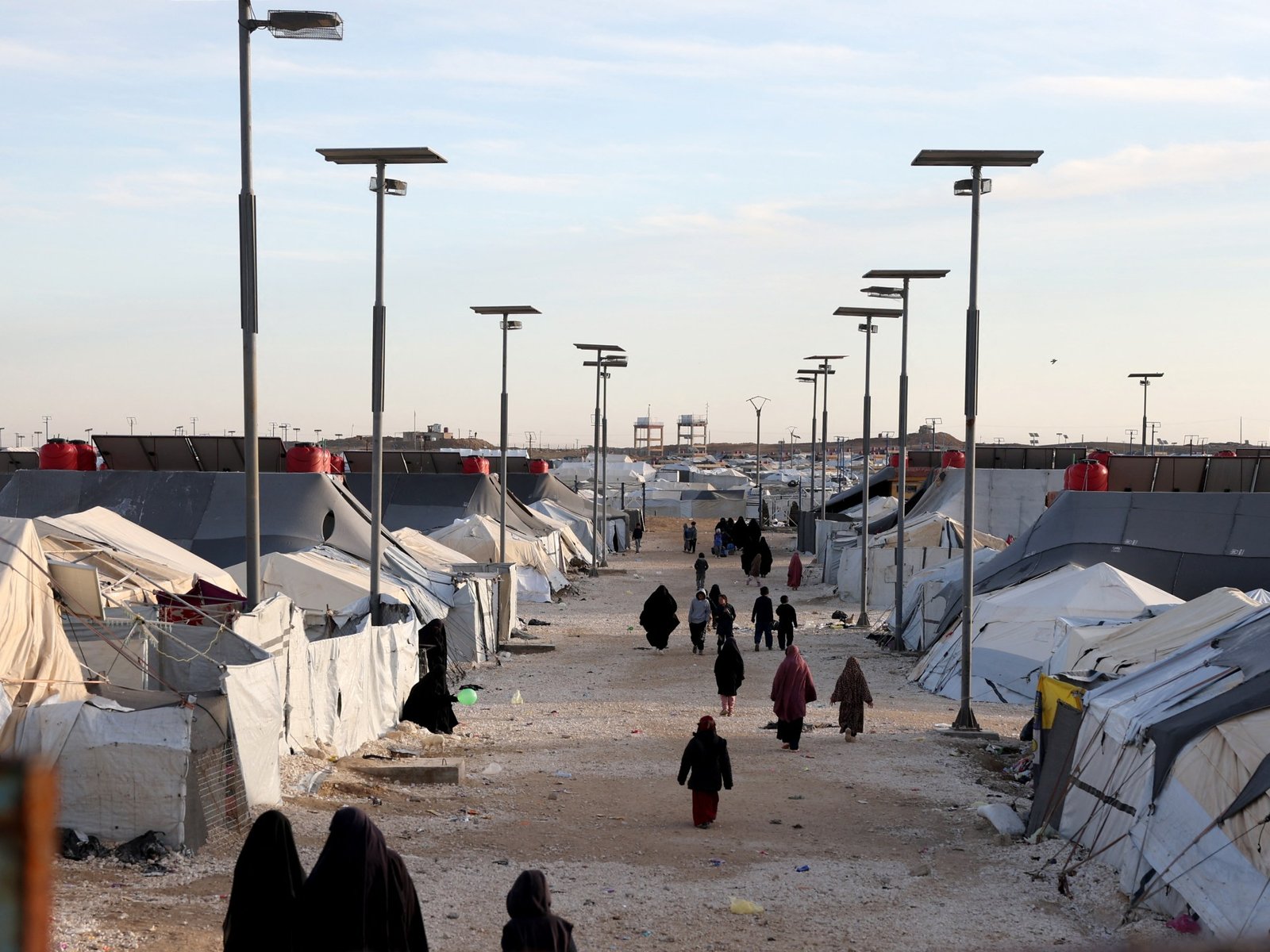
Official Fadi al-Qassim says all residents have left al-Hol camp, which long housed relatives of alleged ISIL (ISIS) members.
Syrian authorities say they have completely evacuated and closed a remote camp that once held thousands of relatives of alleged members of the armed group ISIL (ISIS).
The last residents were evacuated in a convoy on Sunday morning, according to Fadi al-Qassim, the Syrian government official who oversees the camp.
Recommended Stories
4 item listend of list
“All Syrian and non-Syrian families were relocated,” al-Qassim told Agence France-Presse.
Al-Hol, located in a desert area in the northeastern Hasakah province, had long been home to a large number of relatives of suspected ISIL fighters.
At its peak in 2019, the camp housed approximately 73,000 people. Last month, there were about 24,000 residents, mostly Syrians, but also Iraqis and more than 6,000 other foreigners of about 40 nationalities.
While the camp’s residents were not technically prisoners and most were not charged with crimes, they were held in de facto detention in a heavily guarded facility for years.
Last month, the Syrian government took control of the camp from Kurdish authorities, as Damascus expanded its reach into northeastern Syria.
Since then, thousands of its detainees, including family members of suspected ISIL members, have fled to undisclosed locations. Hundreds have been deported to Akhtarin camp in Aleppo province, while others have been deported back to Iraq.
The Syrian Observatory for Human Rights, a United Kingdom-based war monitor, reported that an unspecified number of residents “left the camp individually, without waiting for organized convoys”. Sources on the ground told Al Jazeera that many Syrian civilians left al-Hol for their hometowns, while many foreigners traveled west to government strongholds in Idlib or Aleppo Governorate.
Al-Qassim said the residents who have been relocated are children and women who “will need support for their reintegration”.

The future of the small Rose camp in northeastern Syria, which also houses relatives of alleged ISIL members but is under the control of the Kurdish-led Syrian Democratic Forces (SDF), still remains to be seen.
Most of its residents are foreigners whose home countries have largely refused to receive them.
Syrian authorities turned back buses carrying 34 Australian women and children on 16 February as they left the Rose camp and headed towards Damascus with plans to cross to Australia. Australian authorities later said they would not repatriate the families.
Australian Prime Minister Anthony Albanese clarified his country’s stance, saying, “Clearly, we have no sympathy for those who traveled abroad to take part in an effort to establish a caliphate to undermine and destroy our way of life.”
Albanese said while it was “unfortunate” that children were affected, Australia was “not providing any assistance”.
<a href