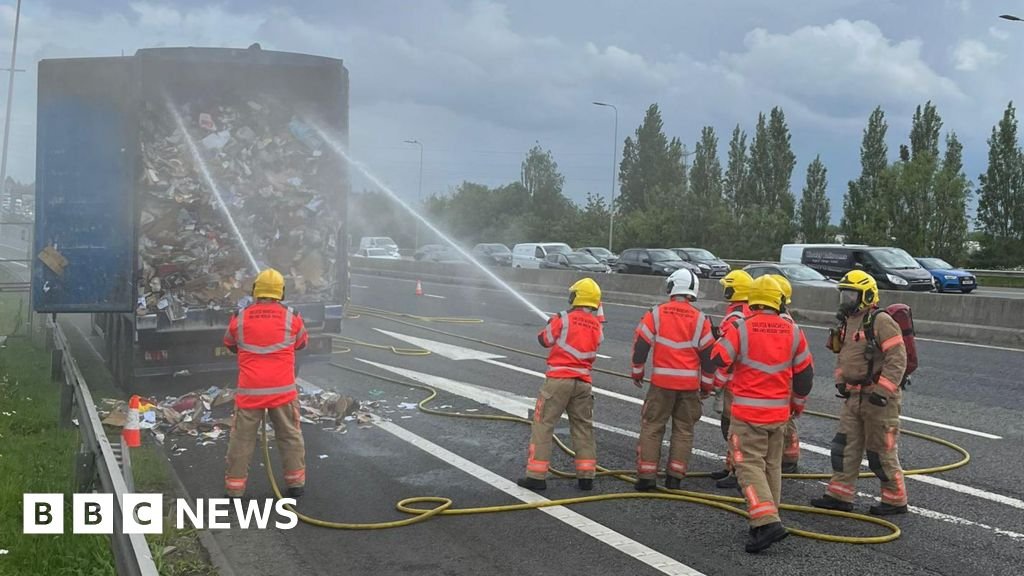
A major waste firm has warned that incorrectly discarded vapes are still causing fires in its garbage trucks and waste facilities six months after a ban on disposable vapes was introduced.
Suez, which runs more than 300 waste management sites across the UK, said it had seen 339 fires this year, more than one a day, putting staff at risk and causing millions of pounds in damage.
Vapes contain lithium batteries that can catch fire if crushed or damaged in the waste stream.
The Independent British Vape Trade Association (IBVTA) said the number of vapes sold had halved since the ban, but called for more consumer education about disposing of them responsibly.
A ban on disposable vapes in the UK came into effect on June 1, with the aim of curbing sales to children and reducing the number of devices being littered or misappropriated.
“Vapes are still a very common sight being tossed on the street, in bins and at recycling centers across the country,” said Adam Reed, chief sustainability and external affairs officer at Suez, which handles waste for 50 local councils.
“The ban was an important first step, but the reality is that it has proven to be a sticky solution to the mountain of vapes that end up in our trash every day.”
Vapes should not be put in general waste or recycling, but rather disposed of in special recycling bins that can be found in stores or recycling centers.
But Swayze and Biffa said people are still treating reusable vapes as disposable, and discarding them after one or two uses.
In September, fellow waste firm Biffa warned that despite the ban having been in place for three months at the time, it was seeing more vapes being misplaced than ever before, leading to more fires.
Some manufacturers offer products that look similar to the most popular disposable vape models, come in similar packets, and sell at similar prices.
But because they have a recharging port and a replaceable tank for nicotine-containing liquid, they count as reusable and can still be sold legally.
Additionally, single-use vapes are still being sold illegally, contributing to the waste problem. Last month the government announced a crackdown on retailers selling illegal vapes, threatening £10,000 fines and jail terms.
Swayze called for a more ambitious plan to tackle the fire risks and environmental damage from cheap throwaway vapes, such as a nationwide recycling scheme paid for by producers.
IBVTA President Marcus Saxton said 7.2 million rechargeable and refillable devices were sold in October, compared with 16.2 million single-use vapes per month last year before the ban, according to Nielsen IQ data.
It added that it “commends this action, but equally recognizes the continued need for consumer education on how to responsibly recycle single-use devices purchased prior to the ban, as well as refillable devices that have reached the end of their life”.
Doncaster Council now offers kerbside collection for vapes and household batteries, making it easier for residents to recycle them, and reducing the number of them being thrown away incorrectly.
A government spokesperson said: “Single-use vapes get children addicted to nicotine and ruin our high streets – which is why we have taken tough action and banned them.
“We are working with Trading Standards and local authorities to enforce the ban and have made it mandatory for all vape retailers to provide recycling bins, with 10,500 takeback bins introduced in UK stores since April.”
<a href