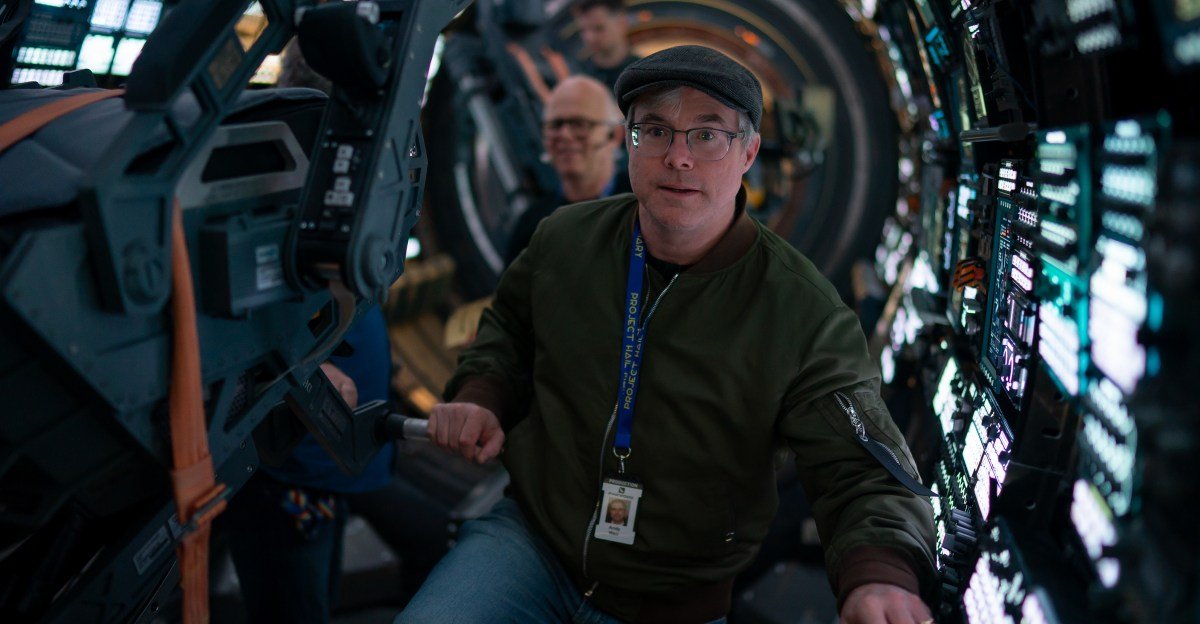
Andy Weir has done very well when it comes to adaptation. His first novel, MartianAdapted into a film in 2015 and directed by Ridley Scott, the picture grossed over $600 million at the box office. And Project Hail Mary Just had a huge opening weekend that puts it on track to become one of the biggest movies of the year. However, despite that success, Weir told me he does his best to keep the idea of adaptation out of his mind when he starts a new novel. “I try not to think about it at all,” he explains.
According to Weir, this is because the two mediums are completely different. This is something she has learned over the past decade, especially when it comes to Project Hail Maryon which Weir served as producer. “I was deeply involved in every aspect of the production,” he explains. “I was there for shooting, principal photography, I was involved in casting and choosing directors, post-production and editing. I had to give notes on everything. The main reason I’m a producer is because of the way my contract is structured, but for the most part I tried to stay out of the way of actual producers who knew what they were doing.”
That role gave him more insight into how films are made Martian“They just gave me the money and told me to go away,” he says – but he says his experience with both films hasn’t changed how he views his writing process.
Here’s how he explained it to me:
When I’m writing a book – and I give this advice to all writers – I don’t think about film adaptations. If you want to write a movie, write a screenplay. But if you want to write a book, write a book. And you should focus on the readers’ experience when they’re reading your book. You shouldn’t limit yourself to just what will make a good cinematic film. You need to focus on what makes a good literary book. Because there are a lot of things you can do in books that you can’t do in movies, and vice versa, so you should take advantage of your much larger canvas and flexibility with the written word. Just use all those tools instead of limiting yourself to basically writing a novelization of a movie that you have in your mind.
“He has these amazing big, cinematic ideas,” says Goddard. “He has an amazing sense of plot. For me personally, it’s the soul of his writing that really drives it. It’s easy to overlook because his ideas were so big, and the hard science is so front and center, I think people think that’s the key to his success. But for me, I love that he’s writing about these deep topics about humanity. He’ll say that He’s not just trying to have a good time. I see these beautiful things that he’s writing and I think my job is to bring that soul out and bring that soul to the screen.”
And this is what helped Goddard overcome his initial fear Project Hail Mary‘s script. “I knew we had to try because I loved this book so much,” he says.
<a href