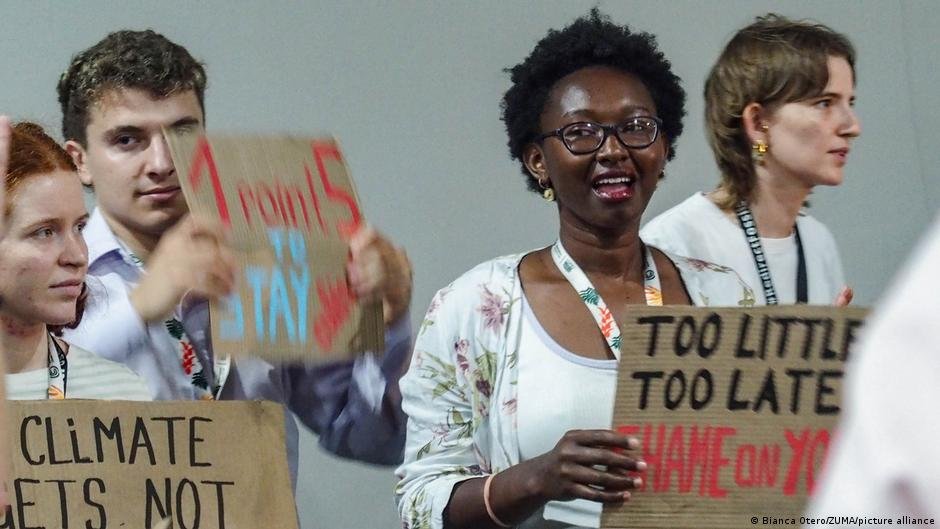
To slow planetary warming caused by the burning of oil, coal and gas and devastating storms, floods, droughts and heat waves, countries have set a number as the holy grail.
They agreed to try to limit the rise in global average temperatures to 1.5 degrees Celsius (which is equivalent to 2.7 Fahrenheit) above pre-industrial levels. If they fail in that target, they pledged to limit the rise to a maximum of 2C (3.6F).
These differences may seem so insignificant that they are not worth mentioning, but as scientists regularly point out, they are important.
Just as small increases in body temperature can make humans feel ill, excess heat in the atmosphere affects the planet. This intensifies the strength and likelihood of extreme weather events that affect everything from the cost of food, home insurance policies, migration, human health and water security.
Yet in the decade since the Paris climate accord was agreed, most countries have continued to burn fossil fuels and emit greenhouse gases like CO2, which are causing the planet to warm. And, in turn, that means other big numbers are also up for discussion.
What does 1.5 degrees Celsius mean?
The number 1.5 is not random. There were obvious reasons for attempting to prevent temperatures from rising above that limit. The warmer the world becomes, the more people are exposed to deadly heat, and the more nations are at risk from sea level rise. Similarly, the risk of ecosystem collapse is high. For example, the risk of irreversible damage to marine and coastal ecosystems becomes very high if 1.5C is exceeded.
A report published last month by the scientific initiative World Weather Attribution and US research organization Climate Central found that since the 2015 Paris Agreement, the world has warmed 0.3C. Even a seemingly small increase translates into an additional 11 hot days per year.
Scientists and experts now broadly agree that the 1.5C target is out of reach. “At least temporarily,” according to recent UN research, which says the only way to get back on track by 2100 would be to cut emissions by more than 55% within the next 15 years. This will require radical and rapid reductions in greenhouse gases.
What does 2 degrees Celsius mean?
Scientists, and later politicians, had been talking about keeping temperature rise well below 2C for years before the target was set in the Paris Agreement because the target would have to be met if countries missed the 1.5C mark.
Here too, no matter how close the numbers may seem, they are linked to very different realities. According to the research organisation, the World Resources Institute, while 1.5C of warming would leave 14% of the global population vulnerable to severe heat, an additional 2C would affect more than a third of all people. And at 2C of warming, 800 million to 3 billion people worldwide will experience long-term water scarcity due to drought.
According to the latest UN emissions gap report, emissions in 2030 would need to be reduced by 25% from 2019 levels to keep the world on the 2C pathway.
Sarah Heck, an analyst at Climate Analytics, a non-profit science and policy institute, says an additional 2 degrees Celsius of warming in the atmosphere would lead to an ice-free summer at least once a decade in the Arctic, while a 1.5 degree scenario would lead to a once-a-century warming.
Melting ice not only raises sea levels, but also threatens coastal communities, low-lying islands and wildlife. Melting of permafrost releases methane, a trapped and powerful greenhouse gas, which causes even more warming.
What does 2.6 degrees Celsius mean?
Despite the targets set in the Paris Agreement, the latest global temperature update from the independent monitoring service Climate Action Tracker shows that under current policies of cutting emissions, the world will warm by about 2.6C by 2100.
This level of warming could cause marine ecosystems to collapse and lead to dramatic increases in extreme weather such as intense drought and rainfall. It also increases the likelihood of causing catastrophic and, in some cases, irreversible climate “tipping points,” such as major loss of ice sheets and the retreat of mountain glaciers on which billions of people depend for freshwater.
Extreme weather reached new heights in 2024, which was the hottest year on record. Wildfires ravaged the US, heat waves hit India and many other parts of the world, and Super Typhoon Yagi devastated Southeast Asia.
World Weather Attribution says climate change contributed to the displacement of millions of people and at least 3,700 deaths in 2024.
Climate scientist and communicator Adam Levy, who says 2.6C will be difficult for humans to cope with and adapt to, is calling on everyone to remember another number.
“The world will continue to warm as long as we keep adding carbon dioxide to the atmosphere. So with all the temperature limits, with all the targets that are happening, zero is the number we should always keep in our minds,” Levy said.
Edited by: Tamsin Walker
<a href