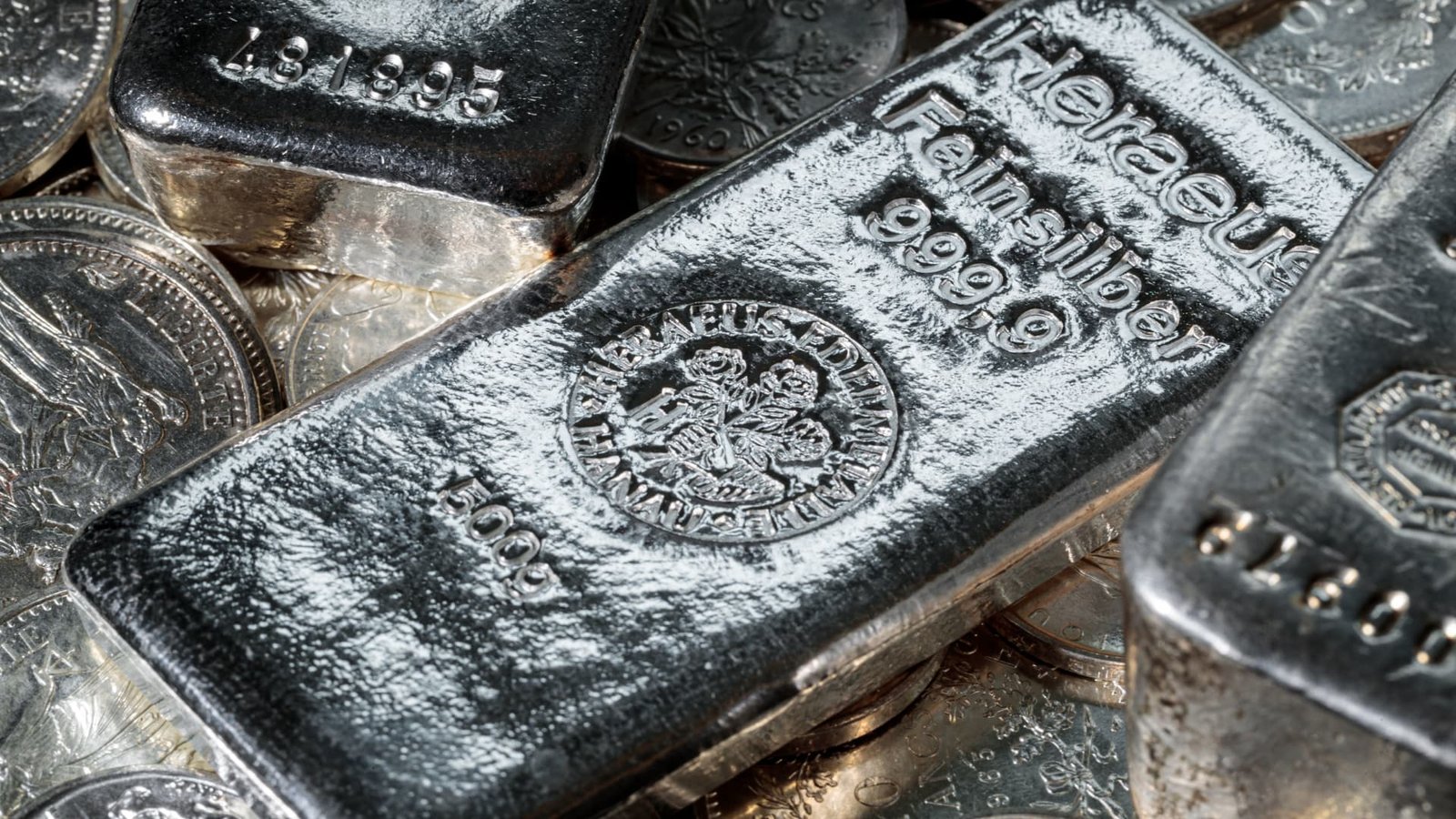
The metal’s growth in value has been in step with gold, which has seen its price rise to $4,000 an ounce this year.
Silver prices reached an all-time high of $54.47 per troy ounce in mid-October, representing a 71% increase year-over-year. Their profits have declined somewhat since then, but are now rising again despite low supply levels.
“Some people are having to transport silver by plane instead of cargo ships to meet delivery demand,” Paul Sims, head of EMEA ETF fixed income and commodity product management at Invesco, told CNBC.
“While we have seen an uptick, we have also seen a slight decline in prices. Over the longer term, there is a different dynamic this time that could keep silver prices reasonably high and probably keep rising for some time to come,” he said.
October was only the third time in the last 50 years that silver prices peaked. Other silver price spikes include January 1980, when the Hunt brothers amassed a third of the world’s supply in an attempt to corner the market, as well as 2011 following the US debt ceiling crisis when silver and gold were adopted as safe haven assets.

Silver prices year-to-date
“Silver is only one-tenth the size of the gold market, and that small decline obviously took some investors by surprise,” Sims said.
Unlike previous investment waves, the silver rally in 2025 was dependent on a mix of lower supply and higher demand from India, as well as industrial needs and tariffs.
“After Liberation Day, the price of gold went up, but silver actually went down a little bit. And the gold-silver ratio went over 100,” Sims said, referring to the gold-silver ratio.
A low ratio means that gold is relatively cheap, while a high ratio indicates that silver is undervalued and likely to rise. This ratio reached a historic high in April.
Rona O’Connell, head of market analysis EMEA and Asia at Stone

Autumn quickly approached and silver recorded its peak demand, especially as India’s monsoon and harvest season ended.
“Farmers don’t really like banks very much, so when they get a harvest gold, and later silver, are the first port of call,” O’Connell said.
India is also the largest consumer of silver in the world, with about 4,000 metric tonnes of silver used every year, mostly for jewellery, utensils and jewellery.
The silver attraction this autumn also coincides with Diwali, a five-day ‘festival of lights’ celebrating prosperity and good fortune and also India’s biggest public holiday.
supply shortage
While gold is traditionally the favourite, this year silver – an affordable investment option in a country where about 55% of the population depends on agriculture for their livelihood – outperformed other metals.
On October 17, the price of silver in India rose sharply, reaching a record high of Rs 170,415 per kg – an increase of 85% since the beginning of the year.
However, 80% of India’s silver supply is imported. The UAE and China are increasingly supporting that demand, but Britain has traditionally been India’s largest silver supplier.
Nevertheless, London’s coffers have been rapidly emptying over the past few years. The London Bullion Market Association held 31,023 metric tons of silver in June 2022. By March 2025, volumes had fallen by nearly a third to 22,126 metric tons – its lowest point in years.
“People don’t necessarily see what’s going on in the safes,” O’Connell said. “And it got to the point where there was basically no available metal left in London.”
In October, the pressure was such that traders had to pay very high borrowing costs – or lease rates – to close out their positions.
“At one time, the cost of overnight borrowing was up 200% on an annual basis, so a lot of people were very stressed, to put it mildly,” O’Connell said.
Like other precious and rare metals, supply is a constant issue for silver. The Silver Institute’s 2025 World Silver Survey estimates that mine production has been declining over the past 10 years, particularly in Central and South America.
“During the past twelve months, the underlying surplus has begun to turn into a deficit for three reasons: the electrification of vehicle fleets, the impact of artificial intelligence and photovoltaics,” O’Connell said.
“Right now, a standard electric vehicle has about 25 grams of silver, maybe larger EVs have 50 grams of silver as part of their components,” Sims said.
“If we move to these solid-state silver batteries, each electric vehicle could require a kilo or more of silver,” he said.
And with silver having higher thermal conductivity and higher electrical conductivity than other metals, coupled with growing demand for EVs, AI and renewable energy, the metal’s value is likely to continue to shine.
“Silver straddles the bridge between precious and industrial metals, and the way technology is going, batteries, solar panels, it’s got some great use cases as we move into a more electrified world,” Sims said.
<a href=