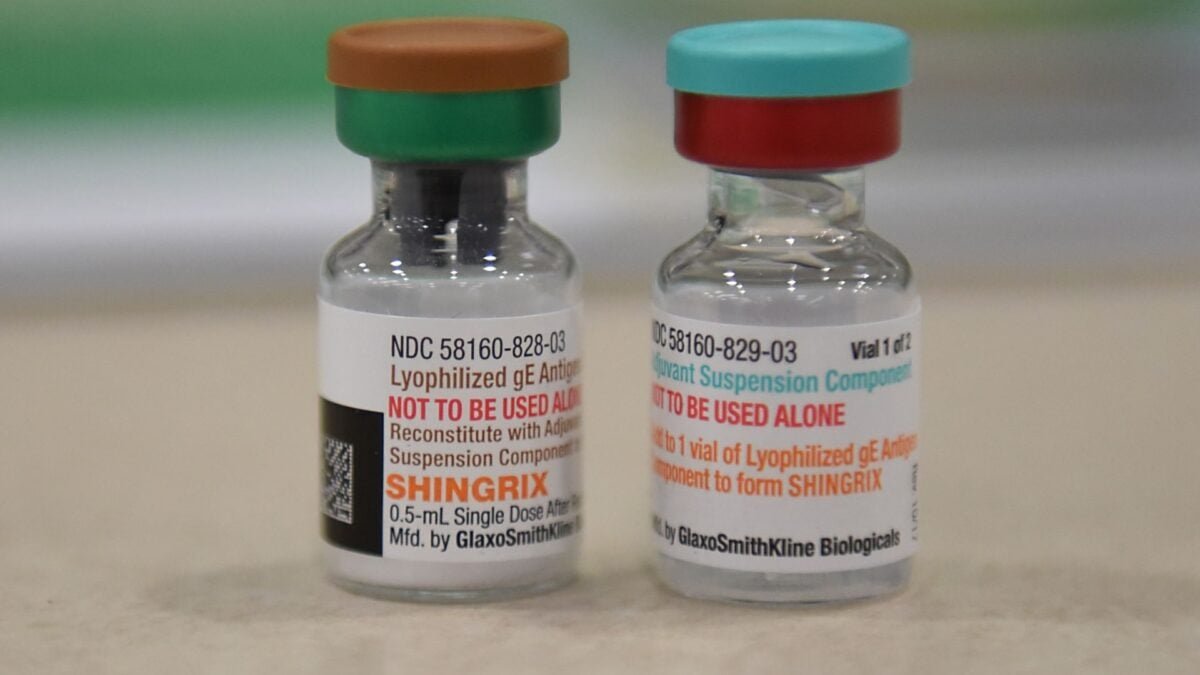

Scientists at Stanford University and others investigated what happened after shingles vaccination began in the country of Wales a decade ago. They found evidence that the shingles vaccine not only reduced people’s risk of developing dementia, but also reduced the chance of dying from it if they had dementia. Researchers say boosting your immunity to shingles could have a broad protective effect against cognitive decline.
“This study suggests that [shingles] “Vaccination slows or stops disease progression across the entire disease course of dementia,” they wrote in their paper published Tuesday in Cell.
a natural experiment
Several studies in recent years have shown that shingles vaccination has benefits beyond preventing the painful viral disease. But researchers say their approach has allowed them to look at a natural experiment that took place in Wales in 2013. That autumn, the vaccination program officially began in the country, with clear age restrictions. People born on or after September 2, 1933 (ages 80 and younger) were eligible for the shingles vaccine for at least one year, while people born before that were not.
These cut-offs (and the UK’s robust record-keeping) meant that researchers could easily track dementia rates among the same groups of older people just before and after the vaccine became available, with the non-eligible group acting as a kind of control. In a study published this April, researchers found that vaccinated people were 20% less likely to be diagnosed with dementia over a seven-year period.
However, this time, they were interested in seeing whether the vaccine was associated with better outcomes at different stages of dementia.
Using the same method, they found that vaccinated people were less likely to develop mild cognitive impairment (MCI), the earliest possible stage of dementia (although many people with dementia will experience MCI first, not all people with MCI will develop full-blown dementia). And among diagnosed dementia cases, those who were vaccinated against shingles were less likely to eventually die as a result of their condition.
“This means that the vaccine has not just preventive potential, but actually therapeutic potential as a treatment, because we already see some benefits in people who have dementia,” Pascal Geldsetzer, assistant professor of medicine at Stanford and senior study author, told CNN. “For me, it was really exciting and unexpected to see.”
already meaningful commentary
These findings still cannot definitively prove that the shingles vaccine can affect dementia outcomes. That said, the team’s unique methodology overcomes many of the limitations of observational studies. And taken overall, there is increasing evidence that the health benefits of the shingles vaccine are greater than we initially thought.
For example, last October, a study found that people who were vaccinated against shingles were also less likely to develop heart disease and stroke; They were also less likely to die early than unvaccinated individuals.
Shingles is one of the most painful experiences a person can have. And this vaccine is universally recommended for every American starting at age 50. So there’s already a lot of incentive to get your shots (it’s a two-dose vaccine). Lowering the risk of brain and heart disease also appears to be a big bonus.
<a href