Where can there be tornadoes, wind, hail this week
Another severe weather outbreak, including the threat of severe tornadoes, is once again forecast for parts of the South, Midwest and East, including areas that are still recovering from last weekend’s devastating storms.
The National Weather Service has already confirmed at least 18 tornadoes from Texas to Michigan from last Thursday through Saturday. This included four deadly tornadoes, two each in Michigan and Oklahoma.
The map below shows where current watches and warnings are in effect.

Here’s our latest daily forecast for this week’s second chapter of severe weather.
Tuesday
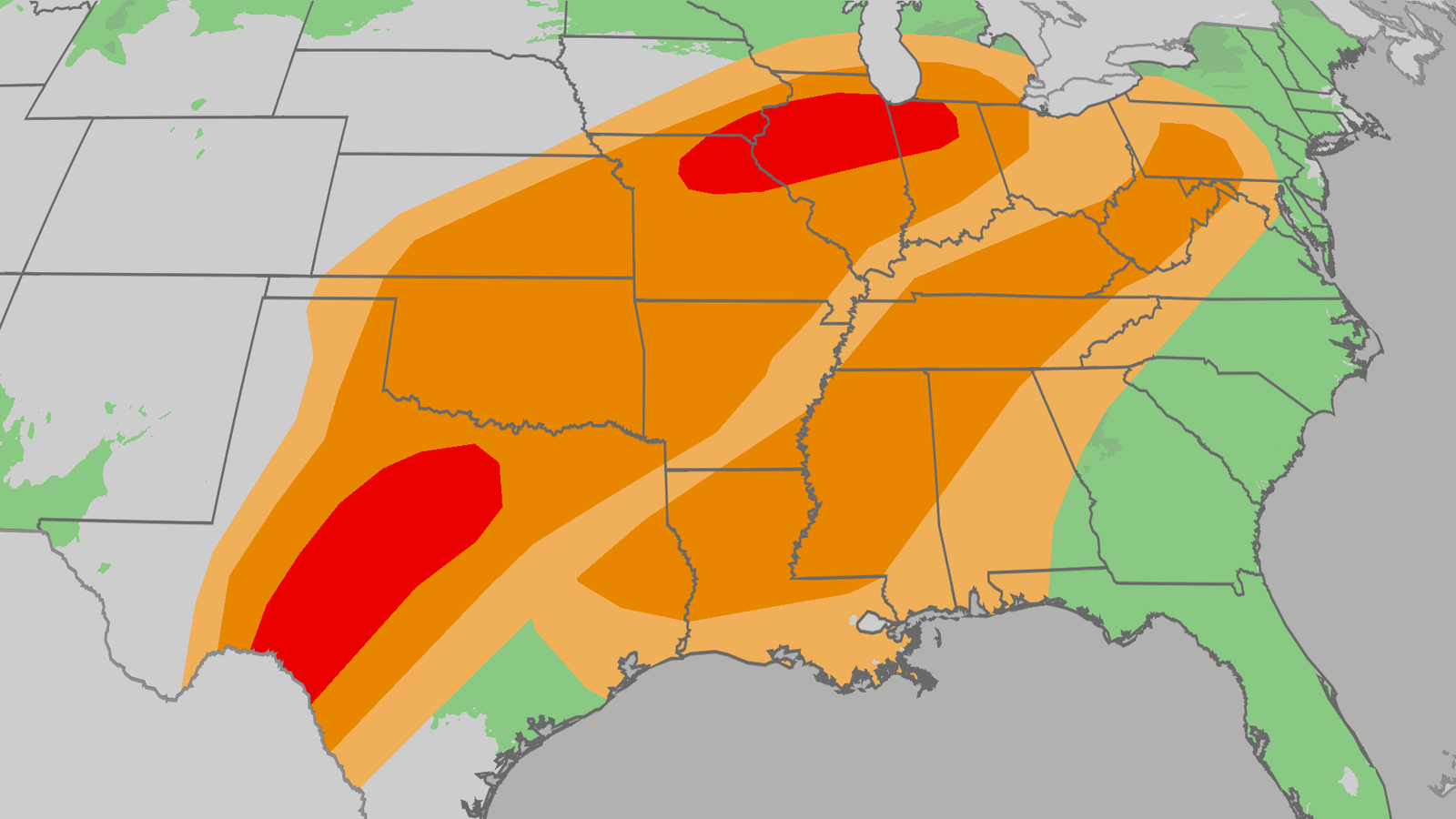
After a brief warming of the area on Monday, the risk of tornadoes is highest across Texas and parts of the Midwest Tuesday afternoon and evening. The Storm Prediction Center has raised the risk of severe storms to a rating of 3 out of 5, extending from northwestern Missouri to northern Indiana. On Monday afternoon, they also upgraded Central Texas to an elevated risk.
Starting in the southern Plains, we expect severe storms Tuesday afternoon, where hail larger than golf balls, winds gusts in excess of 74 mph and tornadoes, some of which could be EF2 or greater, are possible. The biggest danger for all this is in Texas.
By the late afternoon or early evening, severe storms are expected across parts of the Mississippi Valley and western Great Lakes, especially from Missouri and southeast Iowa to Illinois, northern Indiana, and southern Michigan. Tornadoes, some of which may be at least EF2 intensity, large hail over 2 inches in diameter and damaging wind gusts are possible.
This severe threat could last overnight for locations from the western Great Lakes to Texas. There will also be a danger of flood and rain at the local level.

Wednesday
We expect morning thunderstorms from the eastern Great Lakes and Ohio Valley to eastern Texas.
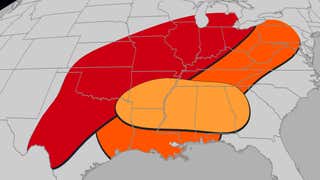
In general, Wednesday’s primary severe threat will be damaging storm wind gusts from the Appalachians and parts of the interior Northeast to East Texas.
But locally heavy rainfall as well as a few tornadoes are still possible.
Thunderstorms, some of which could be severe, will continue into the night across the Southeast from the Tennessee Valley to the northern Gulf Coast.

At least a few severe storms are expected along the Southeast coast and Florida before the cold front moves in on Thursday.
(Map: 7-Day US Rain/Snow Forecast)
flood risk
Along with serious danger, these storms will also bring heavy rains. Some of these areas received heavy rainfall from last week’s storms, so in some cases rain will fall on already wet soils.
Another 1-3 inches of rain is possible, with more rain expected in areas where slow-moving storms move in one place for a few hours.

ready, not scared
You can stay as safe as possible during a severe storm by following these general tips:
– There are several ways to receive official watches and warnings from the National Weather Service, including your smartphone and NOAA Weather Radio. Make sure your smartphone and NOAA weather radio are fully charged and notifications are turned on in case an alert is issued while you sleep.
– Before a hurricane threatens, determine where the best place to take shelter is where you live if a warning is issued. If you live in a manufactured home, you should consider where the nearest community storm shelter or nearest home is that you can get to quickly.
– Take shelter immediately when a warning is issued, including severe thunderstorm and tornado warnings. Don’t waste precious time looking out the window. Some tornadoes are hidden by rain or are not visible at night if lightning does not occur frequently enough.
(More: 14 things you should know about severe weather)
Rob Shackelford Weather.com features meteorologists and climate scientists. He received his bachelor’s and master’s degrees from the University of Georgia studying meteorology and experimenting with alternative hurricane forecasting tools.
<a href=