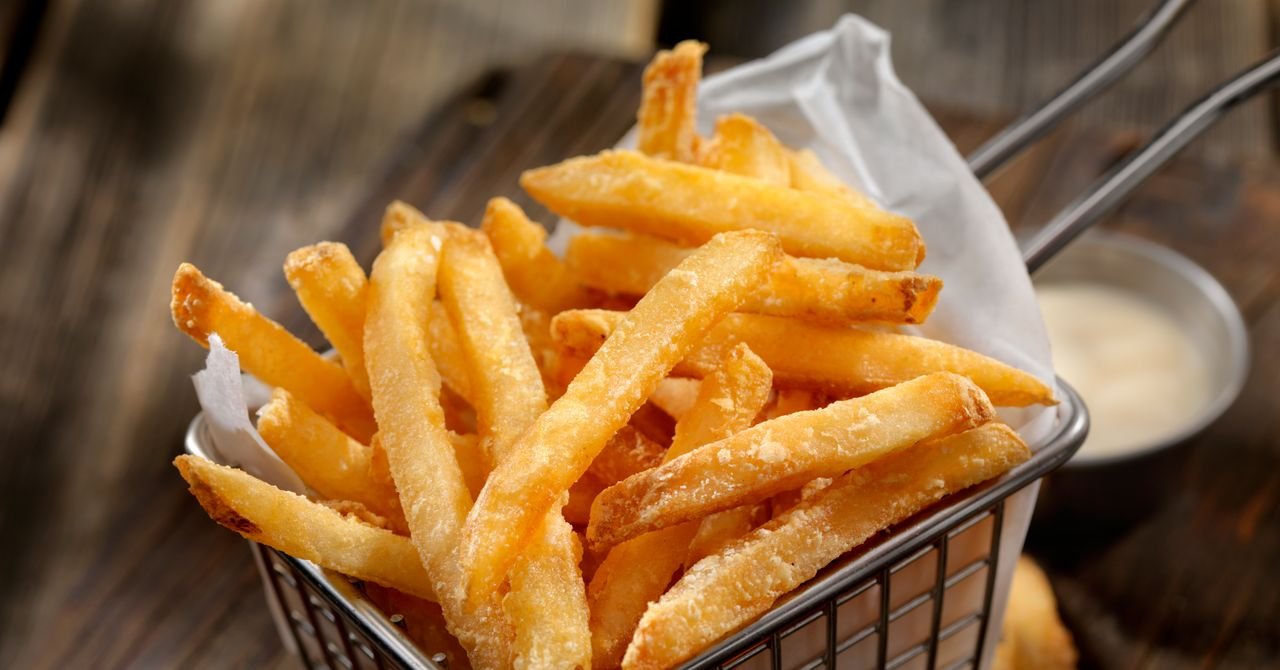
The cooking method combines traditional frying and microwave heating. Adding that microwave step can reduce the amount of oil used in the process, meaning you’ll absorb less fat with each bite. All the secrets to being able to cook fries this way are revealed in two studies published in Current Research in Food Science and The Journal of Food Science.
French fries and health
Although popular, fried foods contain high levels of fat, which is linked to many health problems, including obesity and high blood pressure. “Consumers want healthy food, but cravings often prevail at the time of purchase,” says Pawan Singh Takhar, author of one of the two studies. “The high oil content adds flavor, but it also contains a lot of energy and calories.”
With the goal of helping consumers make better food choices without feeling deprived, researchers are trying to figure out how they can cook healthier French fries by achieving lower fat content without altering their taste and texture.
As studies show, one of the main difficulties in frying is preventing oil from entering the food. In the early stages of the French frying process, in fact, the pores of the potato fill with water, leaving no room for oil.
However, as cooking continues, the water evaporates, creating voids that allow oil to be drawn in by negative pressure. Most of the frying process occurs under negative pressure, which essentially increases the tendency for the fries to absorb oil.
a new wavelength
So, in the new study, researchers tried to figure out how to increase the duration under positive pressure and how to decrease the duration under negative pressure. “When we heat something in a conventional oven, the heat is transferred from the outside to the inside, but a microwave oven heats from the inside out because the microwaves penetrate everywhere in the material,” says Takhar.
In particular, microwaves cause water molecules to oscillate, resulting in increased vapor formation and thus shifting the pressure profile towards positive values which prevents the oil from being absorbed easily.
However, frying in the microwave alone will not produce the desired texture. “If only microwaving is used, the food becomes mushy,” says Takhar. To achieve crispness, frying and microwaving should be combined.
To achieve the right balance, the researchers conducted an experiment in which they specially designed a microwave fryer that monitored the chips’ temperature, pressure, volume, texture, moisture, and oil content. The study concludes, “We propose to combine the two methods in a single appliance. Conventional heating maintains crispness, while microwave heating reduces oil consumption.”
<a href