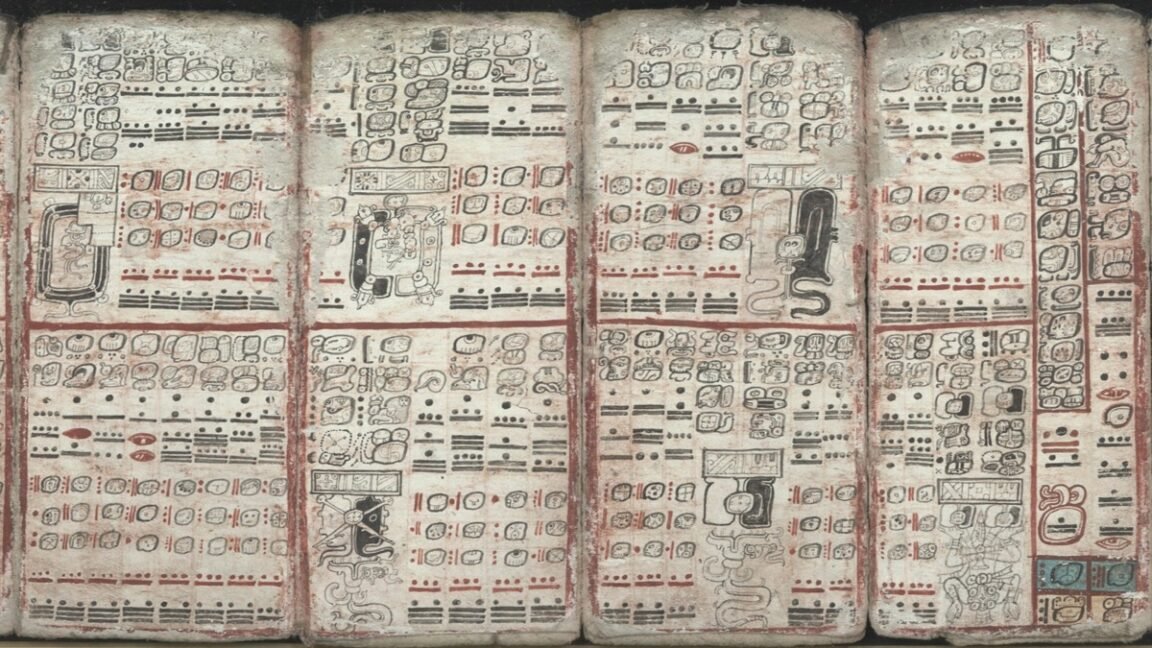
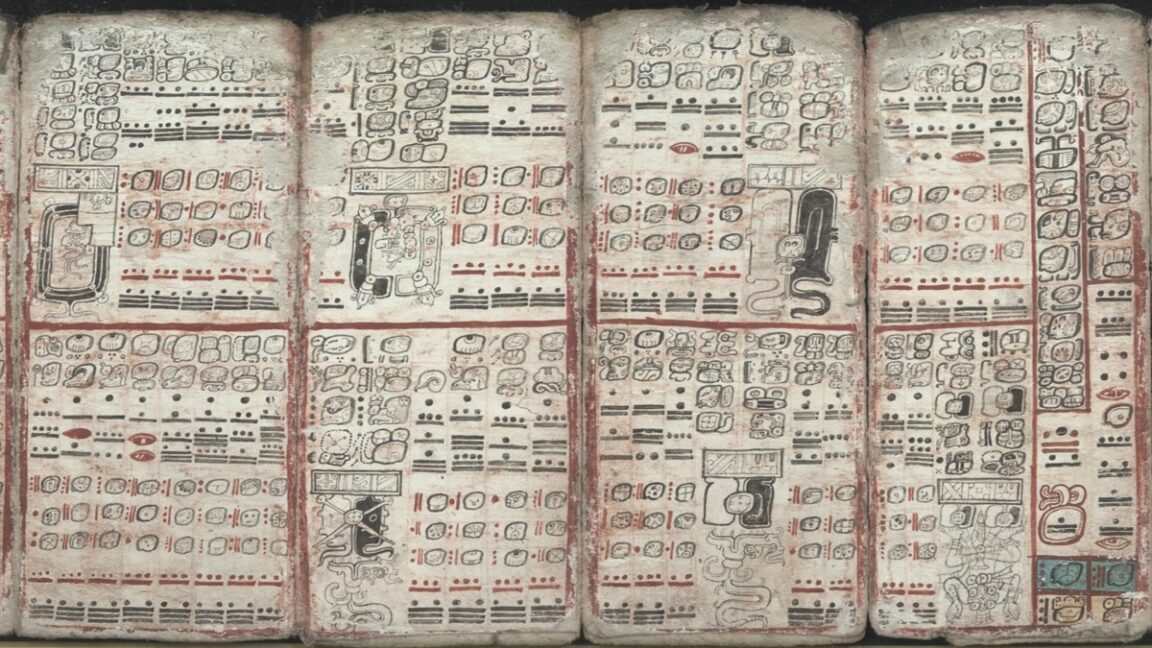
But according to the authors, the Maya did not restart their tables from any one location, which would make the tables more unreliable; Instead, they used a series of overlapping tables. Lowry and Justeson concluded that the tables must have been restarted at one of two specific points before the previous table ended: the 358th new moon (i.e., the most reliable estimate of the total length of the eclipse) and the 223rd new moon (the most reliable lesser estimate).
“The traditional explanation was that you walk through the table, assume the eclipse rates, and then you rebuild the table at each iteration,” Lowry said. “We discovered that if you do that, you’ll miss the eclipse, and we know that didn’t happen. They made internal adjustments. We think they’ll reset the table midway through. When you do that, you go from missing the eclipse to not having an eclipse. You’ll never miss an eclipse. So it’s not a calculated predicted table, it’s a calculated predicted table and adjustments based on empirical observations over time.”
Lowry said, “This is the basis of true science, which is empirically gathered, constant revision of expectations, built into a system of understanding planetary bodies, so that you can predict that something will happen.” “But here it is deeply coded within a religious system. Their rituals were originally linked to astronomy and astrology. There is this group of people over the course of 1,000 years – through war, through decadence, through famine, through external conquest – who have maintained observational records of eclipses every five or six months. It’s not that the Maya have made their calendar more accurate. They have kept their calendar accurate, which is great.”
DOI: Science Advances, 2025. 10.1126/sciadv.adt9039 (About DOI).