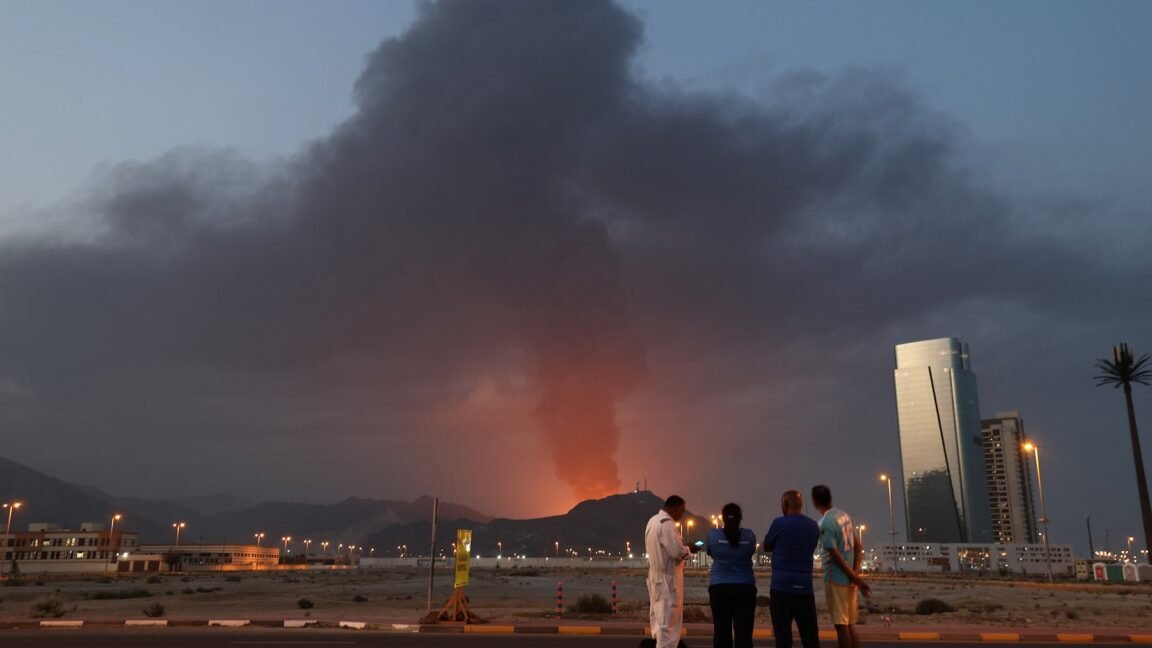
Planet Labs, one of the world’s leading commercial satellite imaging companies, said Friday it was pausing the release of imagery of parts of the Middle East as the regional war enters its second week.
The company, which brands itself as Planet, operates a fleet of several hundred Earth-imaging satellites, designed to record views of every landmass on Earth at least once per day. Its customers include think tanks, NGOs, academic institutions, news media and commercial users in the agriculture, forestry and energy industries.
Planet also has lucrative contracts selling overhead imagery to the US military and US government intelligence agencies.
“In response to the conflict in the Middle East, Planet is implementing a temporary restriction on data access in specific areas of the affected region,” Planet said in a statement emailed to Ars. “Effective immediately, all new imagery collected in the Gulf States, Iraq, Kuwait and adjacent conflict areas will be subject to a mandatory 96-hour delay before it becomes available in our collection.”
The company said imagery on Iran will be available as soon as it is acquired. “This change applies to all users except authorized government users who maintain immediate access for mission-critical operations.”
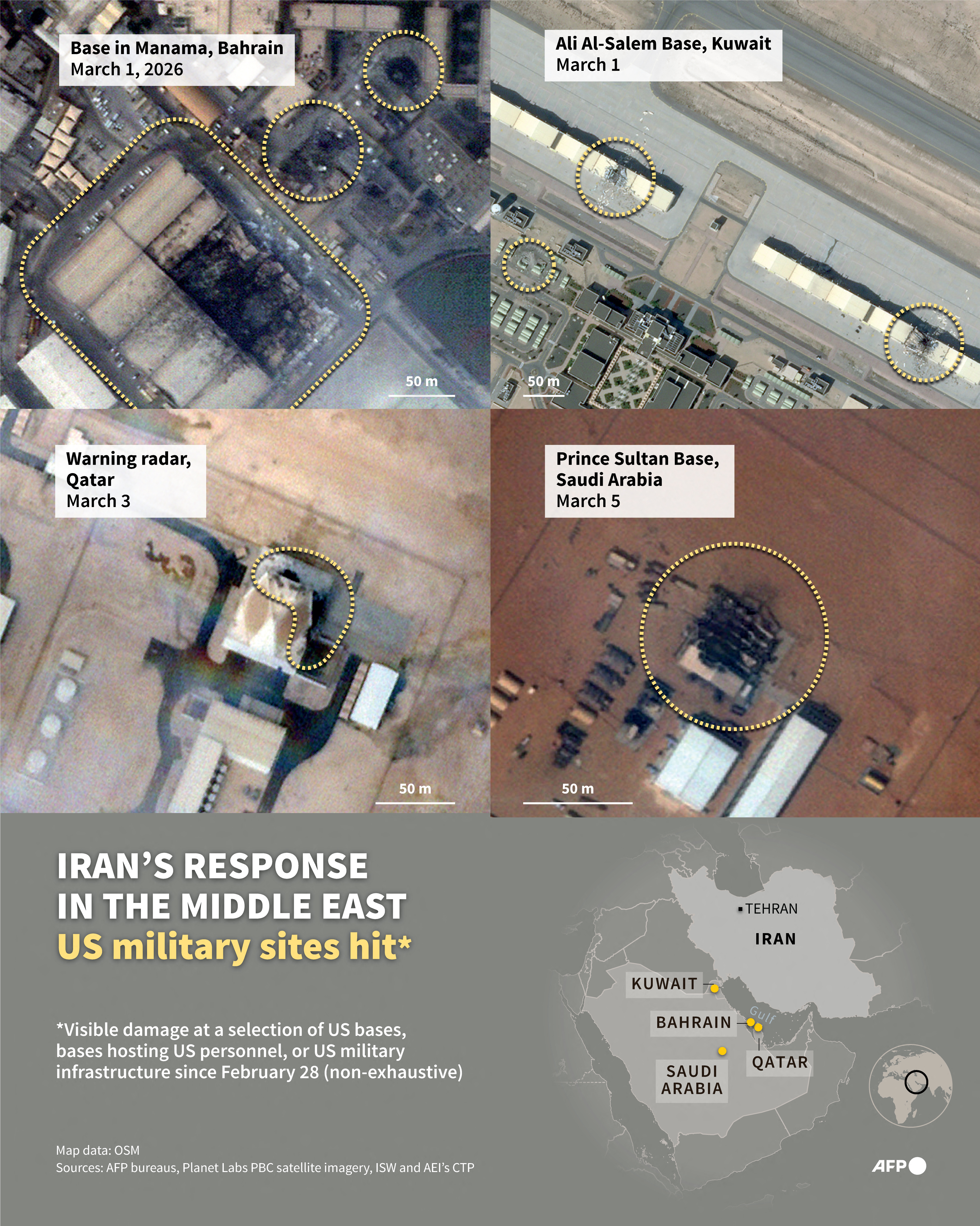
Infographic with satellite images showing damage at a selection of four US military sites in the Middle East, or sites hosting US personnel, in the context of Iranian attacks from February 28, 2026, using images from Planet Labs.
Credit: Graphic by Nalini Lepetit-Chella and Sabrina Blanchard/AFP via Getty Images)/© 2026 Planet Labs/AFP
Infographic with satellite images showing damage at a selection of four US military sites in the Middle East, or sites hosting US personnel, in the context of Iranian attacks from February 28, 2026, using images from Planet Labs.
Credit: Graphic by Nalini Lepetit-Chella and Sabrina Blanchard/AFP via Getty Images)/© 2026 Planet Labs/AFP
overhead intelligence
Over the past few days, Planet’s satellite imagery showed the consequences of Iranian missile and drone attacks on US and allied targets in the region, including damage to the US Fifth Fleet headquarters in Bahrain and damage to a $1 billion US-made early warning radar in Qatar, which is used to track incoming projectiles. Planet said it wanted to prevent “adversarial actors” from using its data for “battle damage assessment (BDA)” purposes. In other words, the company doesn’t want to help Iran’s military learn where it succeeded and where it failed.
<a href