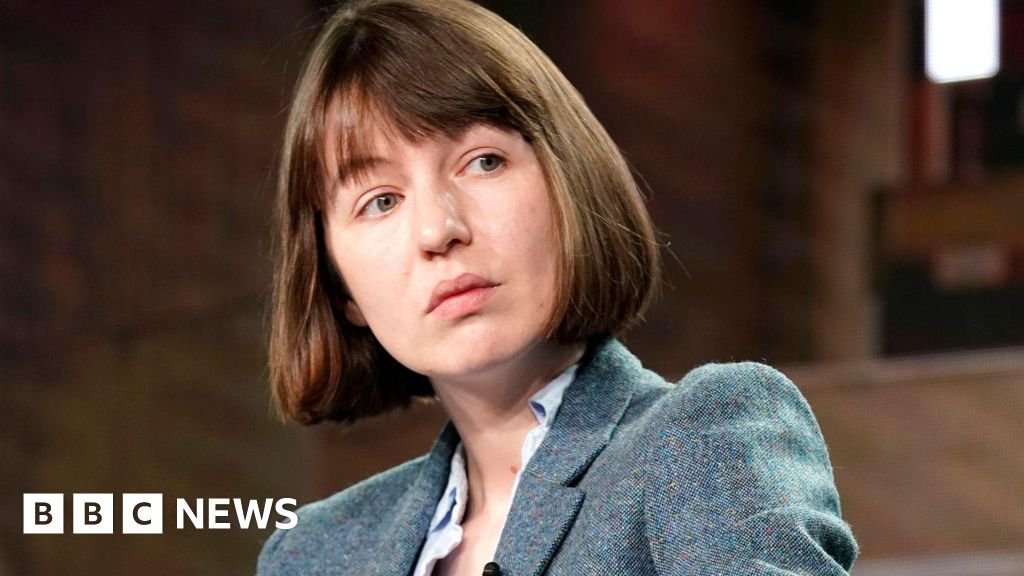
Irish author Sally Rooney has told the High Court it is “almost certain” she cannot publish new novels in Britain and may have to withdraw her current books due to a ban on Palestine action under terrorism laws.
Rooney says that UK law may mean that he cannot be paid royalties by his British publisher or the BBC as this would risk both of them being accused of terrorism financing.
In August she said she wanted to use the royalties “to support Palestine action”.
The group was banned in July after the Home Secretary accused it of causing serious damage to property. Its co-founders are challenging that ban in the High Court, arguing it interferes with the right to protest.
The author of Normal People, which was adapted into one of the most watched BBC dramas in recent years, has backed a campaign to overturn the ban.
In two witness statements given to the High Court, Rooney said he believed Israel had committed genocide in Gaza – and that Palestine Action’s activity in the UK was a “long and proud tradition of civil disobedience – deliberately breaking the laws as a form of protest”.
She adds: “I myself have publicly advocated the use of direct action, including property demolitions, for climate justice. It is logical that I should support similar tactics in an effort to stop the genocide.”
Israel regularly denies that its actions in Gaza amount to genocide and says they are justified as a means of self-defense.
Rooney said the ban on Palestine action under terrorism laws also had far-reaching consequences for him as a writer and his right to free expression.
He said that he continues to receive royalties from BBC adaptations from time to time.
In August she announced in an Irish Times article that she intended to use those royalties “to support Palestine Action”.
Following that statement, he said he had been advised that any payments made to him for television dramas might be a violation of terrorism laws.
The warning came from the independent producer of two BBC dramatizations of his novels. It told her agent that she had received “clear legal advice” that if she knew or suspected that Rooney was using royalties from TV dramas to finance Palestine action, sending him money would be a terrorism offence.
“So it’s not clear whether a UK company can continue to pay me, even if it agreed to do so,” Rooney said.
Rooney told the court that this legal uncertainty affected his rights as an artist – and those of his publisher.
He said, “If … Faber & Faber Ltd. is legally prohibited from paying me the royalties owed to me, my existing works may have to be withdrawn from sale.”
“My novels have been influential and popular in Britain, where I am one of the best-selling literary authors of the last decade.
“The disappearance of my work from bookstores would symbolize a truly extreme intrusion into the sphere of artistic expression by the state.
“It is also almost certain that I will not be able to publish or produce any new work within the UK as long as this ban remains in effect.”
Rooney publicly revealed in September that she did not believe she would now be able to travel to the UK due to her stance.
“I am and remain a committed supporter of Palestine Action. If that support were criminalised, I would effectively be barred from speaking at any future public events in the UK.
“Is it possible that I could collaborate again with British public institutions like the BBC as I have done in the past?”
The hearing will continue till Thursday with the last day for submissions next week.
<a href