,It’s currently ongoing,, Chatman said. ,[We are] Working in close partnership with SpaceX and Blue Origin on the LOX/methane combination and clear equivalence to identify how much we can… reduce that blast radius. Those discussions are happening, have been happening for the last few years, and are expected to conclude here in ’26.
Chatman said, “Until we get that data from ongoing testing and need analysis, we will continue to treat any LOX-methane vehicle with 100 percent TNT blast equivalency, and keep a maximum keep-out zone.”
The data so far shows promising results. “We expect BDA to shrink,” he said. “We expect it to shrink based on some of the early trials that have been done.”e and preliminary data reviews that have been conducted.”
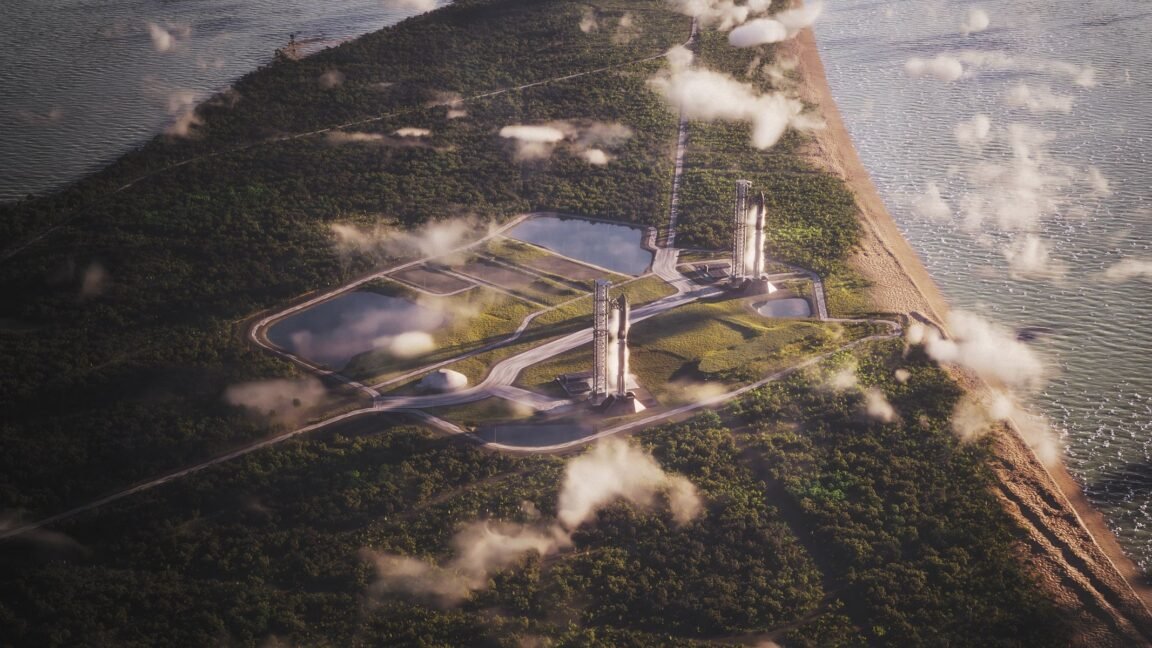
This is important not only for Starship’s neighbors at Cape Canaveral Spaceport, but also for SpaceX. The company predicts a future in which it will launch Starship more frequently than the Falcon 9, which would require nearly continuous operations at multiple launch pads.
Chatman mentioned a future scenario in which SpaceX might want to launch Starships from neighboring pads close to each other.
“AAt that point in the future, I hope that the blast damage assessment based on testing will be reduced and the datasets will be reviewed, [and] We will be in a comfortable position to be able to facilitate all launch operations. But until we have that data, until I’m comfortable with that data, with respect to reducing the BDA, the keep-out zone, we will continue with 100 percent TNT equivalency from a public safety standpoint.
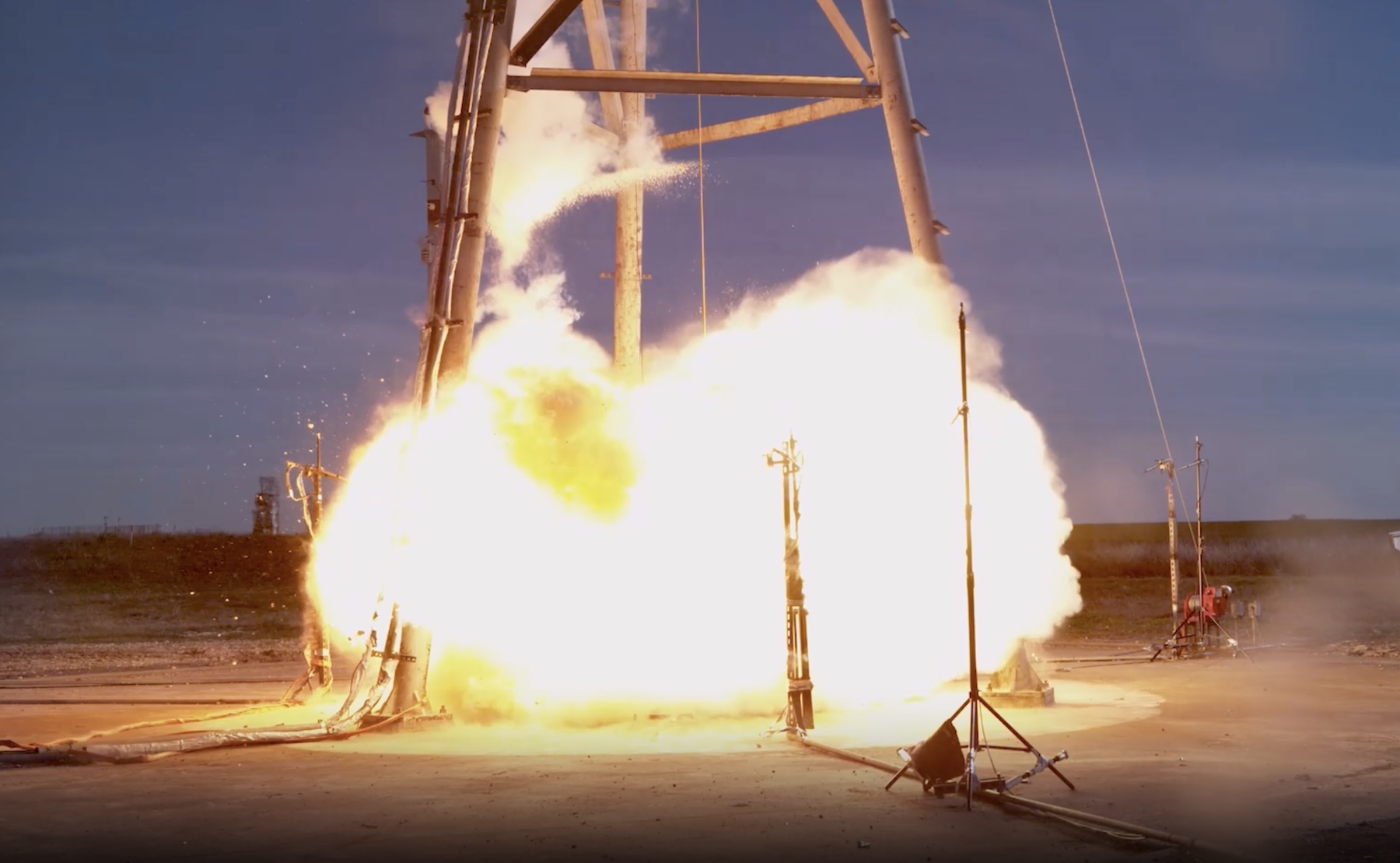
SpaceX has conducted explosive LOX/methane tests at its development facility in McGregor, Texas, including the test seen here.
Credit: SpaceX
The Commercial Space Federation, a lobbying group, submitted written testimony to Congress in 2023, arguing that the government should use “existing industry data” to inform its understanding of the explosive potential of methane and liquid oxygen. The federation said the data shows the government should set its TNT blast equivalence no higher than 25 percent, a change that would greatly reduce the size of the keep-out zone around launch pads. Members of the organization include major methane users SpaceX, Blue Origin, Relativity Space and Stoke Space, all of which have launch sites at Cape Canaveral.
According to the Commercial Space Federation, the government’s Methalox testing plans were expected to cost at least $80 million.
The concern among engineers is that liquid oxygen and methane are highly miscible, meaning they easily mix together, increasing the risk of “condensed phase explosion” with “significantly higher pressures” than in liquid hydrogen or kerosene fueled rockets. NASA wrote in 2023 that small-scale mixtures of liquid oxygen and liquid natural gas “have shown a broader explosive range with higher yields than TNT.”
<a href