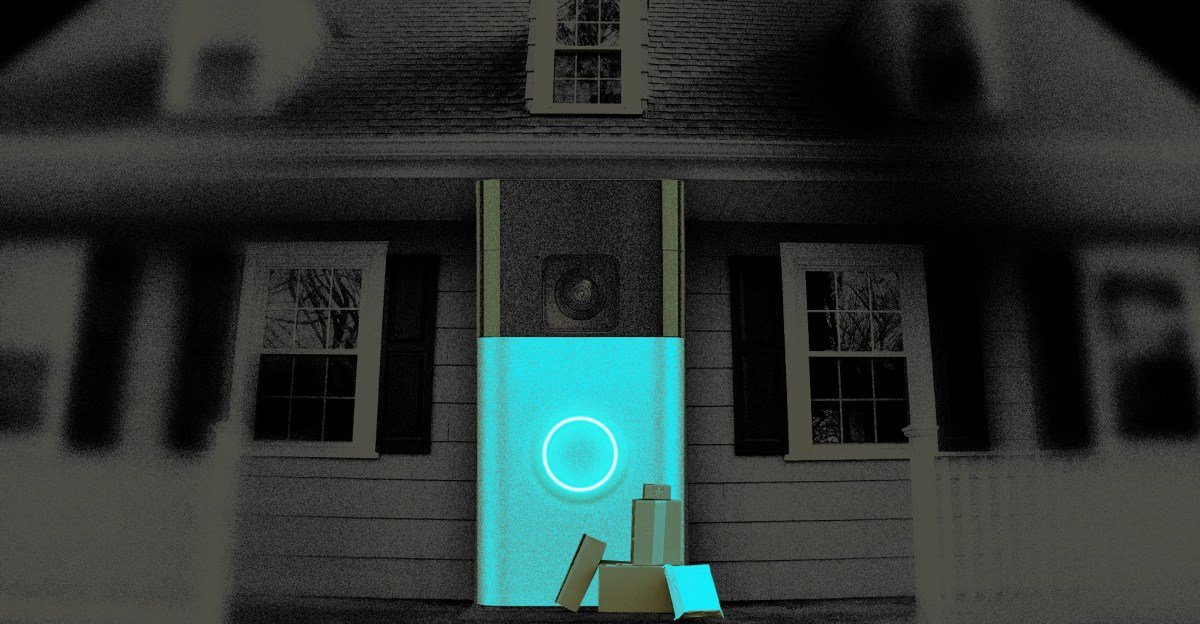
Following intense backlash over its partnership with Flock Safety, a surveillance technology company that works with law enforcement agencies, Ring has announced it is canceling the integration.
In a statement published on Ring’s blog and provided The Verge Before publication, the company said: “After an extensive review, we determined that the planned Flock Safety integration would require far more time and resources than anticipated. So we made the joint decision to cancel the integration and continue with our current partners… The integration never launched, so no Ring customer videos were ever sent to Flock Safety.”
The statement further said that Ring’s mission of making neighborhoods safer “comes with significant responsibility – to our customers, the communities we serve, and your trust in our products and features.”
There is a lot of trust there. Over the past few weeks, the company has faced considerable public anger over its relationship with Flock, with Ring users being encouraged to break their cameras, and some announcing on social media that they are throwing away their Ring devices.
The Flock partnership was announced last October, but following recent unrest across the country related to ICE activities, public pressure began to mount against Amazon-owned Ring’s involvement with the company.
Flock has reportedly allowed ICE and other federal agencies access to its network of surveillance cameras, and influencers on social media are claiming that Ring is providing a direct link to ICE.
Although this claim is not accurate, as the Flock integration has never gone live, Ring has a history of partnering with police, and the new partnership immediately came under intense criticism.

Adding fuel to the fire, this weekend Ring aired a Super Bowl ad for its new AI-powered Search Party feature. While the company says the feature is designed to find lost dogs and says it is not capable of finding people, the ad raised fears that Ring cameras are being used for mass surveillance. The ad shows dozens of Ring cameras monitoring the streets in the neighborhood.
Additionally, the company recently launched a new facial recognition feature, Familiar Faces. Combined with Search Party, the technological leap from using neighborhood cameras to searching for people through mass-surveillance networks suddenly seems very small.
Senator Ed Markey (D-MA) – a longtime critic of Ring – sent an open letter this week calling on Amazon to cancel the company’s facial recognition feature.
Ring spokesperson Yassi Yarger said in an email that its products are purpose-driven technology, “not tools for mass surveillance.” They added that “Familiar Faces is an opt-in feature designed to give customers more control over which alerts they receive (e.g., ‘Mom at the front door’ instead of ‘Someone at the front door’) while keeping their data secure.”
Why did Ring partner with Flock?
Ring’s partnership with Flock was announced in October 2025 as part of Ring’s Community Request Program, which launched last September. It was designed to allow local law enforcement agencies that use Flock’s software to integrate directly with the program.
The community requests were launched after Ring ended its controversial Request for Assistance (RFA) program, which consumer advocacy groups criticized for allowing it to provide video to police without a warrant, calling it a threat to civil liberties.
In its statement about the Flock cancellation, Ring says community requests will continue, claiming it helped authorities locate a suspect during the recent Brown University shooting:
“When a shooting occurred near Brown University in December 2025, every second mattered. The Providence Police Department turned to its community for help, issuing a community plea. Within hours, 7 neighbors responded, sharing 168 videos that captured key moments of the incident. One video identified a new key witness, helping police identify the suspect’s vehicle and solve the case. A mass shooting has been reported. “With the community facing uncertainty about their safety, neighbors who chose to share the footage played an important role in neutralizing the threat and restoring safety in their community.”
Like RFA, Community Requests still allows public safety agencies to request video footage from users in a certain area during active investigations, but it differs from the previous program because it requires law enforcement agencies to partner with a third-party evidence management system – like Flock – to use the service. Ring says this is to better maintain the chain of custody. The previous system allowed police to request footage directly from a user.
Flock was the second partner Ring announced for community requests, the first being Axon, a law enforcement technology company known for making Tasers. With the new service, only law enforcement agencies that use software from these companies can submit requests. But the end result is the same: Law enforcement gets the video from users if they choose to share it.
Ring spokesperson Yassi Yarger says the Axon partnership is unaffected by the end of the Flock integration. Additionally, she says no other integrations are currently being explored.
<a href
В этой информационной статье вы найдете интересное содержание, которое поможет вам расширить свои знания. Мы предлагаем увлекательный подход и уникальные взгляды на обсуждаемые темы, побуждая пользователей к активному мышлению и критическому анализу!
Исследовать вопрос подробнее – https://vivod-iz-zapoya-2.ru/