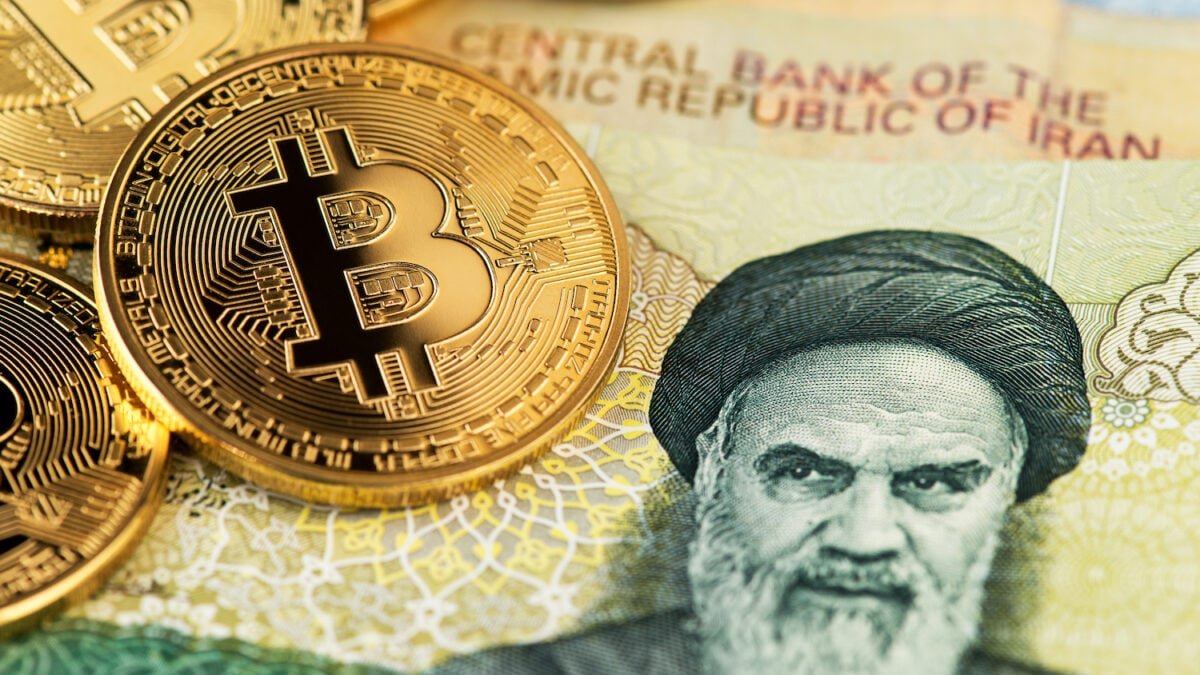

In terms of specifics, the report shows that the volume of withdrawals worth more than $10,000 into self-protected Bitcoin wallets has increased by 262% since the nationwide protests began. According to the report, reasons for the growing interest in self-custody Bitcoin include the decline in the value of the Iranian rial and the potentially increasing need for citizens to operate outside of government-controlled financial channels.
The report also indicates that spikes in Iranian crypto activity were seen during other major domestic and geopolitical events such as the Kerman bombing in January 2024, Iran’s missile attacks against Israel in October 2024, and the 12-Day War. Nobitex, by far Iran’s largest and most popular exchange, was also hacked for $90 million during the 12-day war.
“This pattern of increased BTC withdrawals during times of instability mirrors a global trend we have seen in other regions experiencing war, economic turmoil, or government action,” the report said.
According to Chainalysis, this is not the first time that a country facing some kind of crisis has seen a sharp increase in Bitcoin adoption. In the past, Chainalysis has issued reports related to increased adoption in Ukraine amid Russia’s, Argentina’s and Venezuela’s respective currency devaluations and wars with others.
Recently, countries like Venezuela and Russia have used stablecoins like Bitcoin and Tether’s USDT to avoid economic sanctions. According to another recent report from Chainalysis, evasion of such sanctions was behind $154 billion worth of illicit financial use of crypto in a record year.
Unrest has persisted in Iran since late December, as protesters are fed up with the devaluation of the Iranian rial and other economic difficulties. These grievances are compounded by long-term issues such as corruption, repression, and general government mismanagement. In this way, the use of Bitcoin can also be seen as a form of protest where people are opting out of the traditional financial system.
Ironically, the Iranian regime has also used crypto to evade sanctions and launder money. In fact, the same Chainalysis report released recently also indicates that the Islamic Revolutionary Guard Corps (IRGC) accounts for nearly half of all crypto activity occurring in Iran, estimated at $7.78 billion. A recent report from TRM Labs also indicated that two crypto exchanges in the United Kingdom were effectively fronts for the Iranian regime, and another previous report from Elliptic suggests that Iran has been involved in Bitcoin mining for the purpose of monetizing its energy resources.
This situation reflects the conundrum for authoritarian regimes around the world when it comes to Bitcoin, as the features that make it useful for regimes to avoid sanctions in the US-controlled global banking system also enable them to be used to achieve greater financial freedom for local populations.
Bitcoin is not the only technology that has proven helpful to Iranians during the protests, as the existence of Starlink is the only reason information has been able to move out of the country amid government-imposed internet blackouts. While mesh-networking-based BitChat has recently been adopted in other countries dealing with turmoil, a forked version of the app called Nogteha has gained notoriety in Iran. However, there has also been controversy with Nogteha due to its closed source aspects and donation collection.
<a href