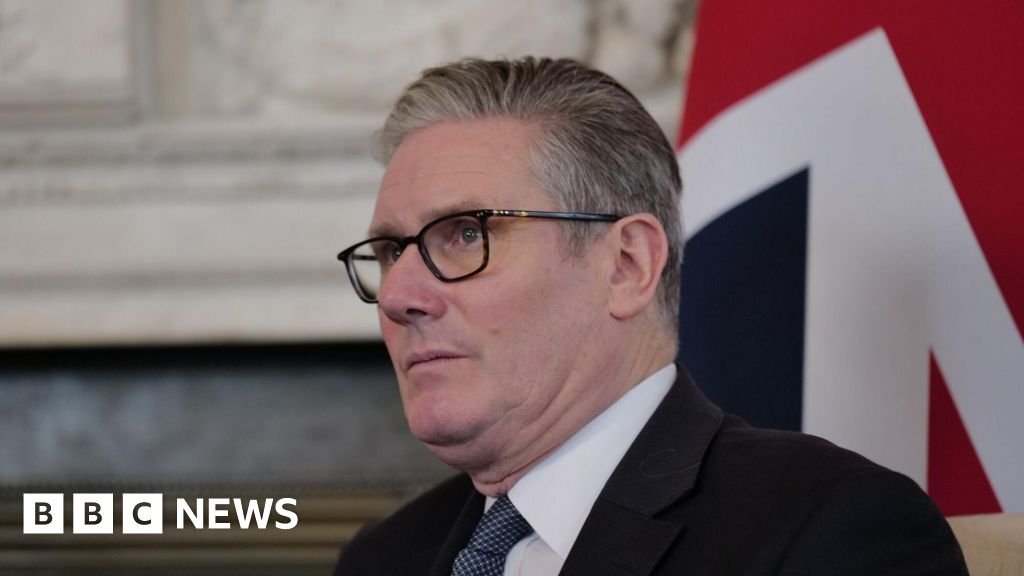
Sir Keir Starmer is visiting Beijing, the first visit to China by a British prime minister since 2018.
He is scheduled to meet President Xi Jinping on Thursday.
About 60 British business and cultural leaders are also on the trip, including representatives from bank HSBC, pharmaceutical company GSK, Jaguar Land Rover and the National Theatre.
It is the latest and most significant moment in the government’s effort to reinvigorate the UK’s ties with China. But critics argue that China has a radically different world view, cannot be trusted, and that the government should be more cautious in its dealings with the Communist Party.
Asked whether the Prime Minister would raise the issue of human rights abuses with the President, Downing Street said he would “raise challenging issues where interests and values differ”.
China has been accused of committing crimes against humanity against the Uyghur population and other mostly Muslim ethnic groups in the northwestern region of Xinjiang.
There has also been criticism over the treatment of Hong Kong pro-democracy media tycoon Jimmy Lai, who is facing life in prison.
In addition to China’s human rights record, there are also concerns in Britain about the scale of its spying activities, with the head of MI5 recently warning that Chinese state operators pose a daily national security threat.
However, Downing Street has argued that the visit is important.
Speaking ahead of the visit, the Prime Minister said: “For years, our approach to China has been plagued by inconsistency – from the Golden Age to the Ice Age, hot and cold, but like it or not, China matters to Britain.
“As one of the world’s largest economic players, a strategic and sustainable relationship with them is in our national interest.
“This does not mean turning a blind eye to the challenges they present – but also engaging where we disagree.”
Business Secretary Peter Kyle and Economic Secretary to the Treasury Lucy Rigby have joined the Prime Minister for the visit.
Kyle visited Beijing in September last year, soon after being appointed business secretary.
Chancellor Rachel Reeves visited a year ago, a few months after the current Deputy Prime Minister, then Foreign Secretary, David Lammy.
We can expect Sir Keir to argue that governments in recent years have engaged in “isolationism” in their attitude towards China and that “strategic re-engagement makes us stronger”.
Downing Street points out that Canadian Prime Minister Mark Carney and French President Emmanuel Macron have both recently visited Beijing, and the heads of government of both France and Germany have visited Beijing several times since Theresa May visited as prime minister eight years ago.
The Prime Minister believes this has made Britain an “outlier” among comparable Western economies.
US President Donald Trump is expected to visit in April.
Some in his administration are skeptical about developing closer ties to Britain and others to Beijing.
Earlier this month, the government approved the construction of a new Chinese embassy in London, which will be the largest in Europe when completed.
Conservative shadow foreign secretary Priti Patel said: “Starmer has already capitulated to the Chinese Communist Party over plans for a spy-hub super embassy in the center of our capital.
“There is strong evidence that China poses a serious threat to our national security and it is clear that Starmer is going to China without any pressure.
“He doesn’t have the backbone to stand up for Britain and is bending over backwards to please Beijing.”
It will not be the first time Sir Keir has met Xi. They meet at the G20 summit in Rio de Janeiro in November 2024.
After visiting Beijing and Shanghai, the Prime Minister will travel to Tokyo to meet the new Japanese Prime Minister Sanae Takachi.
<a href