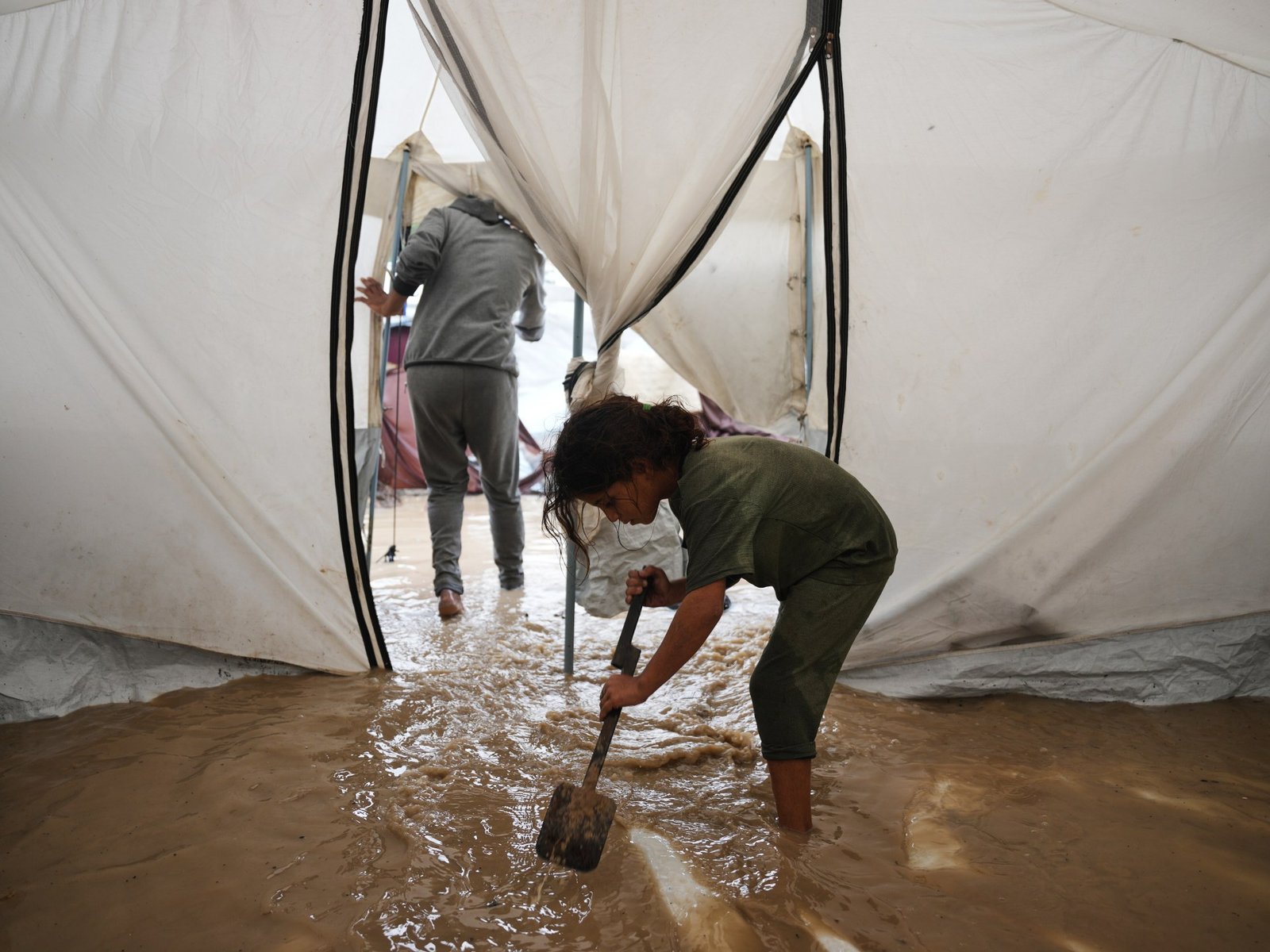
Adding to their suffering is the possibility of harsh winter storms and floods, which could lead to the disappearance of even these temporary shelters, unable to withstand the harsh conditions.
Recommended Stories
list of 3 itemsend of list
Gaza is already hit hard by extreme weather.
“In the last 24 hours, we have seen strong winds, heavy rain and plunging temperatures, turning many displacement areas here into ponds of dirty water,” Al Jazeera’s Hani Mahmoud said, reporting from Gaza City.
“We have areas that are completely inundated, areas that were flooded due to heavy rains and also had sewage water mixed in, making it very dangerous for the people here.”
These conditions have forced entire families to collect dirty water from their tents using only buckets and to put down their tents using other rudimentary tools such as rocks and blocks, in the hopes that what little belongings they have left will be protected.
Displaced Palestinian Asma Fayed told Al Jazeera, “All the tents have been destroyed. Our tents are just made of clothes. Our children are drowning. We have nothing to wear, no clothes to wear.”
Thousands of tents were damaged
The United Nations refugee agency (UNHCR) said last week that at least 13,000 tents had been damaged by heavy rains.
“Many of these displacement sites are located in open areas or in the ruins of many destroyed buildings here (in Gaza),” Al Jazeera’s Mahmoud said.
The problem with these buildings, Mahmood said, is that “there are cracks in the walls… in the roofs”, making living conditions in these buildings difficult.
Under the United States-brokered ceasefire, which took effect on October 10, and which Israel has violated hundreds of times, aid deliveries were to be significantly increased, with at least 600 trucks entering Gaza daily to meet the needs of the population.
However, Gaza’s government media office said an average of only 145 trucks have been entering Gaza since the ceasefire.
“Thousands of internally displaced people in the Gaza Strip are struggling to find safe shelter to prepare for the coming cold weather,” the UNHCR said in a post on social media. “More shelter materials are still needed,” it said.
Aid organizations say at least 300,000 mobile homes and tents are needed to house the displaced people.
The United Nations Agency for Palestine Refugees (UNRWA) has said that more than 79,000 displaced people are living in 85 UNRWA-run shelters in the Gaza Strip.
‘siege policy’
The Palestinian Mujahideen Movement issued a statement condemning the lack of supplies to help Palestinians as winter approaches.
“The suffering of our people in Gaza, especially the displaced, has worsened amid the cold and rainy season. The flooding of displaced persons’ tents is a direct result of the Zionist (Israeli) siege policy and blocking the entry of basic necessities, while the world remains silent.”
The Palestinian Mujahideen Movement also called on the international community to “take immediate action and put pressure on the Zionist enemy to open the crossings and allow the entry of aid and essential supplies.”
Hamas spokesman Hazem Qassem wrote a message on Telegram: “All efforts in the world to mitigate the disaster have failed because of the Israeli siege.”
Al Jazeera’s Mahmoud said sunny and dry weather conditions on Wednesday provided little respite, as “many people are worried that the winds will become stronger again by the evening”.
<a href