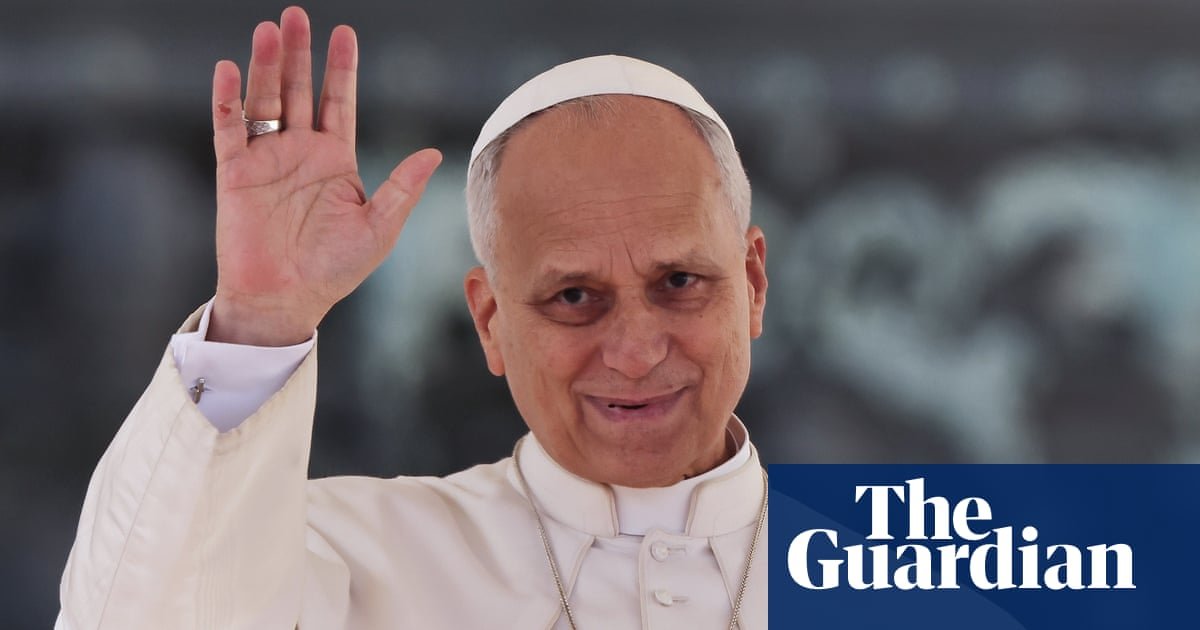
Pope Leo will make his first trip abroad as leader of the Catholic Church on Thursday, traveling to Turkey and Lebanon on a six-day mission of peace and unity, the Vatican said, in what is expected to be a “demanding” schedule filled with meetings with political and religious leaders amid rising tensions in the Middle East.
In Turkey, a Muslim-majority country and home to an estimated 36,000 Catholics, the Chicago-born pope, who was elected in May, will first meet President Recep Tayyip Erdoğan in Ankara.
He will also meet with Patriarch Bartholomew, the spiritual leader of the world’s 260 million Orthodox Christians, for a celebration of the 1,700th anniversary of a major early church council in Nicaea, now Iznik, that settled ideological disputes.
LEO’s arrival is particularly feared in Lebanon, where many fear a deepening conflict between Israel and Hezbollah following an Israeli attack on a neighborhood in southern Beirut earlier this week that killed four Hezbollah operatives and one of the group’s most senior military commanders.
Leo’s predecessor, Francis, who died in April, had planned to visit both countries but was unable to do so due to poor health.
Leo is considered a more moderate, low-key operator than the charismatic but often divisive Francis, and the choice of Turkey and Lebanon for his first trip abroad is highly strategic, as well as providing an opportunity for the Pope to show the world his style and personality.
In recent weeks, Turkish media have been abuzz with images of Vatican delegations visiting the country, while banners showing the smiling face of Pope Leo in Beirut have been plastered on the stone exterior walls of churches in central Christian neighborhoods of the Lebanese capital.
“This is a trip where Leo will have to make promoting peace one of the central themes of his papacy – and he will have two different audiences in mind,” said Christopher White, a Vatican expert and author of Pope Leo XIV: Inside the Conclave and the Dawn of a New Papacy.
“Will be a world leader: Turkey and Lebanon are strategic places for him to redouble his efforts for peace in Ukraine and the Middle East and this is his first trip abroad, he will be the focus of world leaders on this trip.”
The second audience will be Christian leaders, as Leo attempts to unite the region’s long-divided churches. White said he would especially like to use the anniversary celebrations in Turkey “to remind believers that the commonalities they have are far greater than their divisions.”
The Pope will also visit the Blue Mosque in Istanbul and celebrate Catholic Mass at the city’s Volkswagen Arena.
Leo’s arrival in Lebanon on Sunday afternoon comes during a period in which many fear a possible return to the two-month Israeli bombing campaign that devastated southern Lebanon and Beirut last year.
Karim Emile Bitar, a professor of international relations at St. Joseph University of Beirut, said Lebanon’s Christian community may be looking to the pope for a message of unity at a time when the country is deeply polarized.
“This visit matters because the Vatican has historically been the main protector of Lebanese national unity and Lebanese territorial integrity,” he said. “Most states have political or economic interests. The Vatican is one of the last moral authorities in the world that actually tries to promote peace and justice without any hidden agenda.”
Bitar said he believed Leo would “find the right words” during his visit which “has the potential to demonstrate that global powers like the Vatican can attempt to heal divisions in Lebanese society without pursuing their own political interests”.
He added: “Even though this visit is symbolic, and even though the Vatican has no army and no military influence, the simple fact that this is a man who speaks to people with genuine goodwill may matter more than representatives of the heavily militarized regional powers who are pushing Lebanon toward fragmentation.”
Leo will lead prayers in the port of Beirut, where a deadly explosion destroyed parts of the capital in 2020, and visit a psychiatric hospital run by the Catholic Church.
The Turkey visit had been on the agenda for some time before Leo received the official invitation to Lebanon, where leaders hope the Pope’s visit will draw world attention to the country which is in deep economic crisis.
“He immediately embraced it,” said Andrea Vreede, Vatican correspondent for the Dutch public radio and TV network NOS. “Going to Lebanon means being able to talk about peace in the Middle East, in a really war-torn country, and very close to Israel. I’m not sure whether he’ll talk directly about Gaza but he’ll obviously use Lebanon as a platform for peace.”
The Lebanese, meanwhile, “want some hope from them,” Wrede said. “This is a country that is in huge economic trouble… They see this trip as basically the only miraculous thing that can help them.”
After Francis made a high-risk trip to Iraq in 2021, where he visited the northern city of Mosul devastated by Islamic State militants, Leo has faced some criticism for not visiting Christian communities in southern Lebanon. “He won’t go there – it’s too unsafe,” Wrede said.
Meanwhile, Christians from other countries are hoping that he will meet them too. Inside the Maronite church in Bab Touma, a historically Christian neighborhood in the Syrian capital Damascus, Fahed Dahta said he was very happy with the trip to the area. He said, “This visit is extremely important for the people. We need peace in the Middle East. I want peace for the entire region, and an end to all these wars: Israel-Lebanon, Israel-Palestine, Israel and Syria.” “He represents peace: he’s the Pope!”
<a href