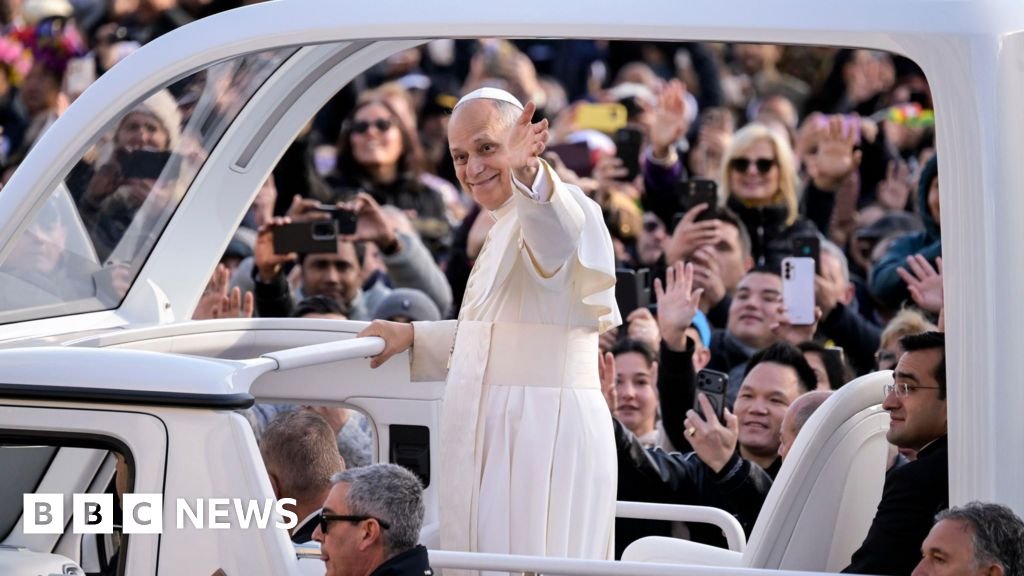
Pope Leo XIV begins the first foreign trip of his papacy. Over the next six days he will visit Turkey for the first time to mark a historic Christian anniversary. He will then visit Lebanon just days after the Israeli air attack on the capital Beirut.
The visits to both countries were originally planned by the late Pope Francis, but the overarching theme — building bridges — is one that Pope Leo made his own as he stepped onto the balcony of St. Peter’s Basilica following his election in May.
In the first six months of his papacy, he has expressed a sense of being extremely measured, even cautious. But his powers of diplomacy will be closely tested on this visit
A high point of the trip will be in the Turkish city of Iznik, site of the ancient city of Nicaea. Pope Leo and leaders of other Christian traditions will gather to commemorate the anniversary of an ancient council that took place there 1,700 years ago. In 325 AD, among other major decisions, more than 200 bishops at the council affirmed the belief that Jesus was the Son of God, creating what eventually became known as the Nicene Creed.
The Eastern and Western branches of Christianity would later split dramatically, but messages of unity and healing divisions would come during this trip.
The Pope will also visit the Blue Mosque in Türkiye, as both his predecessors, Pope Francis and Pope Benedict XVI, did. Before taking off on the second leg of the journey he will hold meetings with other religious leaders as a sign of inter-religious dialogue.
The Vatican says there are no changes to the Pope’s plans to visit Lebanon following the Israeli airstrike on Beirut earlier in the week.
He will meet more religious leaders in Lebanon and hear from youth, with his visit particularly expected to promote Christianity in an estimated third of the country.
On the final day of the visit, Pope Leo will celebrate Mass on the Beirut coast at the site of the 2020 port explosion, praying for the more than 200 people who died and the nearly 7,000 injured.
In recent months, although he has spoken out on some of his pet issues, such as the dignity of migrants, he has certainly not been as overtly political as his predecessor might have been.
He has walked such a good path that in some cases both progressives and traditionalists within the Catholic Church have claimed that he supports his ideology.
It was for such reasons that it was believed that cardinals of different ideologies gathered around him in the conclave.
Pope Francis was seen as a visionary, but he was seen as one who was less concerned about building consensus than leaving behind a somewhat divided church. Pope Leo has acted very differently so far, gently holding on to some of the progressive ideals of his predecessor while paying attention to the views of traditionalists.
He has repeatedly called for an end to the war, but in a different way to Pope Francis, who calls daily for the Holy Family Church in Gaza to offer his support.
In meetings with the Turkish President, Recep Tayyip Erdogan, and Lebanese civilian leaders on this trip, Pope Leo may be drawn on to comment on his views on the conflict in the region.
We can hear some of his impressions at the end of his visit, as it is customary for the Pope to hold a news conference with the traveling press on his return flight to Rome.
The most we’ll hear about this visit is a Pope speaking with a Chicago accent.
Although Pope Leo, who speaks several languages fluently, has so far given public addresses primarily in Italian, the Vatican has confirmed that he will speak English throughout the Turkish leg of his trip, with some French also spoken during his time in Lebanon.
<a href