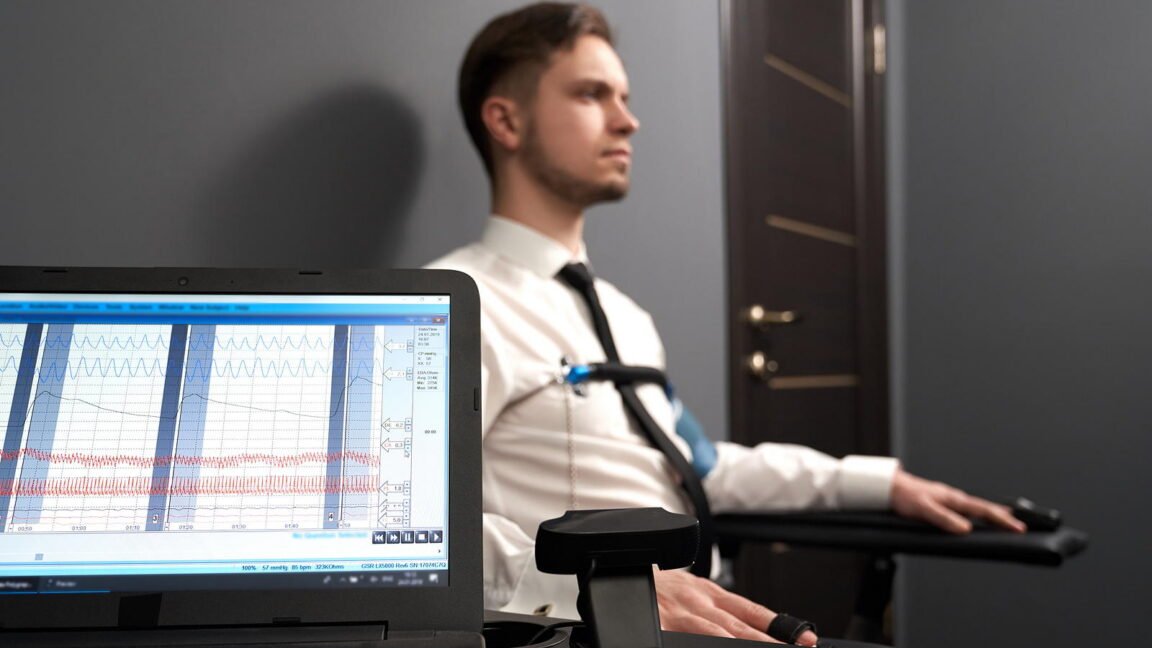
To start, they created a neural predictor to tell whether someone is lying or not. It seemed like it was working. But in a second experiment, he and his research team used that neural lie detector to track people who were telling the truth, but not those who were selfish. It delivered a shock: “And then we show that brain decoder, that lie detector that we thought we had, can also predict when someone is being selfish,” he said.
However, in the final phase of the experiment, the researchers wanted to see if they could separate it from the lying part by reducing the brain activity that reflected selfishness. they could. In the future, Lee said, they may discover that the remaining signals they thought were merely “lies” may still be entangled with some other mental state, such as arousal. After finding and sorting out all the tangles, he said, all that’s left is to lie straight. Theoretically, at least. “It may also be an empirical result that if we remove enough of these confounding processes, deception will disintegrate,” he said. may not happen Happen In other words, upright position; Perhaps lying is just a sum of many parts.
Scientists like Lee are getting closer to an accurate lie detector, and improving the traditional polygraph. But there is currently no superhero solution. And the problem, as Lee’s research indicates, may not be technical, but formal.
This is certainly Maschke’s point of view. “It’s all pseudoscience,” he said. “There is no lie detector. So my thinking is that it’s better not to pretend that you can detect lies, because that’s a way of deceiving yourself.”
Perhaps it is true that no one can know for sure whether another person is lying or not. After all, humans are, famously, individuals. “Each person is very different in the way they lie,” Denkinger said. And, apparently, that’s how they tell their truth.
This article was originally published on Undark. Read the original article.

<a href