
 BBC
BBCPeople left homeless after serious fire safety problems in the buildings where they lived have been given a £3.6 million bill for repairs and maintenance.
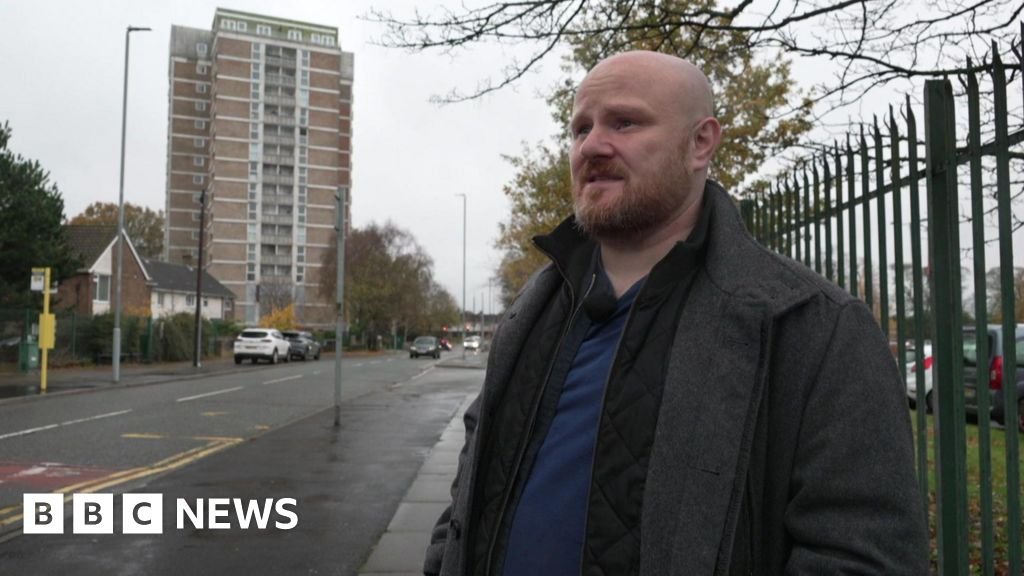
Residents of Beech Rise and Willow Rise in Kirkby, Merseyside were forced to move out in July.
Owners of the buildings’ 160 individual flats face bills of almost £10,000 each for service charges and repairs despite no longer being able to live in the blocks, and say they feel “trapped” in contracts that make them liable for almost all problems that arise.
The buildings’ landlord said the residents’ management company, on which some leaseholders were sitting, had “accumulated significant debts”, and was now considering legal action against it.
The former council block was renovated as “luxury living” apartments in 2006 by developer LPC Living, and sold for up to £100,000 each.
Over the next 14 years, flat owners had to spend a total of hundreds of thousands of pounds fixing problems in the buildings.
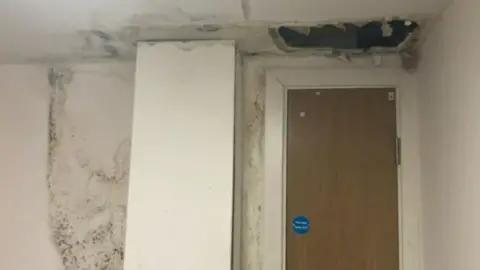
The buildings suffered from damp, mould, water damage and faulty electricity due to broken lifts, which meant that, according to one flat owner, a tenant who was seriously ill had to sleep in his car because he could not manage the stairs.
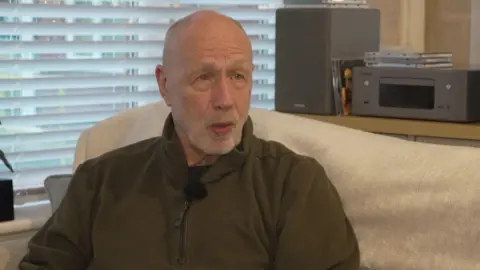
Dave Hemmings, 72, moved into a rented flat in August after having to leave his home when the fire service closed the building.
He said a leak in the building meant they had not had heating or water for several months.
He said he was not in a position to pay the £10,000 he would be expected to contribute, saying: “I can’t pay. I haven’t got it. I’ve put my pension into buying the flat.”
“I ain’t got that kind of money.”
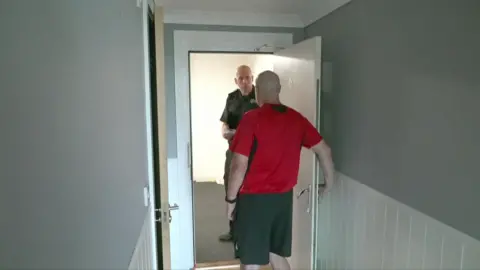
Michael Jones, who paid £95,000 for his flat in 2007, said he and others who had flats in the buildings were locked into leases that required them to pay for all repairs and maintenance, including communal areas, structural walls, ceilings, floors and lifts.
The father-of-two said: “The companies that have come over to be our landlords don’t seem to be responsible for paying anything according to these leases.
“We have repeatedly paid out of the nose for work that now needs to be done again, but it seems there is nothing else anyone can do but make money from us.”
He added, “We have gone through hell all these years. We feel as if they want to throw us out, and these bills are just an attempt to hand us the keys back.”
“We should not be asked to pick up the tab for years of mismanagement and neglect.”
“The leases we signed up for are not designed for us, they are designed for the multi-millionaires who are in charge of the properties,” Mr. Jones said.
The buildings are operated under what is known as a “tripartite” lease structure. Flats have individual owners, then a residential management company, and then above them the landlord – or main lessor.
The residents’ management company, Parklands (Kirkby) Management Company Limited, was made up of representatives of the main lessor and some of the leaseholders.
It was responsible for appointing firms to manage and maintain the buildings and collecting service charges.
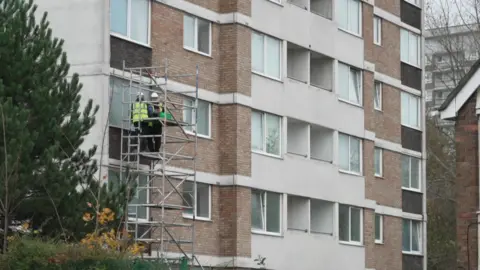
In 2011, the original developer, LPC Living, sold the main lease of the buildings to a firm run by businessman Michael Gabbay, who has a portfolio of hundreds of freeholds and leaseholds across the UK registered to several firms based in the British Virgin Islands.
Mr Gubbe – who has been contacted for comment – has appointed companies to manage the blocks on behalf of Parklands (Kirkby) Management Company Limited.
Flat owner Mr Jones, 42, said that while more than £300,000 was raised to pay for fire doors and other fire safety works during this period, thousands of pounds were added in professional management fees.
But, Mr Jones said, the work was of a poor standard and was not completed and the building fell into disrepair.
As of 2021, the head lease is held by a company registered in the British Virgin Islands, owned by millionaire property tycoons Vincent and Robert Tchenguiz, who own thousands of freeholds and leaseholds in England.

Mr Jones and fellow leaseholder Alan Shaw said they joined the board of Parklands (Kirkby) Management Co Ltd in 2023 in the hope of solving the buildings’ problems, but they were unable to do so. Some leaseholders had already stopped paying service charges, and bills had started rising.
Mr. Jones and Ms. Shaw resigned from the company earlier this year, and since then, major lessor Rockwell FC100 has taken control of the buildings and directly appointed another building management firm to run them.
The freehold of the land on which the buildings stand is owned by a defunct company called TR Marketing, which is registered for a unit in an industrial estate in Salford and purchased the freehold from housing association Liv Housing in 2022.
The BBC has been unable to contact the firm.
By the time the buildings closed in July, Knowsley Council had spent up to £1 million on security patrols so that residents did not have to leave their homes.
But this summer, the building was still deemed unsafe by the fire service, which said it would have to be closed “in the absence of any suitable plan to address the fire safety deficiencies”.
The fire service did not specify what the problems were in its prohibition notice, and the original developer LPC Living has told the BBC that it had received “all necessary approvals and certifications” when renovating the buildings in 2006.

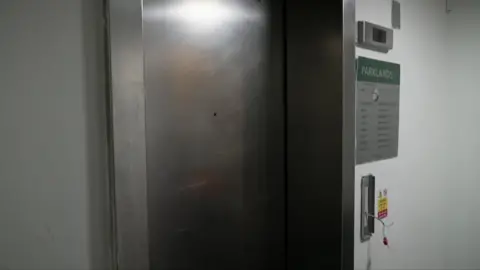
The bill sent to flat owners this month included part of the estimated £600,000 cost of replacing broken lifts and about £220,000 for fire safety works, such as replacing fire doors and ensuring the building has proper fire escapes.
The cost of the “remediation” for the fire alarm system – which was paid for by a government grant of £40,000 in 2021 – is expected to be around £100,000.
‘grossly unfair’
Knowsley Council leader Graham Morgan said it “seems extremely unfair that residents who had kept up to date with their service charge payments, and did not want to move out, are now being asked to pay again – and for what benefit if they no longer live there?”
He added: “I would encourage residents to seek legal advice regarding any liabilities they may have under their lease arrangements.
“The council will also support residents and join them in calling on the Government to intervene, identify those responsible for the lack of repairs and maintenance and ensure that the costs of necessary repairs are met by those who are actually liable.”
A spokesman for estates and management (E&M), the agent for head lessors Rockwell FC100, said the situation was “disappointing”.
He said the company had “no choice but to take over the management of the building” from Parklands (Kirkby) Management Company Limited, adding that it had “accumulated significant debts to suppliers and has not collected service charge money from a large number of homeowners, resulting in the current situation”.
The spokesperson said: “Significant work must now be done to deal with the management of the buildings and address the issues raised by the fire service in the prohibition notice.
“We are exploring whether legal action might be possible against RMC, as they were responsible for the management of the buildings until recently.
“We are not a property development company, and our sole focus is on taking appropriate actions forward. Regular updates will be provided to residents.”
A spokesman for Lambert Smith Hampton, the current building management firm employed by E&M, said any charges would be reviewed against “exemptions arising from the Building Safety Act 2022” “before any costs are imposed on leaseholders”.
<a href