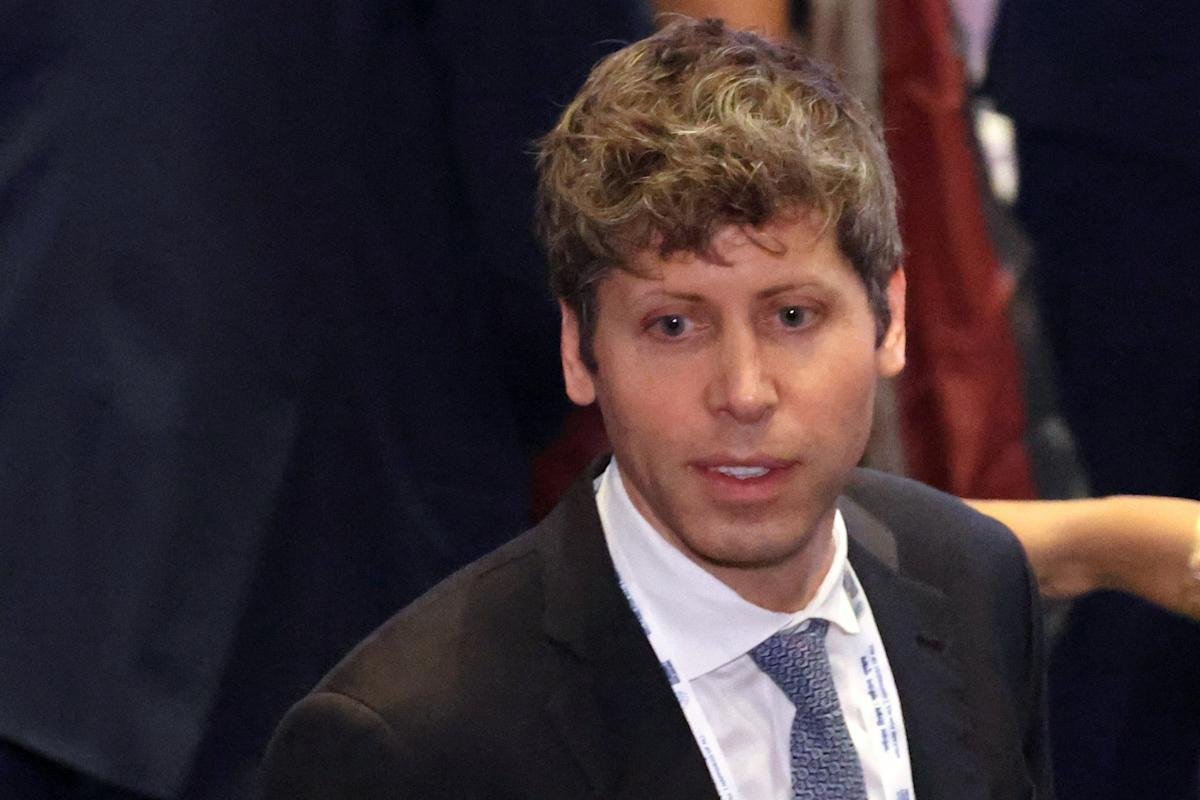
OpenAI’s Sam Altman said the company will amend its deal with the Department of Defense (or the War Department) to explicitly prohibit the use of its AI systems on mass surveillance against Americans. Altman has published an internal memo previously sent to employees at X, telling them the company would be changing the agreement to add language to specifically clarify that point. Specifically, it says:
“Consistent with applicable laws, including the Fourth Amendment to the United States Constitution, the National Security Act of 1947, the FISA Act of 1978, the AI system will not be used to knowingly conduct domestic surveillance of US persons and citizens.
For the avoidance of doubt, the Department understands this limitation to prohibit the intentional tracking, monitoring, or surveillance of U.S. persons or citizens, including the procurement or use of commercially obtained personal or identifiable information.
Altman also claims in the memo that the agency has confirmed that its services will not be used by its intelligence agencies, including the NSA, without amending their contracts. He further said that if he received what he believed to be an unconstitutional order, he would rather go to jail than comply with it.
Additionally, the OpenAI CEO admitted in the memo that the company should not have rushed to make the deal on Friday, February 27, because the issues were “highly complex and demanded clear communication.” Altman explained that the company was “trying to tone things down and avoid a very bad outcome” but in the end it “seemed opportunistic”. If you recall, OpenAI announced the partnership shortly after President Trump ordered all US government agencies to stop using the cloud and any other anthropic services. To note, Anthropic began working with the US government in 2024.
The Department of Defense and Secretary of State Pete Hegseth were pressuring Anthropic to remove the guardrails of its AI so that it could be used for all “legitimate” purposes. These include mass surveillance and the development of fully autonomous weapons. Anthropic refused to bow to Hegseth’s demands and said in a statement that “no threats or punishment” would change its “position on mass domestic surveillance or fully autonomous weapons.” As a result, Trump issued the order. The Defense Department was the first to designate Anthropic as a “supply chain risk,” a designation typically reserved for Chinese companies that are believed to be working with their home country’s government.
Altman said that in his conversations with US officials, he reiterated that Anthropic should not be designated as a supply chain risk and that he hoped the Defense Department would offer it the same deal that OpenAI agreed to. In an AMA session on X over the weekend, Altman clarified that he did not know the details of Anthropic’s agreement and how it differed from the one signed by OpenAI. But if that were the case, he thought Anthropic should have agreed to it.
Following news of the OpenAI deal, Anthropic jumped to the number one spot on the App Store’s Top Free Apps leaderboard, surpassing both ChatGPT and Google Gemini. Anthropic, taking advantage of the sudden popularity of the cloud, launched a memory import tool to make it easier to switch to its chatbot from another company. Meanwhile, uninstalls of ChatGPT have increased by 295 percent day-over-day, according to Sensor Tower.
<a href