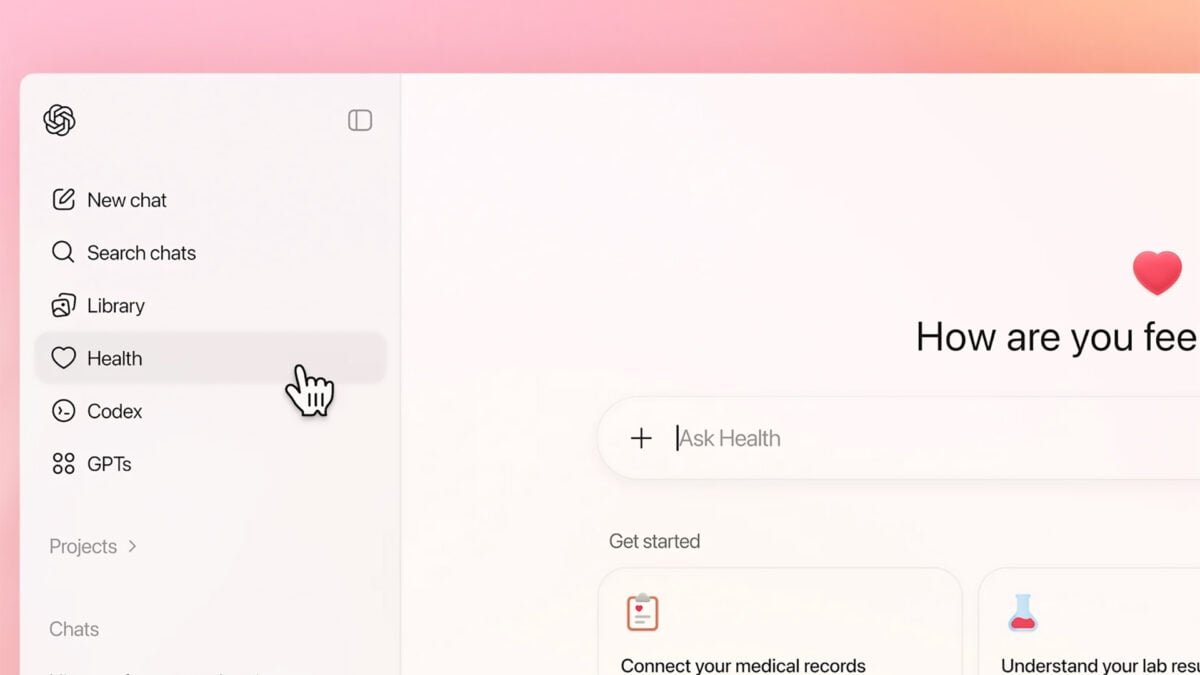

On Wednesday, OpenAI launched ChatGPT Health, a health-specific segment of the popular AI chatbot with the ability to connect to medical records, wellness apps, and wearables.
“ChatGPT can help you understand recent test results, prepare for appointments with your doctor, get advice about your diet and workout routine, or understand the tradeoffs of different insurance options based on your health care patterns,” OpenAI said in the announcement.
Users can connect to apps like Apple Health to share sleep and activity patterns, MyFitnessPal to get nutrition advice, AllTrails for hiking ideas, Peloton to get workout suggestions, and even Instacart so ChatGPIT can create a shoppable list for you based on what it thinks you should follow.
OpenAI says it has been working on ChatGPIT Health for more than two years with more than 260 physicians from 60 countries.
ChatGPT Health has not yet been fully launched. For now, the company is providing access to only a small group of early users for any final refinements. There is a link to the waiting list to sign up for it, although it is not working at the time of writing.
The medical records integration function is only available in the US, but is available globally except for users in the European Union, Switzerland, and the United Kingdom, all of which have very strict digital privacy laws.
ChatGPT has been at the center of privacy concerns after a poorly designed feature made some user queries public and discoverable by search engines.
But the company emphasizes that the new offering is safe and secure through purpose-built encryption and isolation, and it has made these privacy guardrails the main differentiator of Health from regular ChatGPAT.
The Health portion of ChatGPT is believed to have “separate memories” so that information remains limited to that chat, although Health Chats will be able to access information about you collected from non-Health chats. Conversations in Health won’t even be used to train the Foundation model.
OpenAI has been gradually increasing its investment in the healthcare sector for some time. In May 2025, OpenAI unveiled HealthBench, a new benchmark to evaluate the capabilities of AI systems, which was used to train ChatGPT Health.
Then, over the summer, the AI giant made some high-profile appointments to its healthcare AI team, including Nate Gross, co-founder of healthcare business networking tool Doximity, to lead the co-creation of new healthcare technology with physicians and researchers.
Around the same time, OpenAI also announced a partnership with Kenya-based primary care provider Penda Health, highlighting the ability of its latest model GPT-5 to “proactively flag” potential health concerns and create treatment plans when announcing the model, and was named as a partner in a Trump-led private sector initiative to use AI assistants in patient care and allow sharing of medical records across 60 companies’ apps and programs.
Also during the summer, OpenAI appointed its new CEO of Applications, Fidji Simo, who has identified health care as the AI use case he is most excited about and has since called the launch of Health Care “really personal” for him.
Despite some worrying issues, OpenAI’s big healthcare AI bet is a sign of growing industry-wide acceptance of AI. The winds of regulation appear to be blowing in favor of health care AI, with Utah approving AI-prescribed medication renewals and the FDA saying it will regulate wellness software and wearables with a light touch as long as companies do not claim their product is “medical grade.”
“We want to let companies know with very clear guidance that if their device or software is simply providing information, they can do that without FDA regulation,” FDA Commissioner Marty Macri told Fox Business on Tuesday.
But even mere health and wellness suggestions have the potential to lead to disastrous consequences for users if proven wrong. ChatGPT has been the subject of considerable controversy over the past year, notably due to several fatal mental health episodes which have been accused of being triggered by a lack of adequate security controls.
With ever-increasing investments, OpenAI is trying to strengthen its product’s place in healthcare. Earlier this week, the company published a report claiming that more than 40 million ChatGate users seek health advice every day, and paired the findings with sample policy concepts such as demanding full access to the world’s medical data and requesting a clear regulatory path for consumer-focused health AI. The company also said it is preparing to release a more comprehensive health AI policy blueprint in the coming months.
<a href