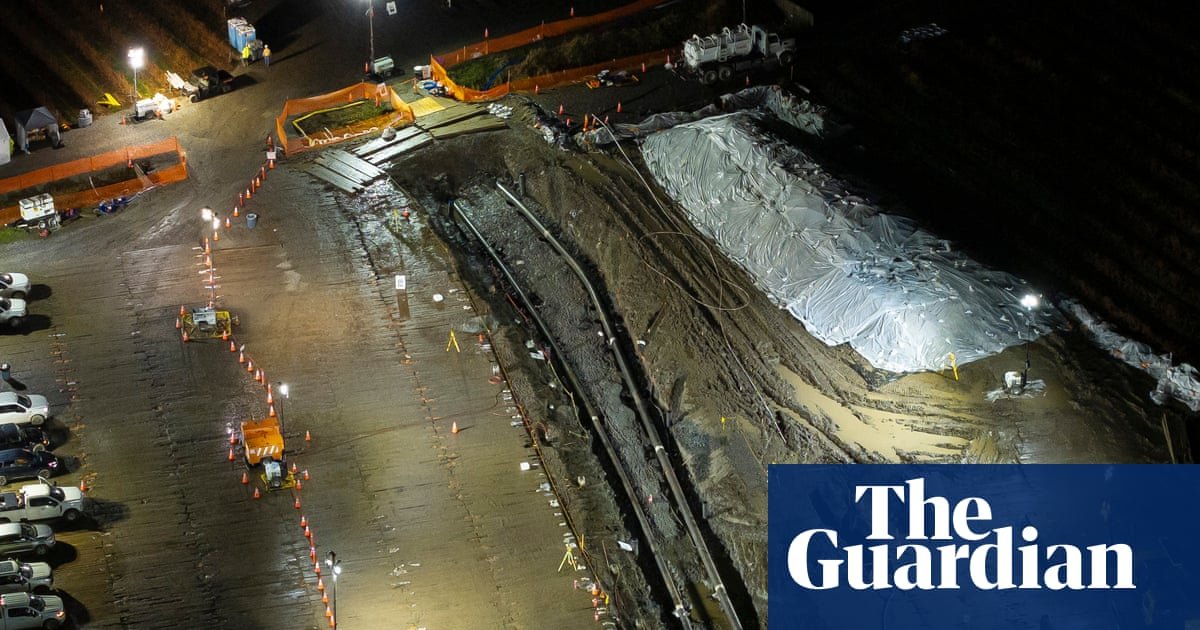
Investigators have identified the source of a leak at the Olympic Pipeline, two weeks after fuel was first spotted in a ditch near an Everett, Washington, blueberry farm.
Oil and gas company BP, the operator of the pipeline, shared in a statement that it had determined that the leak occurred in a 20-inch pipeline, not a neighboring 16-inch pipeline, allowing that pipeline to be restarted.
“Repair plans for the 20-inch segment are being developed and repair and restart timelines will be shared when available,” BP said.
The news follows announcements from Washington and Oregon governors Bob Ferguson and Tina Kotek, respectively, declaring states of emergency due to fuel supply disruptions. The Olympic Pipeline carries gasoline, diesel, jet fuel and other petroleum products across both states, including 90% of Oregon’s transportation fuel and the majority of Seattle-Tacoma International Airport’s jet fuel.
The leak was first reported on November 11 between the cities of Everett and Snohomish, Washington. The state Department of Ecology determined that the leak contained a mixture of gasoline, jet fuel and diesel. BP shut down two pipelines running side by side in the Olympic Pipeline system, either a 16-inch or a 20-inch pipeline, to determine the source of the leak.
On November 16, the company restarted the 16in pipeline, but shut it down again after seeing “an increase in product at one collection point,” it said in a statement.
Later that week, on November 19, Ferguson issued a state of emergency in Washington, waiving state regulations to allow commercial vehicle operators to drive longer distances to transport jet fuel to Seattle-Tacoma Airport.
Kotek on Monday declared a similar state of emergency in Oregon and relaxed commercial driving rules.
In statements to Reuters on Monday, Seattle-Tacoma and major airlines operating through the airport said they had developed contingencies to prevent disruption to holiday travel.
“We do not expect any disruption to our operations at Seattle-Tacoma International Airport during the Thanksgiving travel week,” Alaska Airlines said. He said it had brought additional fuel to Seattle on inbound flights and additional trucking shipments, and had added fuel stops on some flights.
Delta Air Lines similarly said it had delivered additional fuel to the airport and added refueling stops on some long-haul flights.
On Monday, BP reported that it had excavated “over 200 feet of pipeline” and expected “operations to continue overnight tonight”. By Tuesday morning the company had found the source of the leak.
In updated statements to Reuters on Tuesday, Delta said it was “operating our full Seattle hub schedule and has discontinued fuel stops on select long-haul flights”. Alaska said it had “discontinued all planned fuel stops, but will continue to tanker and truck in additional fuel on a reduced basis as the pipeline grows to normal capacity”.
Repairs to the 20-inch pipeline come as the Washington State Department of Ecology fined BP $3.8 million for the 2023 gasoline leak from the Olympic Pipeline. The Olympic Pipeline has leaked at least 13 times since 1999, when a leak near Bellingham caused an explosion that killed a teenager and two young children. The pipeline is projected to leak three times by 2025, according to the Pipeline Safety Trust, a Washington state-based nonprofit.
“These incidents have caused more than $100 million in property damage,” Kenneth Clarkson, a spokesman for the Pipeline Safety Trust, said in a statement to The Associated Press. “Olympic Pipeline needs to explain what has changed and what they are doing to stop it.”
<a href