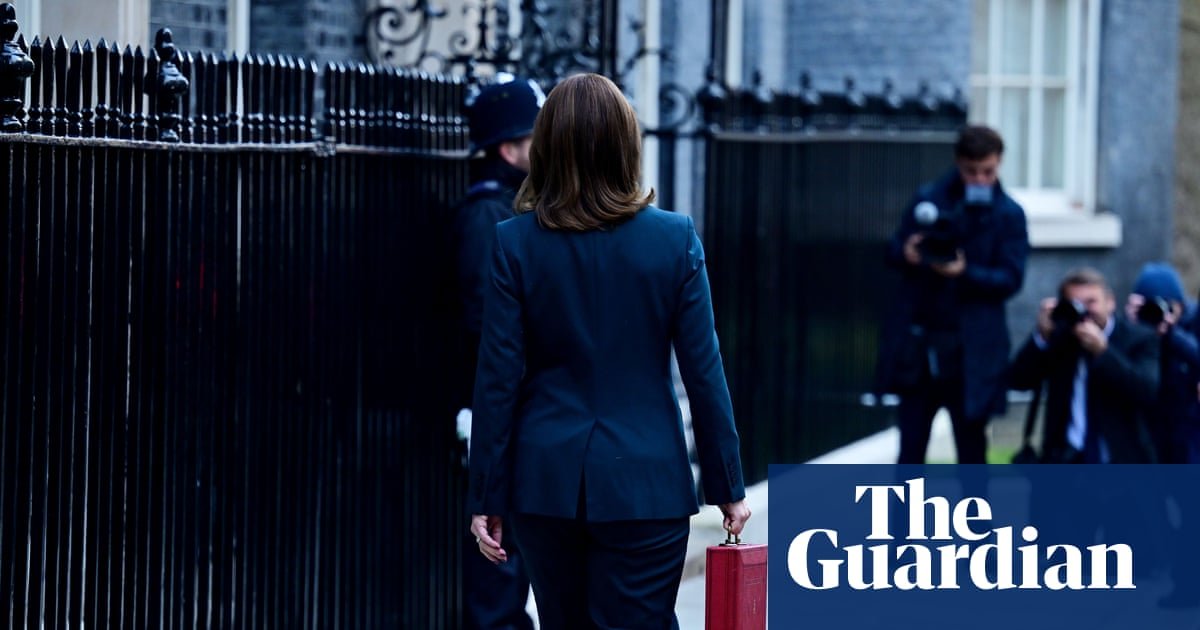
Rachel Reeves’ tax-hike budget will leave public finances in a “weak” position despite doubling the UK’s fiscal buffer, the Treasury’s independent forecaster has warned.
The Office for Budget Responsibility (OBR) said the likelihood of damaging events – such as a global stock market collapse or a future pandemic – impacting the government’s finances remained high, while the Chancellor increased his headroom from £9.9 billion to £22 billion.
Following a comprehensive review of Britain’s economic health following the 2008 financial crash, the OBR also said that the economy will grow slower than previously estimated over the next five years.
The OBR said the economy will grow by 1.5% this year, up from its earlier 1% forecast, and by 1.4% next year, well below the 1.9% forecast in March. Growth over the next three years will also be lower than expected, which will weaken the Chancellor’s campaign.
As Reeves prepared to announce a £26 billion tax rise in his set-piece speech, the OBR accidentally revealed its verdict on the impact of his tax and spending measures in a hastily released document. It immediately apologized for the error and launched an investigation, blaming “a mistake within the OBR”.
The forecaster said the tax rise gave Reeves the money to build a bigger fiscal buffer, as the £16bn cost of its economic downturn was offset by £14bn of extra income from higher tax receipts. The growth rate by 2030 has declined by 0.3 percent compared to the estimate made in March.
High annual debt financing costs and large welfare bills were factors that increased pressure on the Chancellor to raise taxes.
OBR Chairman Richard Hughes stressed the UK’s increasing vulnerability to the projected sharp rise in borrowing over the next two years.
He said the £22bn buffer remains low, and “could be overwhelmed by £60bn more debt by the end of the decade than we estimated in March, an overall debt burden that is twice the advanced-economy average, and the country will continue to pay more to service that debt than at almost any other time in post-war history”.
“While this budget addresses some fiscal risks and increases the margin against the government’s fiscal targets, it still leaves the UK public finances relatively vulnerable to future shocks,” the OBR said.
Hughes said government spending would increase each year over the next five years, with £11 billion added in 2029–30.
Ruth Curtis, chief executive of the Resolution Foundation thinktank, described the budget as a “repair job” that left too much pain from higher tax rises in 2028 and beyond.
Helen Miller, director of the Institute for Fiscal Studies, called it a “spend now, pay later” budget, with most tax increases backdated to the end of Parliament.
Reeves is counting on a three-year extension of the long-standing cap on the income tax cap to close the spending gap resulting from higher spending and declining growth.
Often called a hidden tax, this withholding pushes more low-income people into the standard rate tax band and existing taxpayers into higher rate bands. The OBR said the move would raise an additional £8.3 billion in 2029-30.
The OBR said consumers will face inflation of 3.5% this year, up from 3.2% forecast in March, and 2.5% next year, up from an earlier forecast of 2.1%, before stabilizing at 2%.
After newsletter promotion
The OBR said the government was likely to get a boost from “sticky inflation”, which would keep prices rising above 2% for longer than expected, leading to increased VAT tax receipts and income tax from higher wages.
The OBR said total tax collections as a proportion of national income would reach a historically high level of 38%.
It said excess spending in the first years of the forecast would send borrowing on a rollercoaster ride when higher taxes take effect with tougher spending limits in later years.
“The net effect of budget spending and tax policies increases borrowing by an average of £5 billion over the next three years, but then reduces it by an average of £13 billion over the next two years,” the OBR said.
Among several smaller tax increases will be a ban on salary sacrifice schemes that allow tax-free pension contributions from April 2029, raising £4.7 billion for the Treasury in the 2029-30 financial year.
The Chancellor said she is increasing taxes on wealth by £8 billion, including an annual “mansion tax” on homes worth more than £2m, expected to raise £400m a year from April 2028.
When all tax and spending measures are included, the OBR said borrowing is expected to fall from 4.5% of national income in 2025-26 to 1.9% of national income in 2030-31.
Debt interest will account for £1 in every £10 of government spending this financial year, Reeves said, but the ratio of debt to national income will start to fall in 2029-30 and again in 2030-31.
Earlier this year, the OBR indicated it would review the UK’s productivity outlook, which measures the output of the average worker per hour, in time for this Budget.
The outcome of the review reduced the Chancellor’s headroom from £16bn to £9.9bn, down from the £20bn downgrade expected by many analysts.
Rob Wood, chief UK economist at consultancy Pantheon Macroeconomics, said: “Despite the Chancellor’s positive stance today, the fiscal outlook remains alarming. Some portion of fiscal savings will fail to materialise; the government lacks the political power to put forward the measures needed to steady the fiscal ship in the near term, and we think defense spending will put further pressure on sums.”
Asked whether he would resign over the OBR leaks, Hughes said: “I will follow the recommendations (of the inquiry).”
The OBR also expressed concern over an AI-driven bubble in stock markets. “While market volatility is difficult to predict, a large global equity price correction poses downside risks to both our economy and fiscal forecasts,” it said.
<a href
https://888starz.net.co/
888Starz Colombia constituye una plataforma de casino online y casa de apuestas que reune mas de 9.500 juegos, entre los que se incluyen slots, ruletas y mesas con croupier real y una amplia oferta de deportes que abarca desde la Liga BetPlay hasta la Champions League y los deportes electronicos.
https://ufc327odds.com/
This Miami-held light heavyweight title fight at UFC 327 offers a genuine pick’em for bettors, as ex-champion Jiri Prochazka (-142) and on-a-roll knockout artist Carlos Ulberg (+120) get set to throw down for the vacant belt. The tight odds underscore how well-paired these two finishers truly are, making this fight where a wager on any side is simply a matter of which dynamic fighting style you believe will reign supreme.
ии для дома https://vc.ru/aihub/2842517-luchshie-neuroseti-onlajn-dlya-rossii-obzor-2026-goda
Рекомендую этот сервис, генератор нейросеть написать текст
https://luckia.net.co/
Luckia Casino, con mas de dos decadas de experiencia a partir de su creacion en 2002, se ha posicionado como un sitio de casino en linea y apuestas deportivas de confianza para el publico hispanoparlante, con Colombia incluida en 2026.
русские ии для генерации видео https://vc.ru/aihub/2842552-generatsiya-video-neirosyetyu
https://mine-drop1.com/
https://mine-drop1.com/
Сделать презентацию нейросетью бесплатно. Ознакомьтесь с подробностями – нейросеть для генерации презентаций бесплатно в тг
Кандинский нейросеть — полный обзор: https://vc.ru/aihub/2842713-kandinskiy-neyroset-obzor-prompty
Пространство внутри капсульного дома организовано настолько эффективно, что в нем есть всё необходимое для жизни: купить капсульную кофеварку для дома недорого
https://metallicheskiy-shtaketnik.ru/
https://1win-uzbekistan5555.xyz/
Нужен был телефон срочно, и этот магазин действительно выручил. Заказ обработали оперативно, быстро отправили и держали в курсе по статусу. Смартфон пришёл в идеальном состоянии, без каких либо вопросов. Отличная скорость и нормальный сервис, store 77 официальный