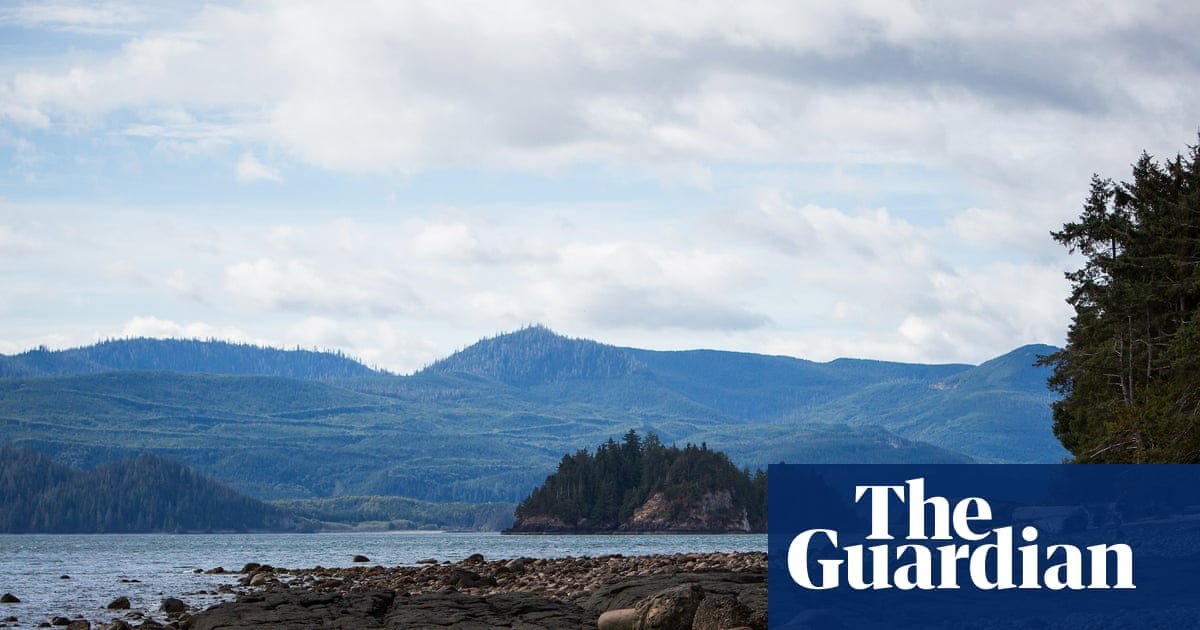
When the people of the Haida Nation won a decades-long battle for recognition that an archipelago off the coast of British Columbia in Canada is rightfully theirs, it was a long-awaited victory.
The unprecedented agreement with the provincial and federal governments means the Haida no longer have to prove they have aboriginal title to the lands of Xaahidlagha Gwaii, the “island on the edge of the world.”
Now, both governments must confront what this could mean.
On Thursday, the Canadian Prime Minister, Mark Carney, and the Premier of Alberta, Danielle Smith, agreed to an energy deal centered on plans for a new heavy oil pipeline from the province’s oil sands to the Pacific coast.
Heralded as a major political breakthrough between the standoff parties, the deal lays the groundwork for an oil pipeline that could carry more than a million barrels a day from the oil sands to the Pacific. With the new legislative powers, Carney’s government can also reduce delays in permitting and approvals.
But the response from politically powerful nations like the Haida – whose consent the government needs – was both quick and simple: “This project is not going to happen.”
President Gagwis of the Haida Nation said the federal government has a duty to “uphold the honor of the Crown” when dealing with his community.
“Attempts to obstruct a project jeopardize that ‘respect’,” he said. “This is an opportunity for the Government of Canada and the Prime Minister to look in the mirror and see what kind of country he wants to lead and what kind of country he wants Canada to be.”
Despite Carney’s pledge to get First Nations’ full consent and share any windfall profits on any potential pipeline project, Gagwis said there is nothing federal or provincial leaders can say to move his country forward.
“Because there is nothing that can absolutely guarantee the safety of our communities from oil spills, there is nothing that can be said to convince us otherwise.”
Coastal First Nations (CFN) President Marilyn Slate, who represents eight coastal First Nations, including the Haida, said the group has no interest in allowing tankers in coastal waters.
“We have no interest in the co-ownership or economic benefits of a project that has the potential to destroy our way of life and everything we have built on the coast,” he said.
Carney has been working to calm political discord among provincial leaders and Thursday’s announcement was greeted with enthusiasm in Alberta. Speaking at the Calgary Chamber of Commerce, the Prime Minister received a standing ovation, an almost impossible feat for a Liberal leader in a conservative-leaning region.
Business groups have come out in favor of the deal, which the Canadian Chamber of Commerce says leads the country to “economic co-operation, greater regulatory certainty and less stress.” Recent polling shows that most Canadians – including a slight majority in British Columbia – are open to the idea of a pipeline. The vague outline of a major infrastructure project has also piqued the interest of some First Nations in Alberta, who have been promised a potential equity stake in any project.
The premise of Carney’s energy plan is that oil and gas exports can be increased while meeting the federal government’s climate goals. The federal government would exempt the potential pipeline project from the existing coastal oil tanker moratorium and emissions limits. In return, Alberta would have to increase its industrial carbon pricing and invest in billions of dollars of carbon capture projects.
In theory, this deal goes a long way in bringing Alberta and Ottawa together to achieve a common, nation-building goal. But critically, no private company has shown interest in supporting a pipeline project that would face stiff opposition.
British Columbia Premier David Eby said after the announcement, “No proponents, no route, no money, no First Nations support.”
Abi, a staunch critic of the deal after his province was left out of the negotiations, said any pipeline proposal “cannot pull limited federal resources, limited Indigenous governance resources, limited provincial resources away from real projects that will employ people, provide the country with the money we desperately need, and provide access to investment and global markets”.
The deal also cost Carney the loss of one of his most prominent cabinet ministers, Steven Guilbault, who resigned hours after the deal was signed.
In a post announcing his resignation on social media, Guilbault said the decision came with “great sadness” but was necessary given his values as a longtime environmental advocate.
The decision to break ground for a potential heavy oil pipeline also reflects the political shift of Carney, who, before entering politics, developed credentials as a global economist focused on achieving a net zero future.
Jessica Green, a political science professor at the University of Toronto, said: “Everything in this (agreement) talks about more fossil fuels, except the first line – where it says Canada and Alberta are committed to achieving net zero greenhouse gas emissions by 2050.
“Say Spade: If You Want to Double Down on Fossil Fuels, At Least Have the Guts to Say It Out Loud.”
Green said that after politically signaling that Canada was “all in” on fossil fuels, the agreement was a “trash fire” of a climate agreement.
But the long trade war with the United States, Canada’s largest trading partner and closest political ally, has dramatically affected the country’s economic security. Much of Carney’s brief tenure as Prime Minister focused on expanding potential markets outside the US.
“Without the trade war and tariffs, I think the economy wouldn’t be hurt the way it is,” Green said. “Nobody has a crystal ball, but in a world where we’re not suffering from trade wars, I think we don’t see this level of aggressive campaigning for fossil fuel interests and infrastructure.”
For remote coastal First Nations whose crops and livelihoods come from the Pacific Ocean, the threat of the pipeline is more than just a question of climate policy.
Gagwis said: “When people talk about this project, they need to understand that in the event of a spill the entire ecosystem could collapse. Losing a culture that has developed a relationship with the sea over thousands of years would be devastating. That needs to be respected.
“I see the reality coming in soon that there is no project, there is no pipeline route, there are no proponents – and there is no support. Everyone here is against it. There are other ways to find more business in oil transportation to Alberta. But it’s not going to be through the coast.”
<a href