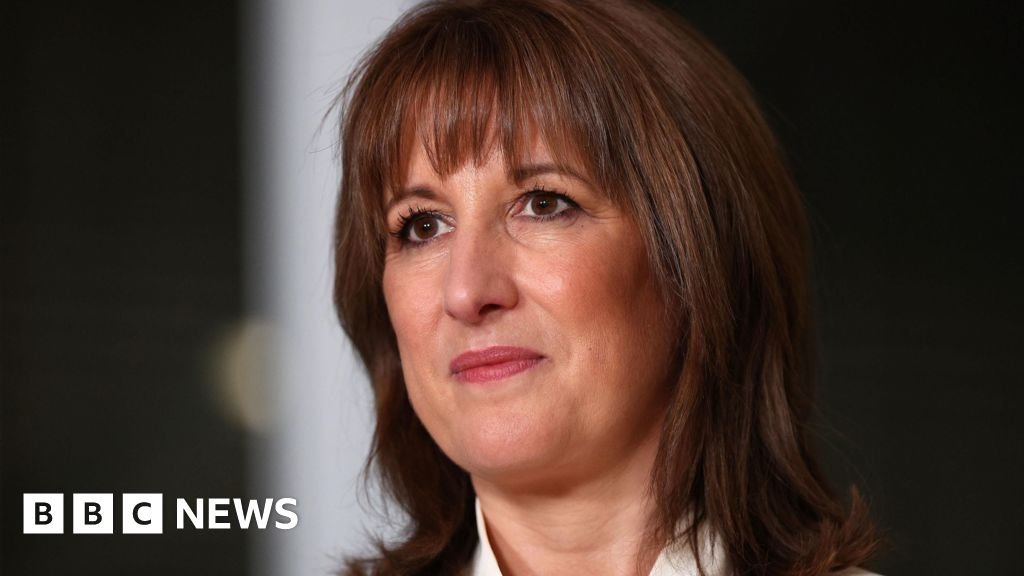
Downing Street has denied that Chancellor Rachel Reeves misled the public about the state of the public finances ahead of this week’s Budget.
There were warnings ahead of the budget that Reeves could face a £20bn gap in meeting his rule not to borrow for everyday spending.
But in a letter to MPs, the chair of the Office for Budget Responsibility (OBR) said he had told the Chancellor in mid-September that the gap would be very small.
Conservative leader Kemi Badenoch said the letter showed that Reeves had “lied to the public” and should be fired.
There was speculation in the weeks before the Budget that the Chancellor would increase income tax rates, breaking a Labor manifesto pledge.
On 4 November, Reeves used a rare pre-Budget speech in Downing Street to warn that Britain’s productivity was weaker “than ever before” and that “reduced tax receipts will also have consequences for the public finances.”
Then, on 10 November, he told BBC Radio 5 Live: “It would certainly be possible to stick to the manifesto commitments, but it would require things like deep cuts in capital spending.”
These comments, along with his speech, fueled speculation that he needed to raise significant sums to meet his financial commitments.
However, the Office for Budget Responsibility has now confirmed that before both of these interventions, it had told Reeves that the government had actually received higher than expected tax receipts, which overstates the impact of the decline in productivity.
This meant that he had surplus to meet both his financial obligations.
In a letter to the Commons Treasury Select Committee, OBR Chairman Richard Hughes revealed that he told the Chancellor on 17 September that the public finances were in a better state than widely thought.
The letter also shows that the OBR was on track to meet both of the Treasury Chancellor’s financial rulings on 31 October.
But Reeves continued to signal that she would be likely to raise income tax rates.
At a Downing Street press conference he said: “It is already clear that productivity performance… is weaker than before.”
She added, “I want people to understand what we’re facing before that budget.”
However, the Treasury then backed off from raising income tax rates, with government sources claiming this was due to the OBR’s better-than-expected forecasts.
It has now emerged that there was no significant change to the OBR forecasts ahead of the Budget.
Conservative shadow chancellor Sir Mel Stride said: “We now know the truth.
“Rachel Reeves spent the months leading up to the Budget claiming that declining economic forecasts would require her to make difficult choices, which were not made by her.
“She also revealed she was considering raising income tax rates.”
Claiming it was “all a hoax,” he added: “It appears the country has been deliberately misled.
“In doing so, some people may also face higher mortgage rates due to the impact on markets from Labour’s chaotic briefing.”
Asked whether Reeves had misled the public and financial markets, the PM’s spokesman said: “I don’t accept that.”
He added: “As he (Reeves) said in the speech he gave here (Downing Street), he talked about the challenges the country was facing and he spelled out his decisions incredibly clearly in the Budget.”
He said the government has increased the scope for the treasury to meet fiscal rules, which will create “certainty and stability for business”.
<a href