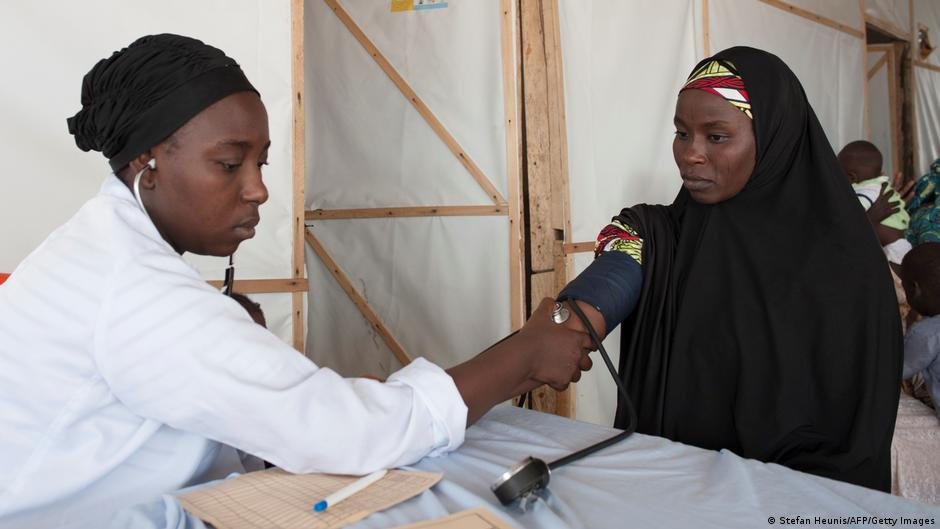
According to the World Health Organization (WHO) Hypertension Nigeria 2023 Profile, the prevalence of hypertension in Nigeria is estimated to be about 36%.,
World Heart Federation High blood pressure ranks as the number one risk factor for death globally, accounting for nearly half of all heart disease and stroke-related deaths worldwide.
It was once thought that high blood pressure mainly affected the elderly. Experts in Nigeria now warn that young adults are at increasing risk.
Ese Odogu, a fashion designer based in Lagos, Nigeria’s commercial capital, was diagnosed with the condition at the age of 26 and has been living with the condition ever since.
‘Stress is the main factor in high blood pressure’
“One of the things I started noticing was my hair falling out,” he told DW.
Odoggu says waking up at 4 a.m., coming home late after 10 p.m., and not getting enough sleep while working a previous job in the banking sector, along with stress, was a major contributing factor to his development of high blood pressure.
Odogdu narrated how she was examined and was shocked when she was told she was suffering from high blood pressure.
“The thing about high blood pressure is that they have to figure out which medications work for you,” he said. “So they have to keep testing different types of drugs to see which drug will really work for your type of high blood pressure.”
“There are some things I can’t do,” she told DW. “I can’t let myself get frustrated, I can’t get angry because once I get angry it means my blood pressure will go up. And there are certain foods I can’t eat.”
WHO warns that if high blood pressure is not treated it can lead to serious complications such as heart failure and stroke.
Preventable risks lead to health crisis
Medical experts, such as John Tehinse, a food scientist at the Nigeria Institute of Health and Environmental Development, point to the current trend as arising from dietary factors such as high salt intake.
Simeon Isezuo, a consultant cardiologist at the Usmanu Danfodiyo University Teaching Hospital, Sokoto, said risk factors associated with hypertension include “high-salt diet, obesity, sedentary lifestyle, excessive alcohol consumption, chronic stress, smoking and genetic predisposition.”
Other experts say awareness is still dangerously low, with a 2021 meta-data analysis indicating that only 29% of people with high blood pressure in Nigeria were aware of their condition, 12% were on treatment, and only 3% had achieved control.
“Most of these risk factors are preventable,” said Dr. Francis Asogwa, a Lagos-based consultant cardiologist. “We’ve seen a lot of cardiovascular complications in young adults, strokes starting to happen in young adults…myocardial infarction, pulmonary artery disease and heart failure.”
They warned that the current increase in high blood pressure rates among Nigeria’s young adults could have serious consequences for the country’s already struggling economy and healthcare sector.
“In a country where life expectancy is about 56.5 years and people between the ages of 18 and 39 are getting high blood pressure, this will really impact the demography of the country and most importantly the economy of the country,” he told DW.
The burden of high blood pressure is deepened by drug costs
Odogu echoes this sentiment, noting that living with high blood pressure already puts a significant financial strain on her income due to Nigeria’s cost-of-living crisis and the rising cost of medicines.
“Some people are lucky to have just one medicine to help them, I have been put on three and one alone costs about 3,000 naira (about $2, €1.78),” she explained.
“So that means sometimes it is 9,000 Naira and because of the economy, sometimes I am spending between 11,000 to 12,000 Naira for these three medicines.”
Nigeria is Africa’s most populous country with more than 230 million people, many of whom are part of the country’s youth demographic aged 18-35, and experts say more work needs to be done in the area of high blood pressure preventive awareness and care.
In October 2024, the government of Nigeria, through its Ministry of Health, launched a nationwide “Know Your Number” initiative Free testing for hypertension and diabetes – the two most prevalent non-communicable diseases – for adults aged 18 years and above.
Some people are taking the help of social media to raise concerns. Health advocate Dr. Olawale Ogunlana, who shares videos on various health topics, says young adults can be reached more effectively through their smartphones and make them aware of the dangers of early-onset hypertension.
“I really strongly believe that social media is currently the most powerful public health tool that we have to bridge the gap between the hospital and the home,” Olawale says. On social media platform TikTok.
He also highlights an “invincibility bias” that young people often show when it comes to taking responsibility for their health. Like other experts, he recommends cutting down on salty foods, eating a healthy diet, staying active, and getting regular medical checkups.
“Every young adult should know their blood pressure just like they should know their phone number and the passcode to their phone,” he told DW.
“If you can remember the passcodes to your bank apps, you can remember your working blood pressure, you should know this.”
Back at home as she checks her regular blood pressure using a home kit, Odogdu hopes that as young people spend more time online and on social media, more young adults like her can become aware of high blood pressure and “how to avoid it.”
But now 31, she’s not thrilled by the prospect of a lifetime of medications due to high blood pressure.
“Not living a normal life, being on medications every day can be really depressing. It’s not funny, it’s not good.”
Edited by: Keith Walker
<a href