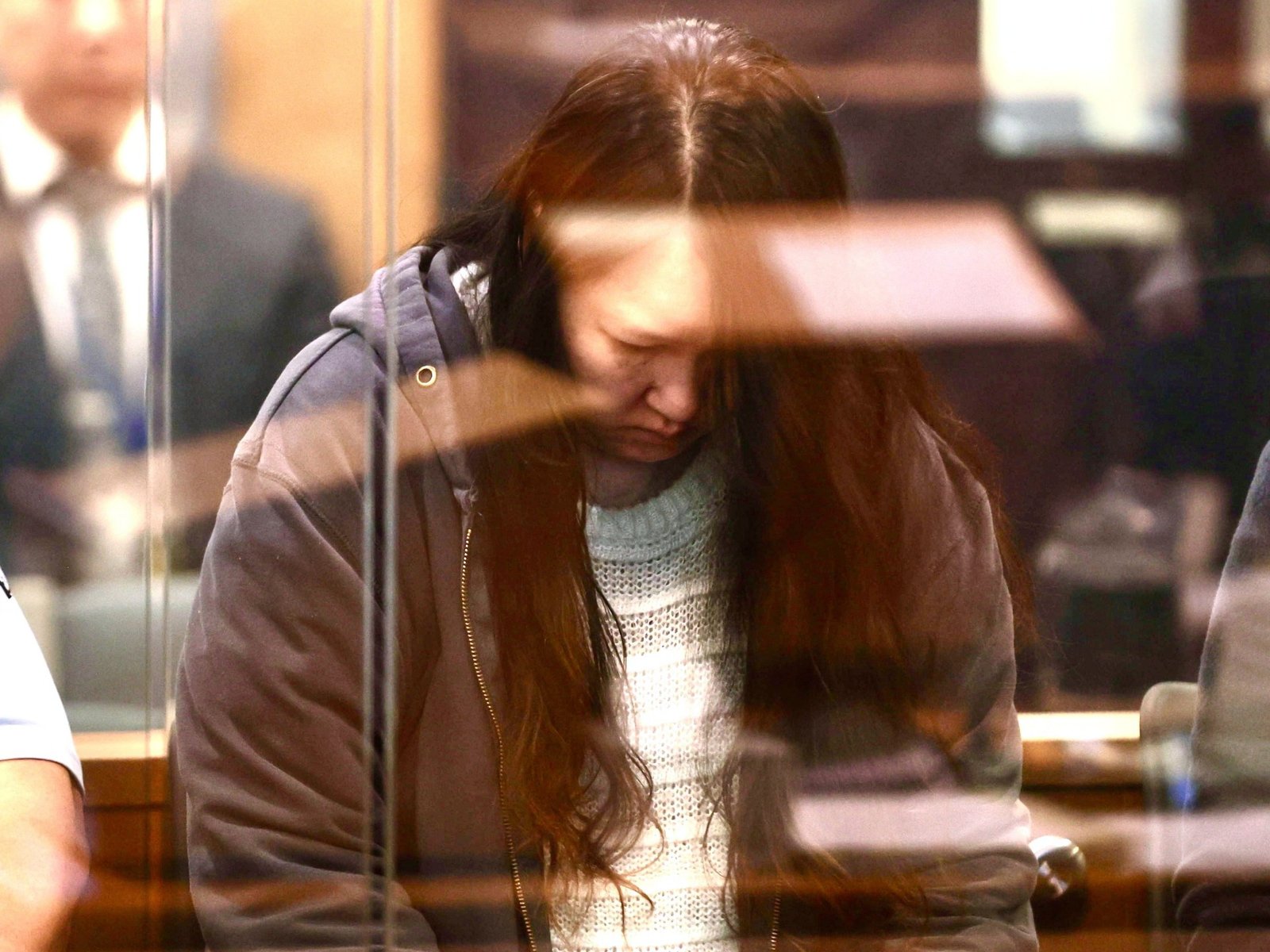
Hakyung Lee receives a life sentence with a minimum non-parole period of 17 years for murdering her two children and hiding their bodies in suitcases in a storage facility.
Hakyung Lee was sentenced on Wednesday after pleading guilty in September to the brutal murders of two children, aged eight and six, in 2018. The case was dubbed the “suitcase murders” in New Zealand.
Recommended Stories
4 item listend of list
Lee, who was born in South Korea, admitted murdering the children, but pleaded not guilty by reason of insanity. The murders occurred a year after the children’s father died of cancer.
Judge Geoffrey Wenning rejected demands by Lee’s lawyers for a lower penalty, and sentenced the 45-year-old to life in prison with a minimum non-parole period of 17 years.
He said he killed children who were “particularly vulnerable”.
But according to the New Zealand Herald newspaper, he approved mandatory treatment in a secure psychiatric facility, with the condition that Lee would return to prison if he was deemed mentally healthy.
Wenning said, “You knew that your actions were morally wrong… perhaps you could not afford to have your children around to be a constant reminder of your previous happy life.”
Lee showed little emotion as he sat in the courtroom and bowed his head with his eyes fixed on the floor as the judge pronounced the sentence.
Life imprisonment is the harshest sentence available in New Zealand, which abolished the death penalty in 1989.

Lee, who said she was stricken with grief after her husband’s death, killed her son Minu Jo and daughter Yuna Jo by mixing an overdose of prescription medication into their fruit juice.
Lee said that he had planned to kill himself along with the children, but the dosage went wrong.
She wrapped her dead children in plastic bags before stuffing them into suitcases, which were then hidden in a suburban storage warehouse on the outskirts of Auckland, New Zealand’s largest city.
The bodies lay in storage until 2022, when an unknown family opened the contents of an abandoned storage locker purchased at auction.
‘Dive deep’ into mental illness
Police used DNA and other forensic evidence to determine who the children were, how long they had been dead, and who ultimately killed them.
Lee, who had long since fled the country for her native South Korea by changing her name, was eventually tracked down and arrested in the port city of Ulsan.
He was extradited to face trial in New Zealand.
Lee represented himself during the trial with the support of two lawyers.
The trial depended not on whether Lee had murdered her children – which she confessed to – but on whether she knew that her actions were morally wrong.
As Radio NZ reports, lawyers told the court that the death of Lee’s husband Ian Joe in 2017 caused her to “dive deep” into mental illness, leading her to believe the only solution was to kill the children and then kill herself.
A forensic psychiatrist testified for the defense about Lee’s mental state, describing depression, suicidal thoughts, and the belief that killing her children was the right thing to do.
But prosecutors argued that Lee’s behavior was calculated, pointing to his efforts to hide the bodies before fleeing the country.
The sentencing hearing on Wednesday heard how the murders had left deep emotional scars on Lee’s family.
“If she wanted to die, why didn’t she die alone?” Lee’s mother, Choon Ja Lee, said in a statement read in court. “Why did she take innocent children with her?”
Lee’s brother-in-law said the children’s other grandmother was ill with cancer and still did not know about the murders.
According to a statement read in court, Sei Wook Cho said his “daily existence is a time bomb of fear” that his grandmother would find out.
“It was my late brother’s wish that I protect him,” the statement said. “They were our hope for the future. That’s a constant sentence that I can never get rid of.”
<a href