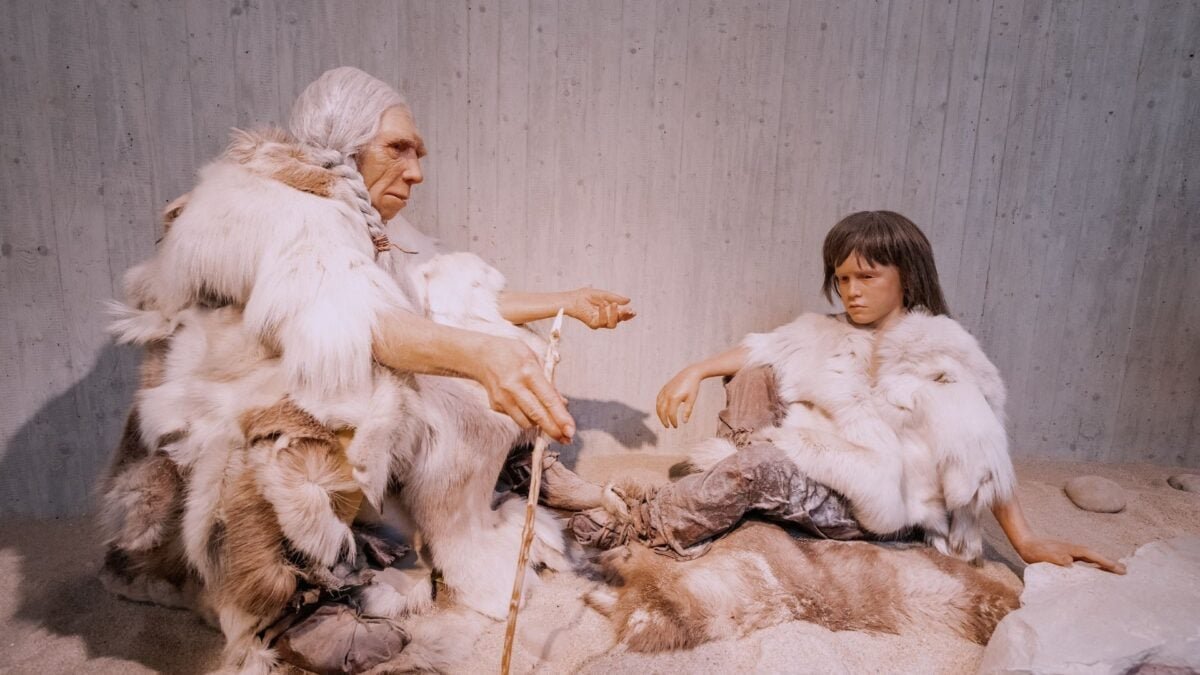
The study, published Nov. 19 in the journal Nature Scientific Reports, shows that the remains belonged to six women and children who were killed, dismembered and cannibalized by other Neanderthals. The bone fragments were found inside the Goyette cave system in modern-day Belgium, and they appear to be 41,000 to 45,000 years old.
According to the researchers, the findings point to targeted violent behavior toward thin, short women and children of other Neanderthal groups.

Cannibal reference revealed
When Neanderthals roamed the Earth, cannibalism was not so uncommon. Researchers have been finding evidence of this horrific practice for years, including examples occurring over extended time periods and in far-flung geographical areas.
Neanderthal cannibalism appears to have stemmed from a wide range of motivations, from sustenance and survival to possible rituals. However, piecing together the context surrounding individual events has proven difficult due to the fragmentary state of most of the skeletal remains and the lack of preserved cultural clues.
That being said, the assemblage of Neanderthal remains recovered from the Goyet Caves provides some clear insights into Neanderthal cannibalism during the Middle to Upper Palaeolithic transition. This collection of 101 bone fragments is the largest collection of Neanderthal remains in Northern Europe with clear evidence of man-made modifications.
Investigating an ancient crime scene
For this study, a team of researchers led by biological anthropologist Quentin Cosnefroy of the University of Bordeaux in France reassembled as many bone fragments as possible and conducted genetic analysis. The results indicated that the bones belonged to four adult females and two male children and that the females were smaller and more slender than the average female Neanderthal.
Forensic examination and microscopic analysis of the remains revealed clear signs of butchery, such as cut marks and scars. According to researchers, this is evidence of nutritional cannibalism.
When they combined their findings with previous isotopic analysis of the remains, they concluded that the cannibalistic Neanderthals came from a completely different area than the one in which they died. This suggests that they were victims of exocannibalism – the practice of eating a person outside their own community – possibly as a result of inter-group conflict, territoriality or cultural treatment of outsiders.
“At a minimum, this suggests that vulnerable members of one or several groups in the same neighboring area were deliberately targeted,” the researchers wrote in the study. They speculate that exocannibalism may have served as a selection strategy aimed at reducing the reproductive capacity of one or more competing groups.
The study’s findings, while stomach-turning, are a window into our distant past. They explain how subtle clues in ancient human remains can illuminate the complex social tensions and selective violence that shaped Neanderthal and ultimately our lives.
<a href