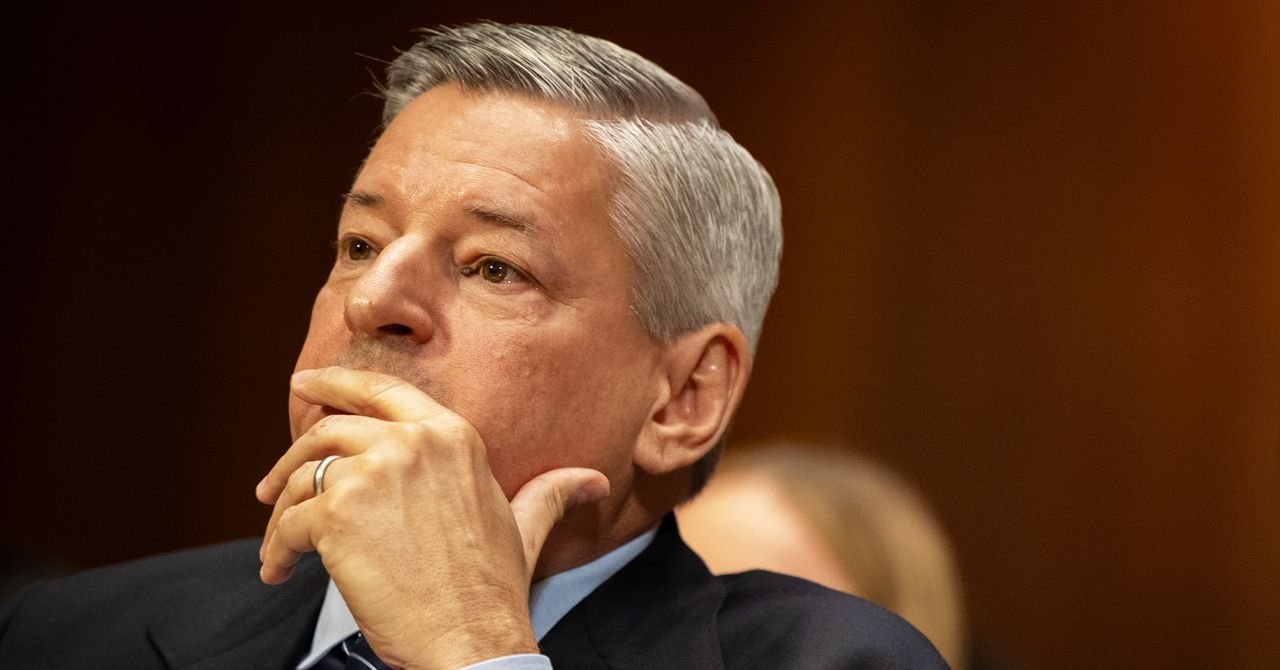
During a US Senate hearing on Tuesday, Netflix co-CEO Ted Sarandos suggested the merger would have the opposite effect.
Sarandos was speaking at a hearing held by the U.S. Senate Judiciary Committee’s Subcommittee on Antitrust, Competition Policy and Consumer Rights, “Investigating the Competitive Impact of the Proposed Netflix-Warner Bros. Transaction.”
Sarandos aimed to convince the subcommittee that Netflix would not become a monopoly in streaming or film and TV production if regulators allow its acquisition to close. Netflix is the largest subscription video-on-demand provider by subscribers (301.63 million by January 2025), and Warner Bros. Discovery is in third place (128 million streaming subscribers, which also includes users of HBO Max and, to a lesser extent, Discovery+).
Speaking at the hearing, Sarandos said: “Netflix and Warner Bros. both have streaming services, but they are very complementary. In fact, 80 percent of HBO Max subscribers also subscribe to Netflix. We will give consumers more content at a lower price.”
During the hearing, Democratic Senator Amy Klobuchar of Minnesota asked Sarandos how Netflix can ensure that streaming remains “affordable” after the merger, especially after Netflix issued a price increase in January 2025 despite adding more subscribers.
Sarandos said the streaming industry is still competitive. The executive claimed that Netflix’s previous price increases brought “too much value” to customers.
“We can cancel with one click, so if the consumer says, ‘This is too much for what I’m getting,’ they can cancel with one click,” Sarandos said.
When pressed further on pricing, the executive argued that the merger poses “no concentration risk” and that Netflix is working with the US Justice Department on potential safeguards against greater price increases.
Sarandos claimed that the merger would “create greater value for consumers.” However, his idea of value is not just about how much subscribers pay to stream, but also about the quality of the content. According to their calculations, which they provided without further details, Netflix subscribers spend an average of 35 cents per hour of content watched, compared to 90 cents for Paramount+.
Netflix’s figure is similar to one provided by MoffettNathanson in January 2025, which found that last quarter, Netflix generated an average of 34 cents in subscription fees per hour of content viewed per subscriber. At the time, the research firm said Paramount+ averaged 76 cents per hour of content watched per subscriber.
Downplaying monopoly concerns
Netflix views Warner as “both a competitor and a supplier,” Sarandos said when the subcommittee chairman, Republican Senator Mike Lee of Utah, asked why Netflix wanted to buy WB’s film studio, according to Variety. The streaming executive claimed that Netflix’s “history is about adding more and more content and options”.
During the hearing, Sarandos argued that streaming is a competitive business and pointed to Google, Apple and Amazon as “tech companies with deep pockets trying to run away from the TV business.” He tried to ease concerns that Netflix could become a monopoly by emphasizing YouTube’s high TV viewership. Nielsen’s The Gauge tracker shows which platform Americans use most when using their TV (as opposed to laptop, tablet or other devices). In December, it said YouTube had more TV viewership (12.7 percent) than any other streaming video-on-demand service, except YouTube TV, which included second-place Netflix (9 percent). Sarandos claimed that Netflix would have 21 percent of the streaming market if it merged with HBO Max.
<a href
Need a multimedia system? equipment for situational centers We integrate multimedia systems for home and business. We install and configure audio and video systems, manage content, and integrate equipment into a single system. Modern solutions for comfortable and efficient use of technology.
Последние публикации: https://l-parfum.ru/catalog/guerlain/la-petite-robe-noire-mon-eau-de-lingerie/
проект дизайн домов коттеджный дизайнер
Дополнительная информация: https://sway.cloud.microsoft/7enuea6fdpnl5nxe?ref=link
компания дизайна интерьера заказать дизайнера интерьера
Delicious – here: https://huyphongfoods.com/2026/03/15/naked-ladies-video-clips/
Full Version at the Link: https://phongthuydantukimtamcat.com/quick-withdrawal-gambling-enterprise-nz-under-one-hour-earnings-2026/
More details One click: https://www.syncm.net/?p=547691
Details at the link: https://veevsistemas.com/2026/03/11/sweetheart-partner-intercourse-movies-offering-partners-fictional-character-inside-the-explicit-porn/
Just what you need: https://www.razoredgeresumes.com/jobsearch_blog/os-melhores-casinos-a-dinheiro-real/
Extended Review: https://www.koffylovers.com/melhores-casinos-uma-vez-que-bonus-criancice-anais-acimade-portugal-acimade-2025/