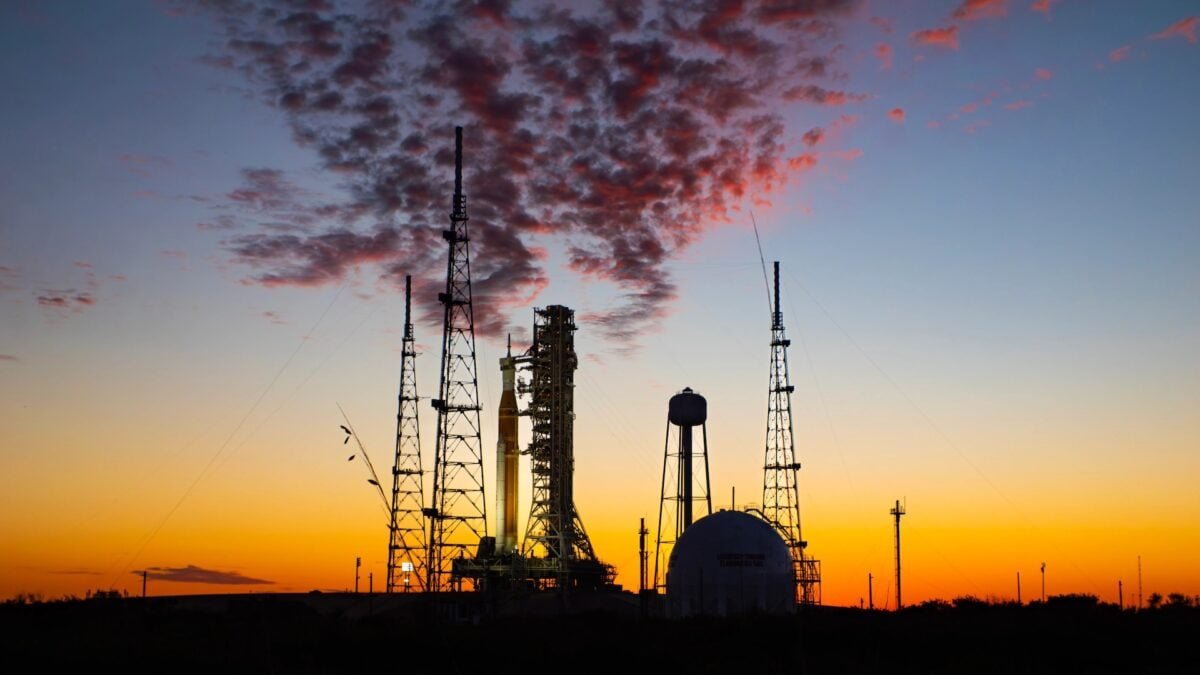

NASA recently conducted a confidence test on newly replaced seals in the area used to load the SLS with propellant. During the test, however, operators only partially filled the rocket’s core stage liquid hydrogen tank before encountering a problem with the ground support equipment, the agency said in a statement.
This problem somehow reduced the flow of liquid hydrogen into the rocket. “To ensure appropriate environmental conditions, engineers will purge the line over the weekend and inspect ground support equipment before replacing filters believed to be the cause of low flow,” NASA wrote.
leaked rocket
The latest confidence test, which the agency did not announce in advance, was to address a hydrogen leak on the SLS rocket.
NASA engineers first detected the leak on February 3 during a wet dress rehearsal for Artemis 2. The SLS was loaded with liquid hydrogen and liquid oxygen to simulate the launch countdown for the mission. The refueling test was cut short when engineers discovered a problem with one of the tail service mast navels on the mobile launcher. 35-foot-tall (11 m high) structures provide cryogenic propellant lines and electrical cable connections to the SLS core stage.
In an attempt to resolve the problem, technicians replaced two seals inside the tail service mast. Although confidence testing of the new seals was only partially successful, NASA teams “were able to gain confidence in several key test objectives, and data was obtained on the core stage interface, taken at the same time in the test where they had encountered a leak during a previous wet dress rehearsal,” the space agency wrote.
case of deja vu
Those dangerous hydrogen leaks also affected the countdown to the launch of the Artemis 1 mission in 2022, causing significant delays and thwarting the launch attempt.
At that time, NASA ground teams solved the problem by changing the way liquid hydrogen was loaded into the rocket’s core stage. The same loading procedure was used for the Artemis 2 wet dress rehearsal, but this time it did not work.
“Considering the problems seen during the lead-up to Artemis I and the long period between missions, we should not be surprised that the Artemis II mission faces challenges,” NASA Administrator Jared Isaacman wrote on X. “It doesn’t excuse the situation, but we understand it.”
Much work is being done on Artemis 2, the first manned mission to the Moon since the Apollo program ended in 1972. “There is still much work left to do to prepare for this historic mission,” Isaacman said. “We will not launch until we are ready and the safety of our astronauts remains the top priority.”
<a href