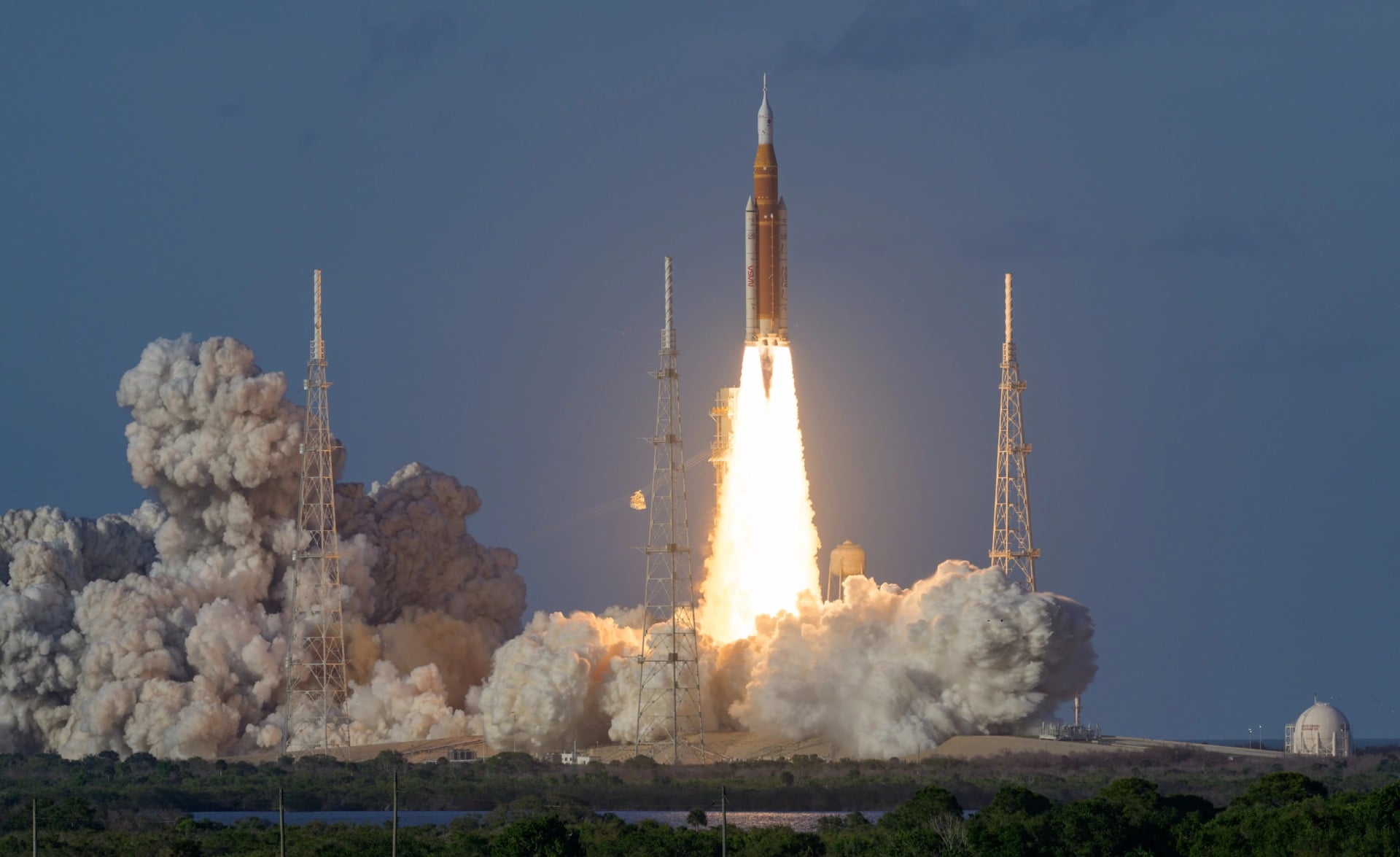
At T-0, the SLS boosters ignited in a burst of fire, generating a massive 8.8 million pounds of thrust to propel the Orion spacecraft skyward. The SLS flew approximately 11 minutes into the 2-hour launch window, which opened at 6:24 p.m. Shortly after ignition, the rocket passed the launch tower, exceeded supersonic speed, and jettisoned its solid rocket booster.
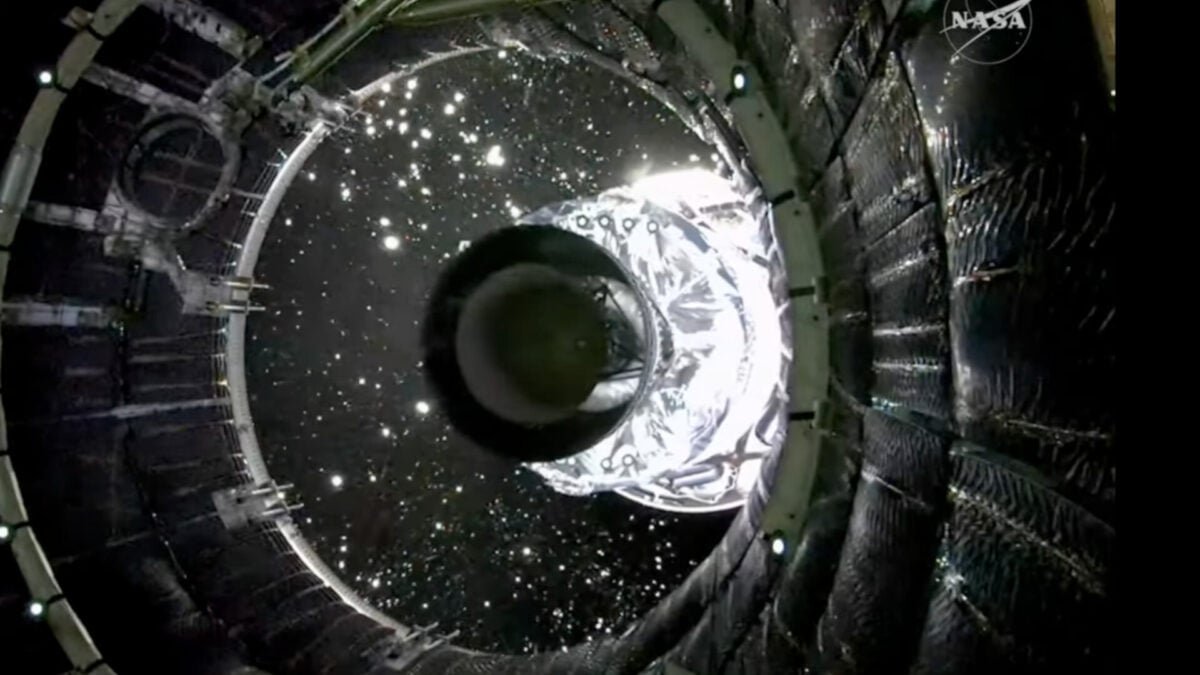
At 6:43 pm, the rocket’s main stage separated, placing the Orion spacecraft and upper stage (also known as the interim cryogenic propulsion stage) into LEO. About 16 minutes later, Orion’s solar array wings opened, completing a critical configuration step. These arrays supply power to all of Orion’s systems, from propulsion to life support.
This achievement took a long time to come. It has been 54 years since the last Apollo mission returned to Earth, and humans have not left low-Earth orbit since. Over the next nine days, Artemis 2 astronauts will travel deeper into space than the Apollo missions, circling around the far side of the moon and returning to Earth.
The Artemis 2 launch also faced several delays. NASA had hoped to launch during the February window, but SLS experienced a hydrogen leak during a wet dress rehearsal, derailing these plans. Then the March window, well, went out the window when NASA had to roll the SLS back to the Vehicle Assembly Building to fix a helium flow problem.
Today, tanking of both the core and upper stages of the rocket went remarkably smoothly, with no major leaks or problems. Now that Orion is finally in space, humanity is ready to return to the Moon. If all goes according to plan over the next several hours, the ICPS will perform a burn to boost the spacecraft’s orbit in preparation for translunar injection.
Approximately 3 hours and 30 minutes after launch, Orion will separate from the ICPS, and the upper stage will begin a demonstration to test its ability to maneuver and operate safely near Orion. Once this is complete, the ICPS will re-enter Earth’s atmosphere and fall into the Pacific Ocean. Orion will perform a burn to adjust its orbit and conclude the first day of flight.
10 days of history being made
Assuming the mission proceeds as planned, Orion will perform the critical translunar injection burn approximately 25 hours after launch. This will place the spacecraft on the path to the Moon.
Orion should enter the lunar impact zone on the fifth day of flight. At that time, the Moon’s gravitational pull will be stronger than Earth’s, allowing the spacecraft to perform a fuel-efficient lunar flight. Orion will orbit around the far side of the moon, giving the Artemis 2 astronauts a full day to observe the surface. They will see parts of the distance that have never been seen before with the naked eye.
NASA expects Orion to exit the lunar impact zone on the seventh day of flight and enter a return trajectory. The spacecraft will perform a few more burns to adjust its trajectory on the ninth and tenth days of flight before the crew capsule separates from the service module. The crew capsule will re-enter Earth’s atmosphere at a speed of 25,000 mph (40,000 kph) and touch down off the coast of San Diego, California.
Gizmodo will follow the mission every step of the way, bringing you the latest updates as humanity makes its epic return to lunar space. Watch this space for news on all things Artemis 2.
<a href