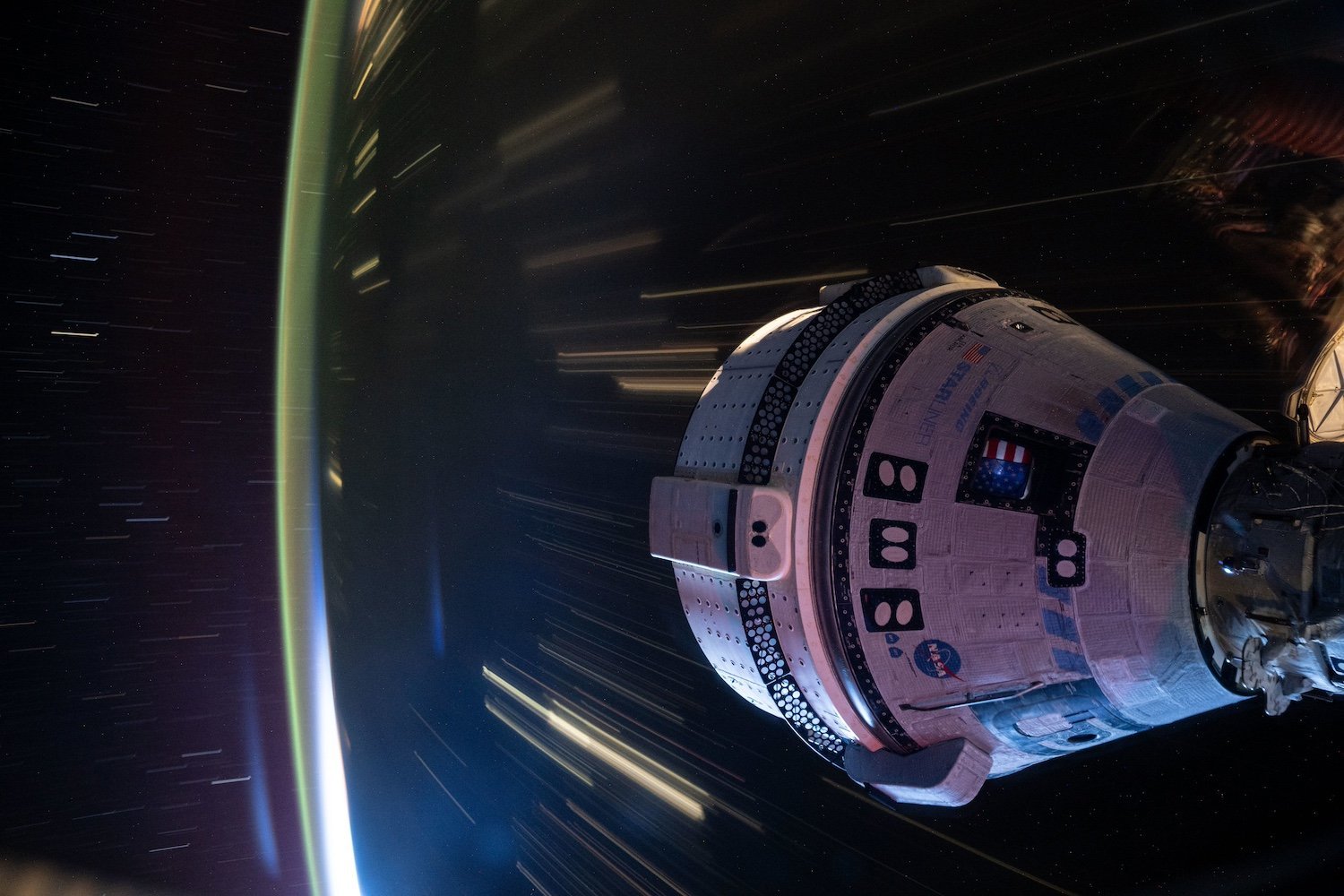

This week, NASA announced amendments to its 2014 contract with Boeing, reducing the number of Starliner missions to four instead of six, with the remaining two available as options. The agency also revealed that the next Starliner mission will have no crew but will instead be used to deliver cargo to the ISS and “allow in-flight verification of system upgrades implemented following the Crew Flight Test mission last year,” NASA wrote. The mission, codenamed Starliner-1, is scheduled to undergo spacecraft certification and other mission preparation activities before April 2026.
“NASA and Boeing are rigorously testing the Starliner propulsion system in preparation for two potential flights next year,” Steve Stich, manager of NASA’s Commercial Crew Program, said in a statement. “This modification allows NASA and Boeing to focus on safely certifying the system in 2026, executing Starliner’s first crew rotation when ready, and aligning our ongoing flight planning for future Starliner missions based on the station’s operational requirements through 2030.”
try and try again
On June 5, 2024, Starliner launches NASA astronauts Butch Wilmore and Sunni Williams to the ISS for its first crewed mission. En route to the space station, five of the spacecraft’s thrusters failed, and it developed five helium leaks, one of which was identified before liftoff. NASA deemed the spacecraft unfit to carry astronauts home and instead sent its crew back aboard SpaceX’s Dragon spacecraft. An empty Starliner undocked from the ISS and returned to Earth later in September.
Under its original $4.5 billion contract with NASA, Boeing was scheduled to deliver six crewed missions to the ISS. Following the crewed test flight, the agency was hoping Starliner could begin operations by early 2025. However, its flawed mission meant that the spacecraft would not launch again before Boeing implemented some changes to avoid another malfunction.
Instead of using Starliner, NASA was forced to turn to SpaceX to launch its Crew-10 and Crew-11 missions earlier this year, as well as the upcoming Crew-12 mission scheduled for February 2026. NASA was eager to rely on another commercial partner to launch its astronauts, but Boeing has so far failed to fulfill its end of the deal.
The ISS will be retired by 2030, leaving little scope for Boeing to transport NASA astronaut crews to the space station. Still, the agency isn’t abandoning the Starliner program just yet. “Certification of Boeing’s Starliner is critical to NASA’s goal of a continued human presence in low Earth orbit,” NASA wrote.
<a href