NASA assessed a 1 in 276 chance of crew loss in the first flight of astronauts aboard SpaceX’s Crew Dragon in 2020. For Boeing’s Starliner in 2024, the chances were 1 in 295. It wouldn’t be wrong to question those numbers, given the proven performance of Dragon and Starliner.
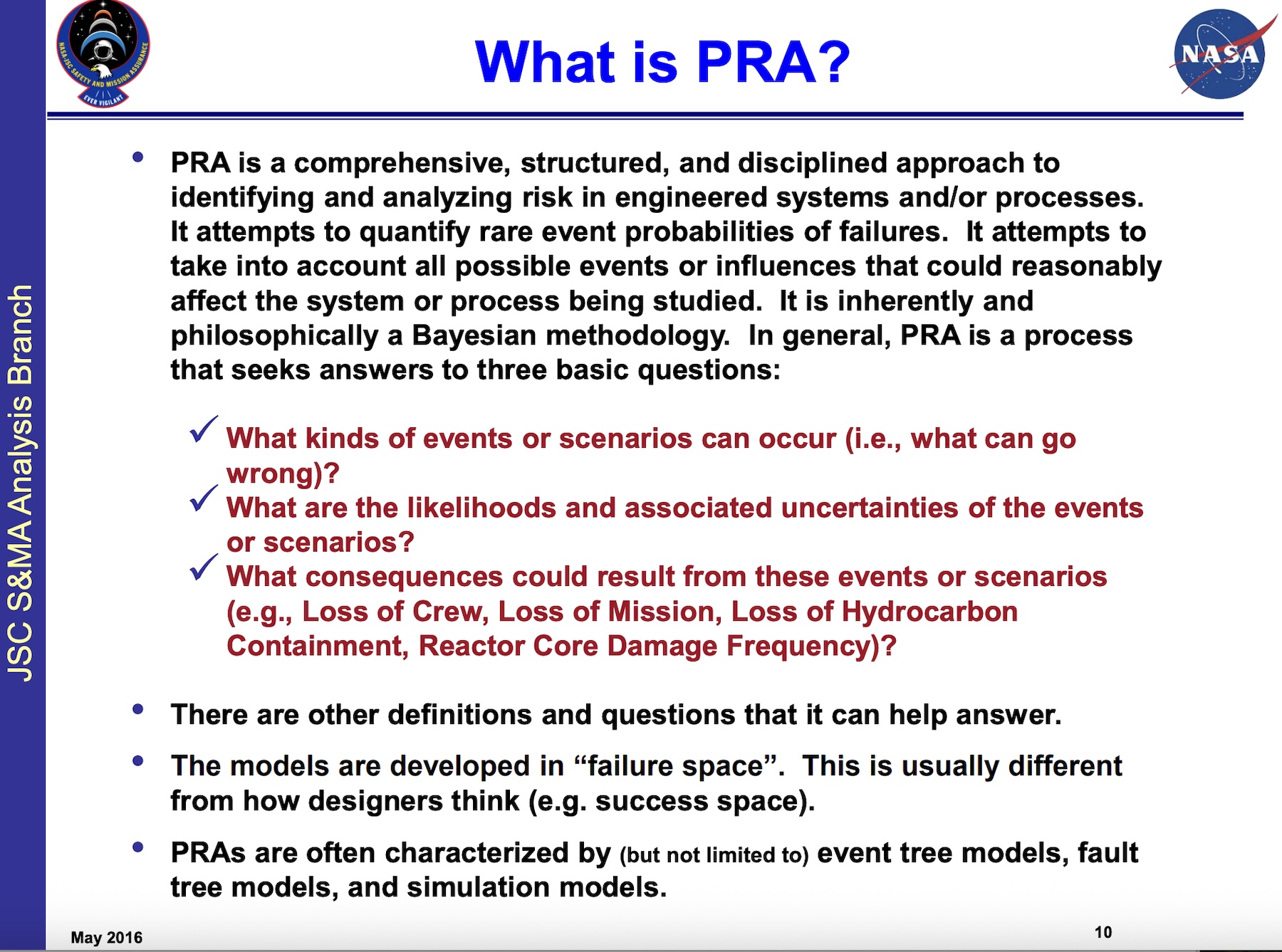
This chart from NASA’s Office of Safety and Mission Assurance describes the agency’s process for conducting probabilistic risk assessments.
Credit: NASA
This chart from NASA’s Office of Safety and Mission Assurance describes the agency’s process for conducting probabilistic risk assessments.
Credit: NASA
So, what do the Artemis II astronauts make of all this?
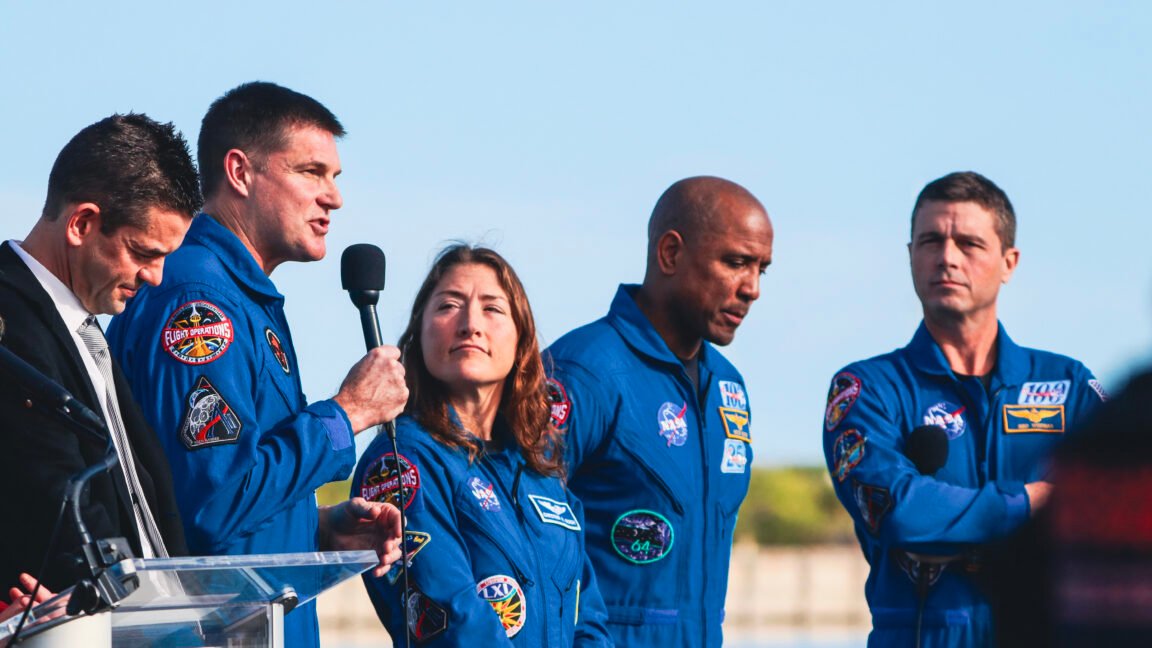
The mission commander, Reed Wiseman, said that the crew members were trying to prepare their families “honestly and openly” for the dangers of a lunar flight.
“I went on a walk with my kids, and I told them, ‘The will is right here, the trust documents are right here, and if something happens to me, what’s going to happen to you,'” Wiseman said. “It’s a part of this life. I really wish more people in everyday life talked to their families like this because you never know what the next day is going to bring.”
Any sailor knows that you can’t stay in port forever. Test pilots and astronauts take calculated risks to earn a living.
“When you see numbers like Mach 39 on entry, when you see numbers like 38,000 miles, 250,000 miles and 5 or 6 million pounds at the pad, those are just crazy numbers,” Wiseman said. “These numbers, you don’t even understand. There’s risk in that. We don’t know what we don’t know right now, so we’ll learn all that [on the mission].
Despite the unknown, Wiseman is ready: “For me, I really feel completely 100 percent bought in. When I get to Orion, it’s like climbing into my bed, and I’ll feel warm and wrapped up in it.”
The formal risk matrix for Artemis II is the same as Artemis I, with MMODs again at the top of the list. NASA’s Artemis II mission manager Matt Ramsey told Ars in January that the Orion spacecraft’s environmental control and life support systems, which did not fly to their full capacity on Artemis I, are the second-biggest risk to Artemis II. “Those two are my biggest concerns,” said Ramsey, who has been with NASA since 2002.
<a href