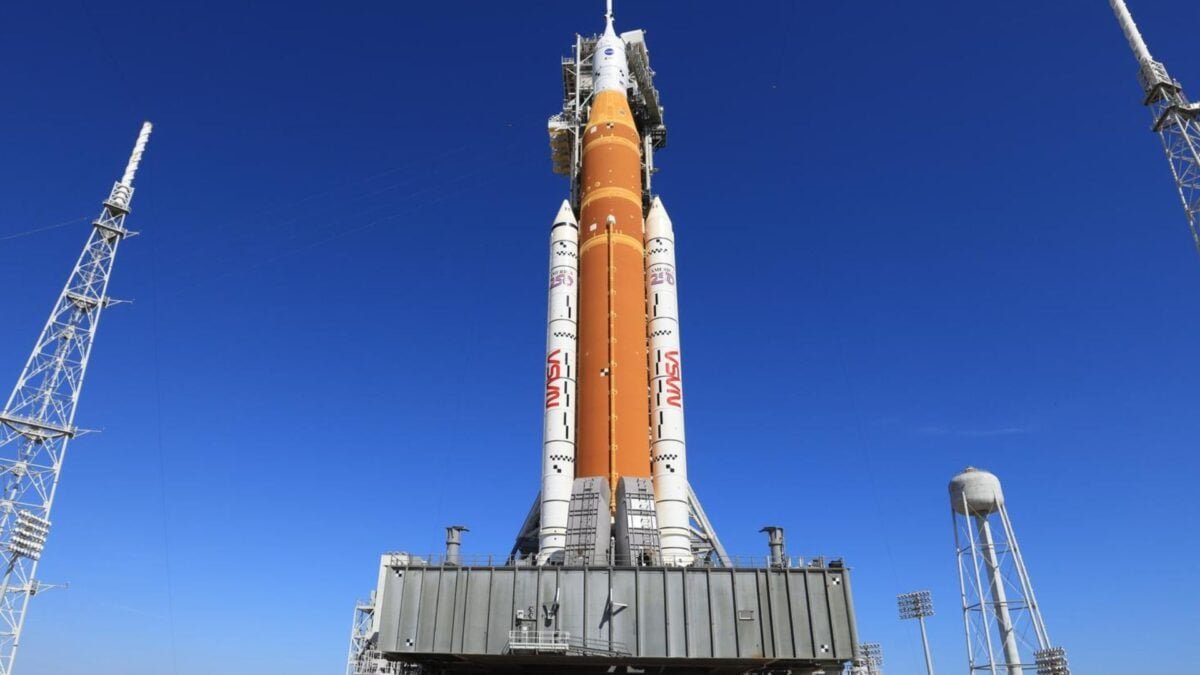

Under a new proposal, the Space Launch System (SLS) rocket would no longer be used to boost the Orion spacecraft into lunar orbit. Instead, Starship and Orion will dock in Earth orbit, and a SpaceX rocket will be responsible for carrying the crew capsule into lunar orbit before carrying astronauts to the lunar surface, Bloomberg reports.
The original plan was to use the SLS to fly Orion close to the Moon and rendezvous with the starship in lunar orbit. After several delays and cost overruns, NASA is considering reducing the role of the SLS to speed things up for its Artemis Moon program. At the same time, the agency is doubling its reliance on commercial partner SpaceX to deliver astronauts to the lunar surface.
quick timeline
NASA’s recently appointed leadership wants to speed things up for the agency’s Moon program. In late February, NASA Administrator Jared Isaacman announced a major revamp of Artemis, which will include an additional flight in 2027 under Artemis 3, as a test flight of commercial lunar landers in Earth orbit.
The 5.75 million-pound SLS rocket, designed and developed by Boeing, is essential to NASA’s Moon program. But ongoing issues since Artemis 1 launch preparations in 2022 have plagued the rocket and forced the agency to delay the crewed Artemis 2 mission.
Under the $3.2 billion contract, Boeing was tasked with producing the SLS core and upper stage for Artemis 3 to 6 and the Exploration Upper Stage (EUS) for Artemis 5 and 6. Earlier this month, the agency said it would no longer use Boeing’s EUS due to major delays in development. NASA also canceled planned upgrades to the SLS, opting to standardize its Moon rockets in hopes of increasing its launch cadence.
supporting role
The latest report is another major downgrade for the SLS, reducing its role in NASA’s upcoming moon landing. The SLS is set to launch astronauts to lunar orbit for the Artemis 2 mission in April, but after that it may be tasked with delivering only the crewed Orion spacecraft to Earth orbit (sending astronauts to the Moon is a two-way process: getting the crew into Earth orbit and, after that, sending them on a trajectory toward the Moon).
SpaceX’s Starship will then proceed forward, docking with the Starship in Earth’s orbit and taking over from there. The company’s rocket is still under development, having completed 11 suborbital test flights but has not yet reached orbital altitude.
SpaceX and Blue Origin are also tasked with developing a lander to take astronauts from lunar orbit to the lunar surface. A recent report from NASA’s Office of Inspector General notes that Starship’s human landing system faces significant delays and is unlikely to be ready before the launch of the Artemis 3 mission in 2027.
According to Bloomberg, Isaacman will meet with companies working on the Artemis and Human Landing System (HLS) programs to discuss their progress.
As part of NASA’s new plan, Artemis 4, tentatively scheduled to launch in 2028, will be the agency’s first attempt to land astronauts on the Moon in more than 50 years. NASA is also aiming for two lunar touchdowns within 10 months, which would accelerate the Artemis schedule to help establish a permanent presence on the Moon.
Isaacman also recently revealed an ambitious plan to land missions to the Moon on a monthly basis in 2027 as part of the agency’s efforts to build a lunar base.
The new accelerated timeline comes with its own challenges and requires NASA and its commercial partners to complete many unproven components of the Artemis mission.
<a href