Here’s what we know.
What has happened?
Cyclone Ditvaha made landfall early Friday morning, mainly affecting eastern and central areas of the island nation, with wind speeds of 65 kilometers per hour (40 mph).
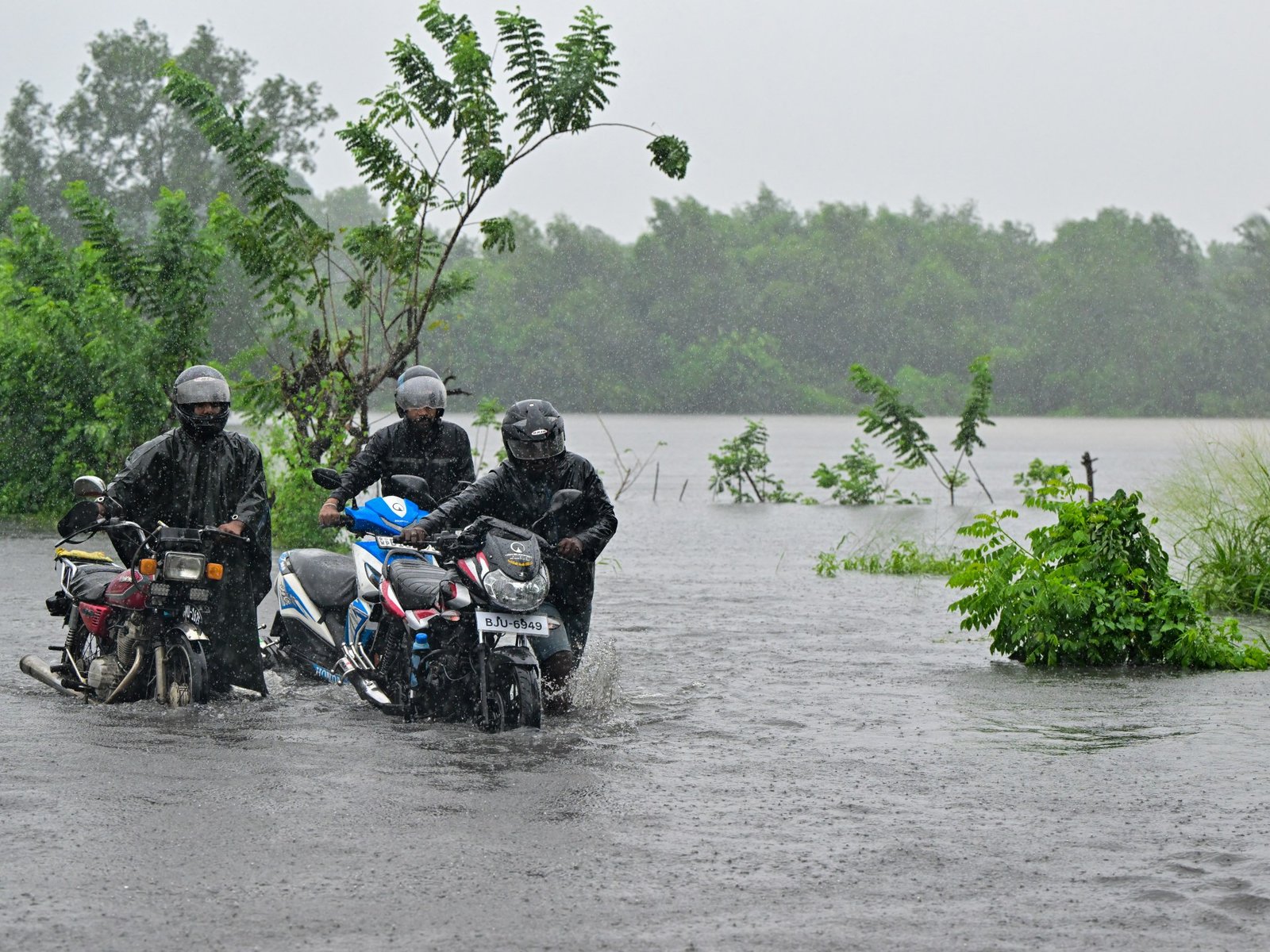
Heavy rainfall occurs before and after the arrival of a tropical cyclone or hurricane. Sri Lanka saw heavy torrential rainfall of more than 300 mm (11.8 in) between Thursday and Friday.
The rains caused floods and landslides, killing many people.

What do we know about casualties?
The death toll across Sri Lanka rose to 56 on Friday.
On Thursday, more than 25 people were reported dead in landslides in the hilly, tea-growing areas between Badulla and Nuwara Eliya, about 300 km (186 miles) east of the capital Colombo. Other people lost their lives in landslides in other parts of Sri Lanka.
According to the government’s disaster management centre, 21 people are missing and 14 injured in Badulla and Nuwara Eliya areas. Overall, 23 people are missing across the country.
What damage and disruption has occurred?
Heavy rains have destroyed four houses and damaged more than 600.
It also caused downed trees and mud and blocked many roads and railway lines.
The flight has been disrupted due to weather conditions.
Fifteen flights, including services to Muscat, Dubai, New Delhi and Bangkok, were diverted from Colombo’s Bandaranaike International Airport (BIA) to Mattala Rajapaksa International Airport (MRIA) in Sri Lanka’s southern province of Mattala as well as Trivandrum and Kochi in India from Thursday to Friday afternoon, local media reported.
How have the authorities responded?
Local media reported on Friday morning that the country’s Disaster Management Center (DMC) evacuated 43,991 people from 12,313 families to schools and other public shelters.
Media also showed footage of military helicopters rescuing three people trapped on the roof of their house in Hanwella, a town in Sri Lanka’s Colombo district, on Thursday. Navy and police also evacuated people by boat.
The government announced the closure of all government offices and schools on Friday.
Additionally, train services were suspended, and the Colombo Stock Exchange announced early closing of trading.
Authorities closed several roads across the country after landslides dumped rocks, mud and trees on roads and rail lines, some of which were also submerged in floodwaters.
What causes such storms?
Tropical storms develop over warm ocean waters near the equator. Warm air rises, creating a low pressure area. As this air cools, it is displaced by hotter rising air from below, setting up a continuous cycle that produces strong winds and heavy rainfall.
As the system intensifies and its rotation speed increases, a cool, clear eye forms in the center, marked by very low air pressure.
Once wind speeds reach 63 km/h (39 mph), the system is classified as a cyclonic or tropical storm – Cyclone Ditvah has a wind speed of 65 km/h, giving it the storm’s current technical name. If winds increase to 119 km/h (74 mph) or more, it becomes a tropical cyclone.

What’s the latest on the ground?
Schools and government offices remained closed on Friday. Road and train closures are also in effect.
The Irrigation Department has issued a red level flood warning for low-lying areas of the Kelani River valley for the next 48 hours, warning that the capital Colombo is also included in the risk area.
What is the economic situation in Sri Lanka now?
Last year, Sri Lanka elected leftist Anura Kumara Dissanayake as its president, who promised to end the painful austerity measures imposed by his predecessor Ranil Wickremesinghe as part of a bailout loan package from the International Monetary Fund (IMF).
While Dissanayake was initially opposed to the IMF deal, the deal remains in place as he attempts to improve the country’s economy instead.
The economy has shown some early signs of improvement this year, especially in the tourism sector. However, the recovery is fragile and heavily dependent on debt management.
<a href