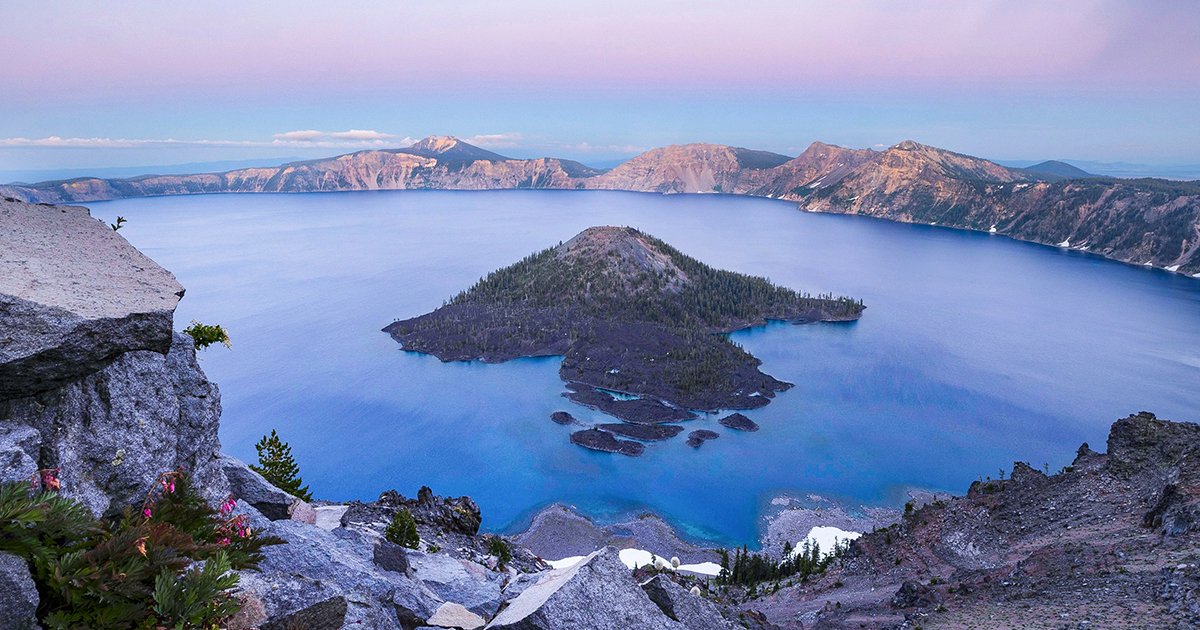
In the past, when summer nights became cool, the lake would release the day’s accumulated heat, causing the surface water to condense and sink. This phenomenon induces the shallow mixing that occurs in summer. However, as the nights have become warmer, this process has weakened and mixing has slowed.
Conversely, as the surface water layer has warmed, it has also become thinner. “On average, there is half as much water floating on the surface in the summer as there was in 1971,” Gairdner said. This creates a sharp difference in the density of the cold water below, resulting in an increased amount of wind energy needed to break up and mix the layers.
“I think of it like a vinaigrette,” said Kevin Rose, a freshwater ecologist at Rensselaer Polytechnic Institute in New York who collaborated with Gairdner and Chandra. “There is opposition to mixing.”
So what does all this have to do with the fact that the lake is cleaning up? This is where biology comes in. A community of phytoplankton lives in the warm surface waters of Crater Lake. The thin warm surface layer means less habitat, so there are less phytoplankton, which means there are fewer particles in the water to scatter light. This overall increases the clarity of the water and the depth of light penetration.
Crater Lake’s winter processes, which mix the lake bottom, are undergoing profound changes of their own. These changes include the weakening of a phenomenon called reverse stratification, in which a layer of very cold water, cooled by cold winter air, forms above a slightly warmer layer that is about 4 °C, the temperature at which water is heaviest. (At temperatures below this, water molecules begin to organize into light ice crystals.) When strong winds push additional cold surface water horizontally, some of it sinks as it approaches the lake’s edge. If it is pushed down far enough, the increased pressure causes it to become denser than a 4-degree water layer. It then sinks to the bottom within a few hours, creating a mixing effect.