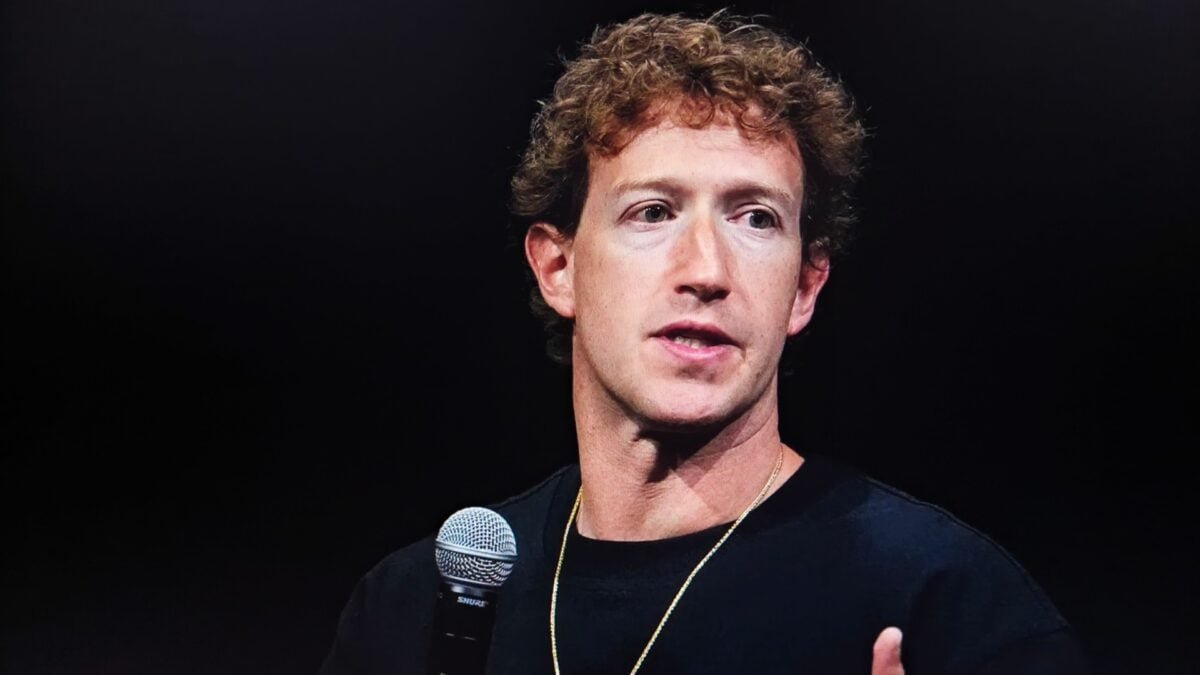

The tech giant has spent billions on meta superintelligence labs, attracting top talent from OpenAI, Apple and other companies in hopes of reviving its failing AI initiatives.
Meta CEO Mark Zuckerberg said on the company’s earnings call on Wednesday that the company is hoping to prove that it is finally reaping the fruits of that commitment with a bunch of new AI models and products that it will ship in the coming months. But maybe don’t expect anything unprecedented.
“I think this will be a long-term effort,” Zuckerberg said. “This is a journey we’re on, and I think the first set of things we put forward will be more about showing the trajectory we’re on rather than being a moment in time.”
Going beyond just models and product announcements, Meta is hoping that 2026 is the year it can use AI to make its existing offerings even more hyper-tailored to you. To the average user, it’s going to look like an Instagram feed of strangely targeted content, thanks to an LLM-enhanced recommendation system that can understand “people’s unique personal goals” and tailor ads and feeds accordingly.
“Today, our apps feel like algorithms that recommend content,” Zuckerberg said. “Soon, you’ll open our apps, and you’ll have an AI that understands you and will be able to show you great content or even create great personalized content for you.”
These recommendation models will leverage LLM’s world knowledge and reasoning capabilities to better predict what content you might want. Meta CFO Susan Lee said this will especially help recently posted content that has less engagement data to base recommendations on.
Starting last month, the company officially started using AI chat history to inform hyper-targeted ads and posts on all platforms except the EU, where it is forced to serve less personalized ads due to strict consumer protections.
In addition to advancing algorithms, AI is already “increasing the time spent on Instagram,” Lee said, through AI-dubbed videos in local languages.
“Millions of people are watching AI-translated videos every day,” Li said.
This personalization effort will also translate into meta AI offerings. The more personalized the responses are, Lee said, the more the user will engage with the AI. But this may not always be a good thing.
OpenAI spent the past few months under intense scrutiny and some legal repercussions after it was discovered that addictive AI chatbot designs inherently come with risks, especially to the mental health of vulnerable users like children and teenagers.
Meta doesn’t already have a good track record when it comes to AI safety guardrails for vulnerable populations, and children in particular. The company became the subject of regulatory scrutiny after a Reuters report in the summer found that Meta had allowed its chatbots to engage in “sexualized” conversations with minors.
On the earnings call, Meta executives said the company could experience a material loss this year due to “investigations over youth-related issues.”
Zak’s exploration of the “immersive” digital experience
The AI-enhanced feed is a continuation of Zuckerberg’s long-term vision for a more “immersive and interactive” digital experience. It’s the same approach that inspired his huge investment and corporate turnaround in the metaverse, a venture that has now contributed nearly $80 billion in total operating losses.
According to Zuckerberg, we have seen online content evolve from text to photos and videos, but it has not reached its final limit.
“Soon, we will see an explosion of new media formats that are more immersive and interactive and are only possible because of advances in AI,” Zuckerberg said in the call. “Our feeds will become more interactive overall.”
While he previously believed that virtual reality office spaces were the way this could be realized, it seems that Zuckerberg has now turned his attention to artificial intelligence and wearables.
Earlier this month, Meta laid off 1,500 people in its Metaverse division as part of an initiative to shift investments from VR to wearable devices like smart glasses.
Zuckerberg said, “Glasses are the ultimate embodiment of this vision. You can see what you see, hear what you hear, talk to you and help you get through your day.” He even compared smart glasses to smartphones.
Zuckerberg said, “I think we’re at the same moment as when smartphones came out, and it was obviously only a matter of time until all flip phones became smartphones.” “It’s hard to imagine a world in many years where most of the glasses people wear are not AI glasses.”
<a href