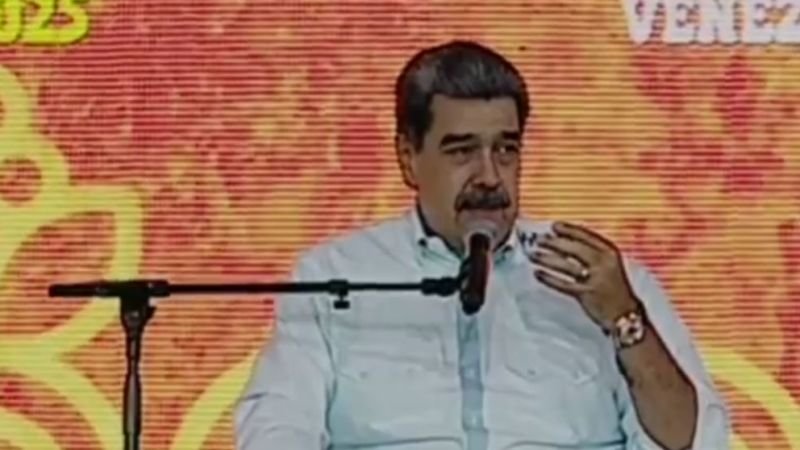
Venezuelan President Nicolas Maduro appeared in public for the first time on Sunday, ending speculation within the country that he had fled amid rising tensions with the United States.
Maduro, who usually appears on Venezuelan television several times a week, had not been seen in public since Wednesday – when he posted a video of himself driving around Caracas on his Telegram channel – leading to intense speculation about his whereabouts.
On Sunday, he appeared at an annual special-coffee awards ceremony in eastern Caracas.
In photos circulated online, the president sat in front of the crowd and handed out medals to coffee growers who demonstrated their top products. He sipped various coffees while delivering brief comments – none of which overtly addressed the current crisis in the country.
At the end of the program, he spoke about the country’s economy, saying that Venezuela is “indestructible, untouchable, unbeatable”.
The comments appear to point to tensions with the US, which has sent more than a dozen warships and deployed about 15,000 troops to the region in what it says is an effort to combat drug trafficking – but Caracas believes it is an effort to remove Maduro from office.
Maduro’s appearance at the Coffey awards ceremony came moments after US President Donald Trump confirmed he had spoken by phone with the Venezuelan leader.
When Trump was asked whether the call had taken place, he told reporters aboard Air Force One, “I don’t want to comment on it – the answer is yes.” “I wouldn’t say whether it was good or bad. It was a phone call.”
The New York Times and The Wall Street Journal reported that Trump and Maduro spoke by phone earlier this month.
Maduro and senior members of his government have not commented on the phone call with Trump.
On Sunday, the head of Venezuela’s National Assembly Jorge Rodriguez declined to discuss the talks, saying it was not the purpose of his press conference – which instead focused on announcing an investigation into recent US maritime attacks on alleged drug boats in the Caribbean, which killed more than 80 people.
In recent days, the US president has increased pressure on Maduro by warning that ground attacks against drug trafficking networks could happen “very soon” and asking airlines, pilots and criminal networks to avoid Venezuelan airspace.
However, speaking aboard Air Force One on Sunday, Trump told reporters that his warning about Venezuelan airspace was not a signal that an airstrike was imminent.
“Don’t read anything into this,” the president warned on the airfield, “because we don’t consider Venezuela a very friendly country.”
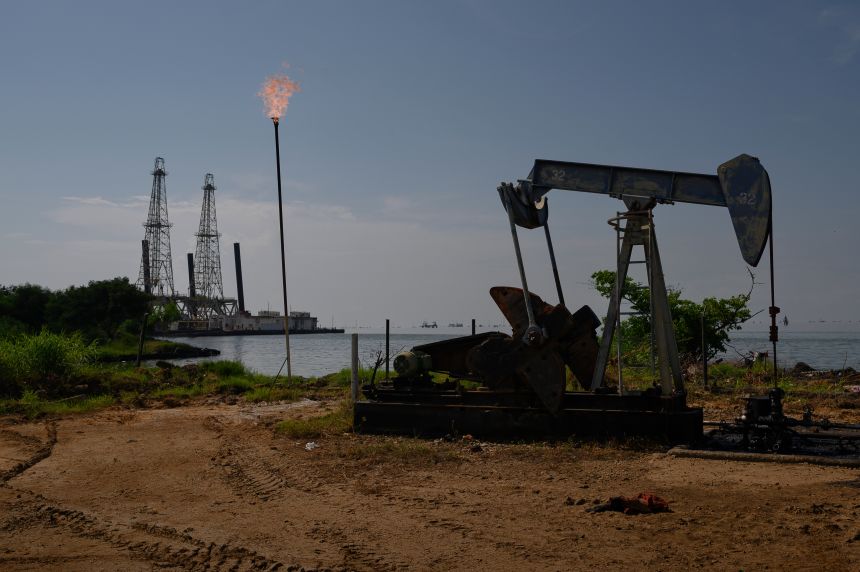
Meanwhile, amid fears of escalating tensions, Maduro wrote to OPEC accusing the US of trying to seize Venezuela’s oil reserves by force, while the president of Venezuela’s National Assembly accused the US of “murder” in connection with recent military attacks on alleged drug boats.
In a letter to OPEC Secretary General Haitham Al Ghais on 30 November, Maduro accused the US of making “persistent and repeated clear threats” towards his country, which he said “seriously jeopardize the stability of Venezuelan oil production and the international market.”
Venezuela’s oil reserves are considered the largest in the world.
Venezuelan Foreign Affairs Minister Yvan Gil Pinto posted the letter to OPEC on Telegram, also pledging that Venezuela “will remain steadfast in protecting its natural energy resources.”
“No one will stop us. We will remain free and sovereign!” Pinto wrote.
CNN has contacted the White House for comment on the letter.
Earlier, the US State Department had opposed such claims. Responding to a CNN exclusive in which Colombian President Gustavo Petro said Trump’s interest in Venezuela was about oil rather than drug trafficking, he said the administration “remains steadfast in its anti-narcotics operations in the Caribbean and its commitment to protecting Americans from the deadly poison of the Maduro regime.”
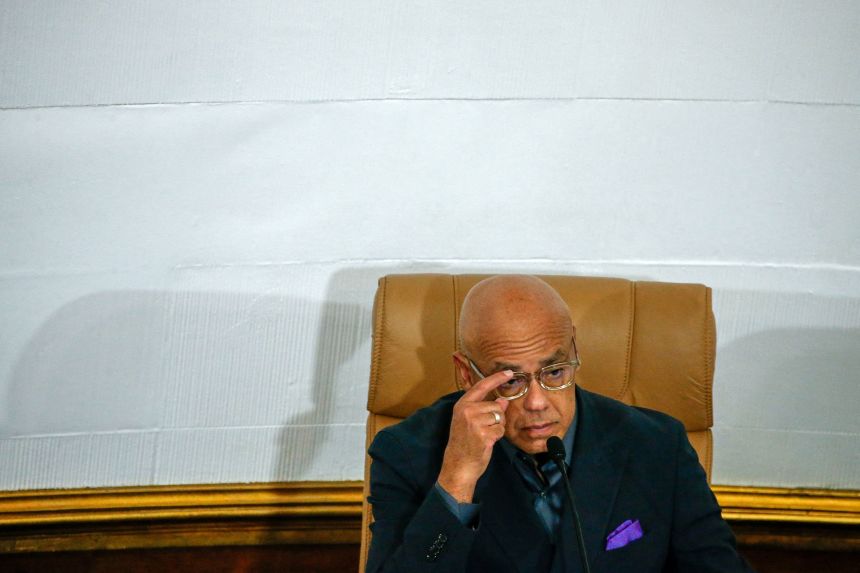
Earlier on Sunday, Venezuela accused the US of “murder” after publicly admitting for the first time that some of its citizens were among those killed in US attacks on alleged drug boats.
“There is no declared war (between the US and Venezuela), so this cannot be classified as anything other than a murder,” Rodríguez, the president of the National Assembly, told a news conference on Sunday.
He said, “Every human being has the right to due process; no human being may be killed in a cruel manner.”
CNN has contacted the State Department for comment.
It is the first time Caracas has openly said that some of its citizens have been killed in the US strikes, which have been ongoing since September.
Rodriguez, a key figure in Maduro’s government, said he had met with the families of those killed and that Venezuela’s parliament would convene on Monday to create a special commission “to investigate the serious incidents that led to the killing of Venezuelans in the Caribbean.”
The investigation will look into reports that US forces conducted a follow-up attack on a suspected drug ship operating in the Caribbean on September 2, he said, after the initial attack did not kill everyone on board.
When CNN’s Stefano Pozzibon asked how many Venezuelans were killed in the attacks, Rodriguez did not provide a number, saying only, “Tomorrow we will start the investigation, once we know, we will share that information.”
The Maduro government has also been accused of extrajudicial killings and human rights violations in the past. Venezuelans facing government repression are routinely denied fair trials, according to a statement from the Office of the UN High Commissioner for Human Rights.
More than 50 Venezuelans have been detained for political reasons in the month of October alone, human rights groups told CNN.
The Venezuelan government has denied allegations of human rights abuses.
<a href=