LG calls its latest LCD screen technology “Oxide 1Hz.” As the name suggests, these screens can reduce their refresh rate from 120 Hz to just 1 Hz – the equivalent of one refresh per second – when the content on the screen is static. That wide variable refresh rate (VRR) has been common on smartphones and smartwatches for years. Various iPhone and Android phones support the same feature with OLED and AMOLED displays.
The actual specifications of how LG created these 1Hz panels are unclear. In a press release, LG said it developed custom circuit algorithms and display materials. It “used oxides with the lowest power leakage during low refresh rate modes for the display’s thin-film transistors.” We don’t know what oxide LG is using, but it is believed to be able to retain an electrical charge for much longer than a typical LCD panel. That constant power keeps the panel from refreshing when it’s viewing static content like an online article. It can boost the refresh rate to 120Hz for content displayed at 120 frames per second (fps), just like your average video game.
The Dell XPS 14 already has a screen

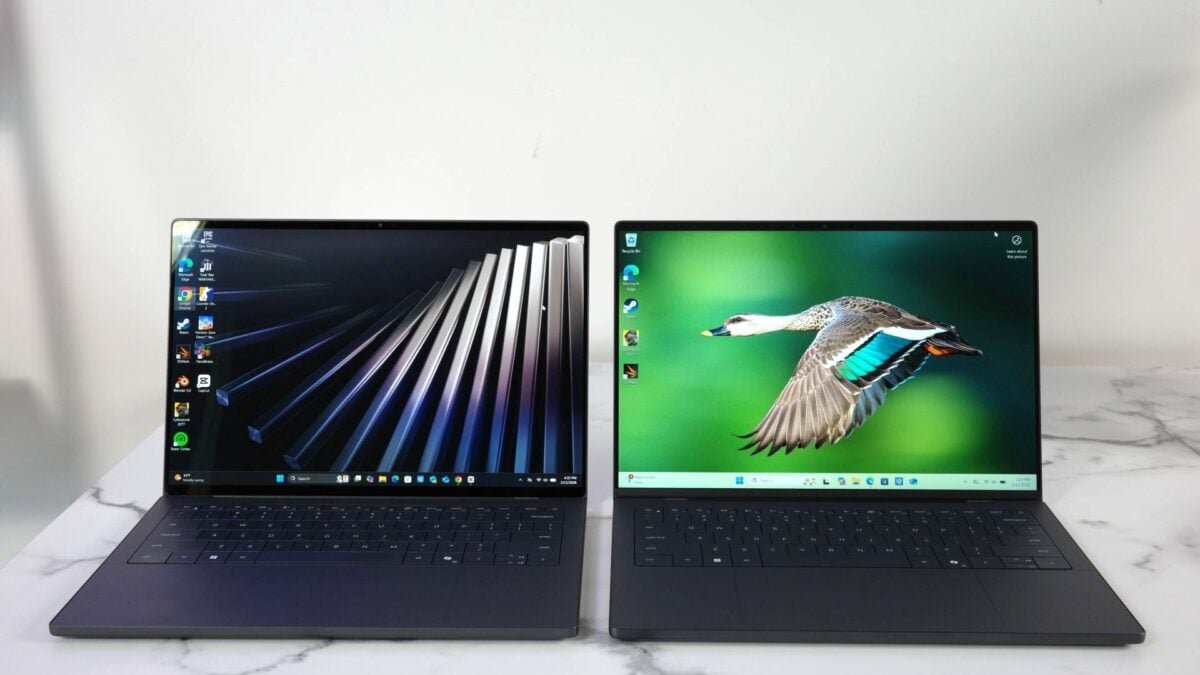
Oxide 1Hz is currently limited to LCD panels. LG promised that we’ll see more 1Hz OLED screens in 2027. However, we have already seen this LCD technology with Dell’s latest XPS 14 laptop. Gizmodo tested battery life on an XPS 14 with both an LCD panel and an OLED screen and found that the less beautiful device had significantly better battery life. That extra longevity was equivalent to several hours of browsing and typing tasks.
However, we should note that the LCD test unit provided to us by Dell was using a lower-end Intel Panther Lake chip than the OLED model. The more expensive Dell XPS 14 had an Intel Core Ultra X7 358H CPU. That chip included 12 Xe3 GPU cores, making it very strong indeed for gaming at 1080p resolution. While the LCD model may be good for regular daily browsing tasks, the only XPS 14 laptop that can actually max out the 120Hz refresh rate costs at least $1,800 and comes with an LG-made LCD display.
The real jewel in LG’s mobile computing crown may be a year off, when we’ll finally see more 1Hz OLED laptop displays. LCD panels can produce a quality picture, and they generally cost less than other screen options. Hey, if you need proof that there’s still something to be had in low-cost LCDs, just look at the $600 MacBook Neo. But once you’ve got an OLED laptop in your hands, it’s hard to go back. The organic light emitting diode display has superior contrast and provides far deeper blacks than any typical backlit liquid crystal display.
We expect more Dell and HP laptops to launch with Oxide 1Hz screens in 2027. Based on several leaks and rumors, Apple may promote a new OLED MacBook Pro this year. Previous leaks have indicated that it may offer a 1Hz ProMotion refresh rate. The current MacBook Pro Mini with LED screen is clocked at less than 48Hz. Current iPad Pro models with tandem OLED displays feature upscaling that can go from 10Hz to 120Hz.
<a href