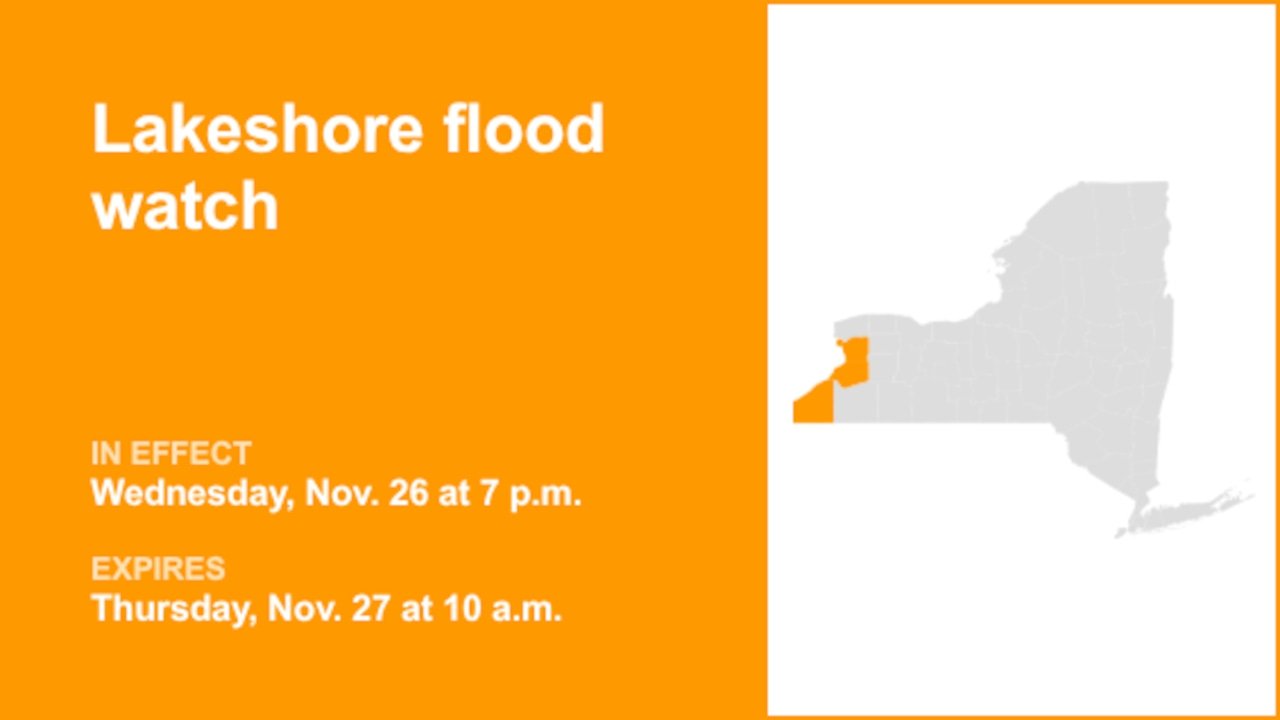
The National Weather Service issued a lakeshore flood warning at 12:46 a.m. Tuesday, which is valid from 7 p.m. Wednesday through 10 a.m. Thursday for North Erie and South Erie, as well as Chautauqua County.
“Beach flooding is possible,” the weather service comments.
The weather service describes, “A rapid rise in water levels at the eastern end of Lake Erie may result in flooding of some lakes along the Lake Erie coast. Flooding is possible along Route 5 in Hamburg, Buffalo Harbor and Canalside, Dunkirk Harbor and other flood prone locations. Very high wave action may also result in significant shoreline erosion.” “Lakeshore Flood Watch means that favorable conditions are expected to develop for lakeshore flooding. Residents on or near the shore should take action to protect property, and listen to local radio, television, or NOAA Weather Radio for subsequent statements or warnings.”

Understanding the difference between advisories, watches and warnings
- Flash Flood Warning: Take Action!
A flash flood warning is issued when a flash flood has occurred or is likely to occur. If you are in a flood prone area, move to higher ground immediately. Flash flooding is a sudden, severe flood that can take minutes to hours to develop. Flash flooding is also possible in areas where it is not raining immediately.
- Flood Warning: Take Action!
Flood warnings are issued when flooding is imminent or imminent.
- Flood Advisory: Be careful:
Flood warnings are issued when flooding is not expected to reach a level of severity that requires a warning. Nevertheless, it can still cause considerable inconvenience and, if not careful, can potentially lead to situations that endanger life and/or property.
- Flood Watch: Be Prepared:
A flood watch is issued when conditions are favorable for flooding. This does not guarantee that flooding will occur, but it does show that the possibility exists.
Staying Safe During Flooding: Weather Service Recommendations
Flooding can pose a significant threat, especially if you live in a flood-prone area or find yourself camping in low-lying terrain. To ensure your safety, the Weather Service offers essential flood safety guidelines:
Go to higher ground:
If you’re in a flood-prone area, or if you’re camping in a low-lying area, move to higher ground as a first step.
Follow the evacuation orders:
If local authorities issue an evacuation order, heed it immediately. Make your house safe by locking it before leaving.
Disconnect utilities and devices:
Disconnect your utilities and appliances if time permits. This precaution reduces the dangers of lightning during floods.
Avoid basements and submerged areas:
Stay away from basements or rooms where electrical outlets or cords are submerged in water. This helps in preventing electrical accidents.
Evacuate immediately for safety:
If you see sparks or hear buzzing, crackling, snapping or crackling sounds, evacuate without delay. Do not enter water that has an electrical charge.
Stay away from flood water:
Never attempt to wade through flood water. Even just 6 inches of fast-flowing water can knock you off your feet forcefully.
Seek higher ground if trapped:
If you become trapped in flowing water, get to the highest point available and contact emergency services by calling 911.
During heavy rains, flooding is possible, especially in low-lying and flood-prone areas. Never drive through water on the road, even if the water does not seem deep. According to the weather service, it only takes 12 inches of water to carry most cars. Prioritize your safety by staying informed and prepared.
<a href=