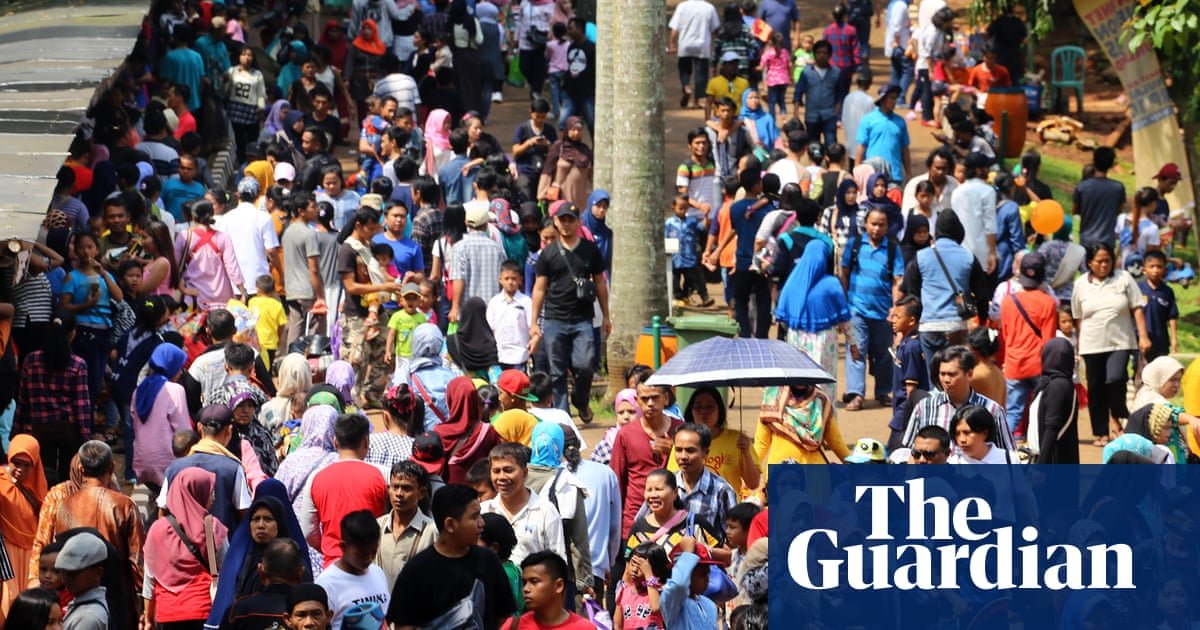
Jakarta has overtaken Tokyo as the world’s most populous city, according to a United Nations study that uses new criteria to give a more accurate picture of the rapid urbanization that is driving the megacity’s growth.
The Indonesian capital is home to 42 million people, according to an estimate from the World Urbanization Prospects 2025 report of the Population Division of the United Nations Department of Economic and Social Affairs, published this month.
After Jakarta, the capital of Bangladesh is Dhaka with 37 million people. With a population of 33 million, Tokyo – defined in the study as a megalopolis that includes three neighboring prefectures – has slipped to third place. This differs dramatically from the previous UN report in 2018, which ranked the Japanese capital at the top with a population of 37 million.
According to UN officials, the change in rankings is the result of a new methodology that is more consistent in the way cities, towns and rural areas are classified.
Patrick Gerland, head of the UN department’s population estimates and projections section, said Tokyo was prioritized in earlier assessments that used data from countries based on different definitions. “The new assessment … provides a more internationally comparable delineation of the urban boundary based on similar population and geospatial criteria,” Gerland said.
According to the report, the number of people living in cities has more than doubled since 1950, when 20% of the world’s 2.5 billion people were urban residents. They now account for almost half of the planet’s 8.2 billion people.
The report said two-thirds of global population growth by 2050 is expected to occur in cities and the remaining one-third in cities.
The number of megacities – defined as those with at least 10 million inhabitants – has increased from eight in 1975 to 33 in 2025.
Nine of the 10 most populous cities – Jakarta, Dhaka, Tokyo, New Delhi, Shanghai, Guangzhou, Cairo, Manila, Kolkata and Seoul – are in Asia.
“Urbanization is a decisive force of our times,” said Li Junhya, UN Under-Secretary-General for Economic and Social Affairs. “When managed inclusively and strategically, it can open transformative pathways to climate action, economic growth and social equity.”
Metropolitan Tokyo’s 33 million people are spread across a wide area that includes the surrounding prefectures of Saitama, Chiba and Kanagawa. The latter includes Yokohama, itself a city of 3.7 million people.
According to the new criteria, Tokyo was the world’s most populous city until 2010, when it was replaced by Jakarta. While the Tokyo area used in the United Nations study has mirrored the rest of Japan in experiencing population decline in recent years, the city itself is going in the opposite direction.
According to the Tokyo Metropolitan Government, the population of 23 special wards and 26 small towns, which can be called “Tokyo proper”, currently exceeds 14 million, compared to 13.2 million a decade ago.
Net migration to the Japanese capital slowed during the COVID-19 pandemic but has improved due to an influx of young people looking for work and education opportunities, according to the Ministry of Internal Affairs.
<a href