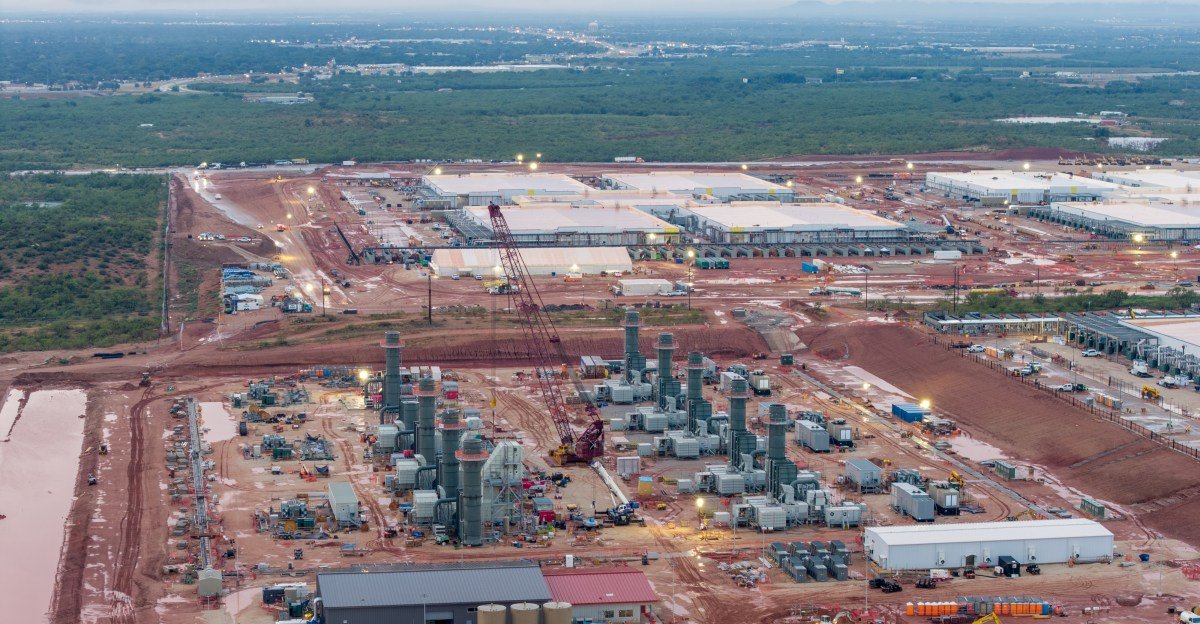
The US is now leading the global increase in new gas power plants being built on a large scale to meet the growing energy demand of data centers. And more gas means more planet-warming pollution.
Globally, gas-fired electricity generation is expected to increase by 31 percent in 2025. About a quarter of that additional capacity is earmarked for the US, which has overtaken China with the largest increase of any country. More than a third of that growth in the U.S. is expected to directly power data centers, according to a recent analysis from the nonprofit Global Energy Monitor (GEM).
More gas means more planet-warming pollution
Electricity demand is projected to skyrocket due to the race to install more powerful hardware in expanded data centers used for generative AI. There is still much uncertainty about whether AI will become as incorporated into everyday life as tech companies want, and many proposed data centers may fail. Still, plans to build more gas plants in the name of AI are stalling efforts to transition to clean energy sources.
“If the electricity demand expected from AI is never met, there is a risk that this capability could trap future emissions and become a stranded asset,” Jenny Martos, project manager for GEM’s Global Oil & Gas Plant Tracker, said in a press release.
Already, 2026 is shaping up to be a record-breaking year for gas. If all of this year’s proposed projects cross the finish line, it would be a bigger leap in additional capacity than the record set in 2002. This is quite remarkable considering the beginning of America’s so-called “shale gas revolution” in the 2000s, when fracking suddenly exposed previously difficult-to-access reserves. Gas is now a cheaper energy source than coal and produces less carbon pollution when burned. But gas production releases methane, which is a more potent greenhouse gas than carbon dioxide, even though it does not persist in the atmosphere as long.

Image: Global Energy Monitor
Scaling up electricity generation from gas is also a significant step away from global climate goals. A decade ago, nearly every country on Earth – including its two biggest greenhouse gas polluters, China and the US – signed a historic agreement in Paris to limit global warming. The only way to achieve the most ambitious targets set out in the Paris Agreement will be to replace fossil fuels with less polluting alternatives such as renewable energy and reduce greenhouse gas emissions to near-zero by 2050.
<a href