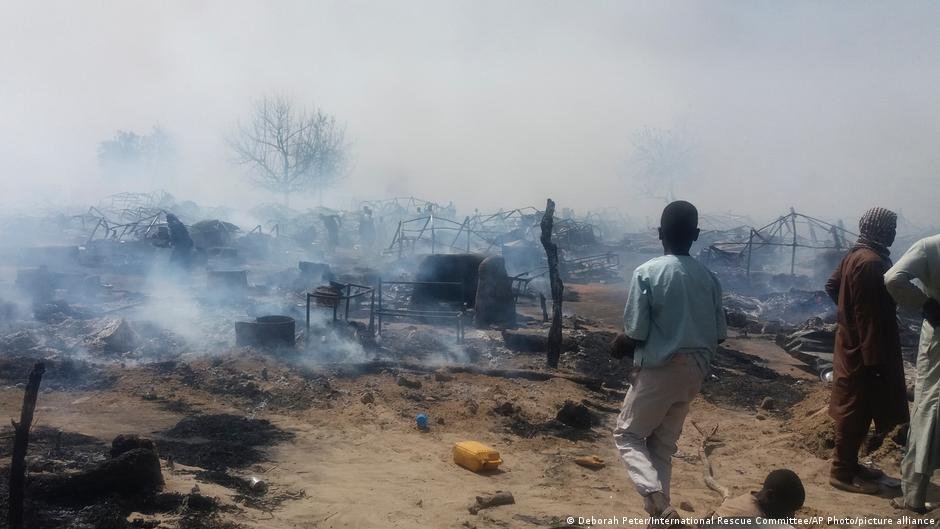
In September, JAS (Jamaatu Ahlis Sunna Liddawi wal-Jihad) – a central faction of the Boko Haram terrorist group in Nigeria – attacked the village of Darul Jamal in Borno state, killing dozens of locals who had recently been resettled from a displacement camp under the government’s policy of repopulating rural areas. This incident alone sparked a new wave of infighting with its affiliated factions, primarily the Islamic State West Africa Province (ISWAP).
ISWAP claimed the attack occurred in areas under its control and subsequently retaliated against Boko Haram fighters led by local leader Ali Ngule, who reportedly led the Darul Jamal attack.
What followed was a series of deadly counter-attacks, resulting in casualties on both sides – and weakening.
While from the outside it seems clear that all jihadist movements have a common enemy – the so-called West – and therefore should have more in common than anything that might separate them, the reality is quite different.
What differences divide these groups, and are there hidden opportunities for governments fighting such violent insurgencies to profit from their disagreements among each other?
Siblings or strange companions?
Boko Haram has been waging a bloody insurgency in northeastern Nigeria and neighboring countries since 2009. The group has since been responsible for at least 40,000 deaths, while more than two million people have been displaced from their homes.
At the height of its notoriety in 2015, Boko Haram controlled vast swaths of territory in Nigeria, particularly Borno State, and extended its campaign of terror and fear to the border area around Lake Chad.
Eventually, government forces managed to push the group back under heavy pressure, resulting in what can only be described as an uneasy stalemate for the last decade.
In search of brothers, Buk Haram’s then-leader Abubakar Shekau pledged allegiance to the so-called “Islamic State” (IS) terrorist group, and adopted the name ISWAP for Boko Haram.
The Islamic group did not actually need IS’s support for financial reasons; The region has always been economically prosperous, which is why jihadists have established themselves so deeply there that they can generate significant resources.
This was for a sense of prestige at a time when the Islamic State group was the leading name in Islamic terrorism globally. But this is also when cracks between the various jihadist factions first began to appear: some members of the original Buk Haram group argued that this association with IS distanced it from its core ideology – particularly on the issue of the treatment of civilians in the fight for their misguided cause.
Those who opposed this move broke with Shekau and still retained the ISWAP name, thereby securing their ongoing affiliation with IS.
The Shekau-led group struggled to reorganize and reorganize, eventually becoming JAS.
believe it or not
The main point of contention between the two Islamist groups is the definition of who qualifies as a “nonbeliever” under extremist interpretations of Islam.
ISWAP uses the premise of separating Muslims from non-Muslims, which has allowed the group to win over many local Muslim communities, particularly those around the islands of Lake Chad.
By providing these people with security as well as their own version of law and order, ISWAP – although an illegal group – has managed to gain control over this part of Nigeria.
Meanwhile, the JAS defines all citizens who do not engage in its interpretation of “jihad” as unbelievers, meaning people who can be punished, plundered, plundered, and abused.
This difference in opinion on the concept of “unbelievers” continually pits the two groups against each other in the region, with both sides continuously recording heavy casualties.
In 2021, the clashes reached their peak when ISWAP launched a daring offensive on Boko Haram positions in the Sambisa Forest, defeating Shekau, who killed himself in the fighting.
Two Islamic groups, one enemy: the state
Vincent Faucher, a research fellow at the National Center for Scientific Research in France, said that since then, there has been a “continuation of fighting and losses and moments of violence” on both sides.
“There have been repeated attempts to reconcile or at least accommodate the two groups, but these have so far failed,” he said.
He said the clashes that began last month between the two groups, however, “were particularly deadly for both factions, because they know the terrain, and the factions suffer more losses fighting among themselves than attacks by the forces of Lake Chad Basin countries.”
Despite their clashes, both groups remain a major threat throughout the region. ISWAP has focused its attention primarily on targeting military structures, capturing at least 15 military posts this year alone and killing dozens of service personnel in Nigeria and neighboring Chad.
On the other hand, JAS continues to attack local communities and alleged collaborators, making a name for itself in kidnappings for ransom. This group also makes its due contribution in attacking government forces.
Malik Samuel, a senior researcher at the pan-African think-tank Good Governance Africa, told DW that both groups “have demonstrated the potential to pose a serious threat to the state at least through 2025, despite their fighting.”
He said that JAS has managed to carry on despite the losses and setbacks it has suffered at the hands of ISWAP.
“We have seen that the group is not only capable of challenging ISWAP, but also capable of taking on the military,” Samuel said.
The government has run out of opportunities to end the bloodshed of terrorist groups.
However, analysts also believe that continued internal clashes between groups could provide an opportunity for the government to launch a full-scale targeted offensive – rather than waiting for the groups to “fight themselves to the death”, says Malik.
He highlighted that ISWAP is run in a decentralized manner – not just for administrative reasons but to position itself in such a way that reinforcements and backup can be easily made available whenever the group finds itself under intense military attack.
“The army can ensure that reinforcements do not happen,” Malik said. He suggested that the Nigerian Army should cut off access routes to ISWAP fighters based outside the Lake Chad region.
This should be supported by an information campaign for fighters who would secede from the region, he added, which could also open the door to defection among jihadists because “many fighters find it difficult to understand why these two groups would fight each other if their goal is to create an Islamic state.”
“A lot of them (he knows) didn’t sign up for this,” Malik told DW.
Vincent says regaining control of local communities, who have no choice but to follow the jihadist groups’ rules, is another key factor in ultimately winning the fight.
Terrorist groups “live in these areas and tax, plunder, trade and recruit. So… take back control of those enclaves and the rural areas around those enclaves!”
Edited by: Serton Sanderson
<a href